

Hybrid Training 101: How to Lift and Do Cardio Without Burning Out
How to Lift and Do Cardio Without Burning Out
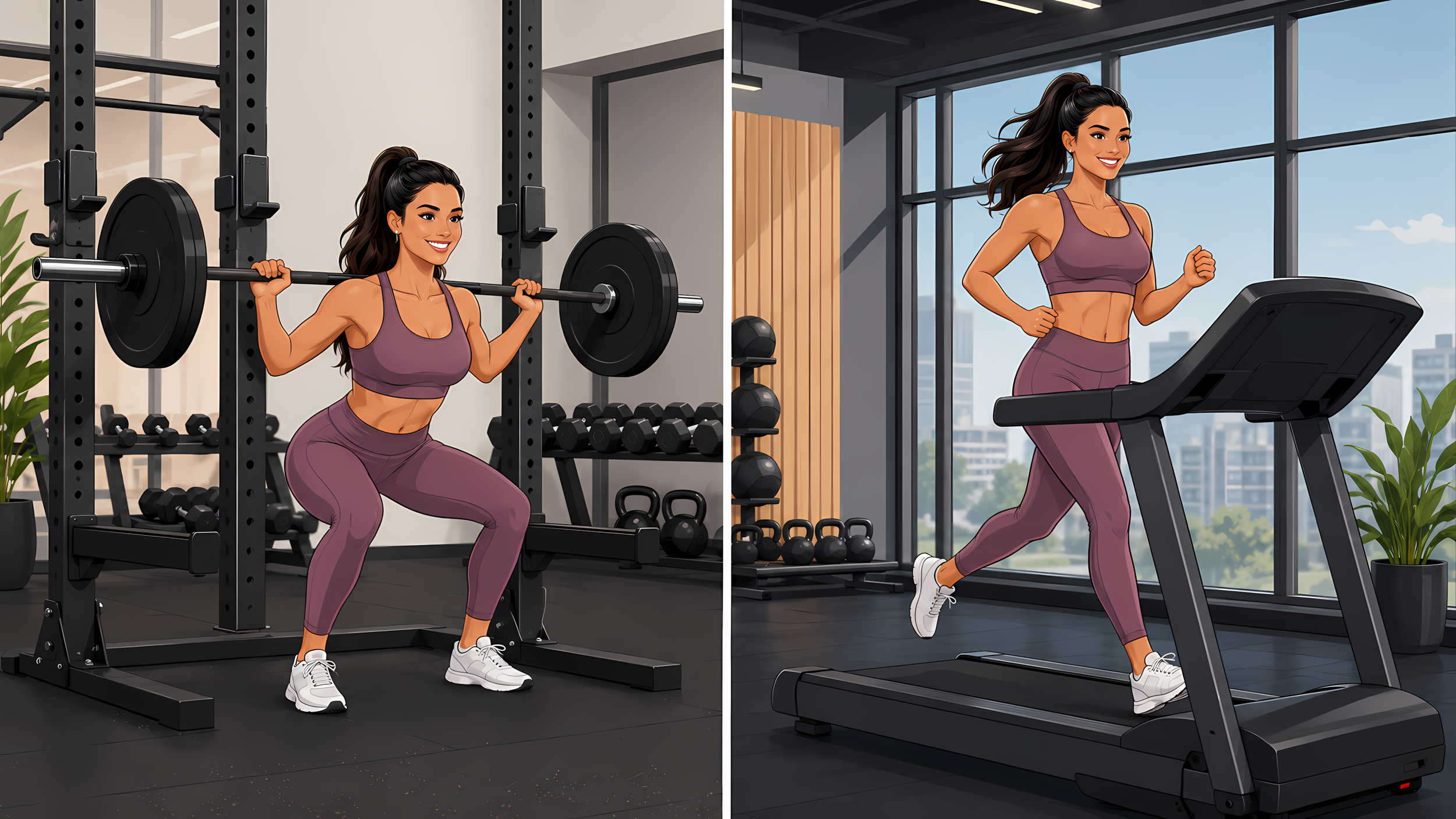
You open TikTok and it feels like everyone is doing “hybrid training.” One clip is heavy squats. Next clip is a long run. Then someone finishes with sled pushes and looks like they could still take a math test afterward.
It’s tempting. Hybrid training promises the best of both worlds: strength, leanness, and real-world fitness.
But there’s a catch. A lot of people try to do everything, every day, at high intensity. Then the wheels come off. Sleep gets worse. The bar feels heavier. Your easy run feels hard. Motivation tanks.
Hybrid training works, but only when it’s built like a system. That’s where Four Pillar Fitness fits perfectly.
What Hybrid Training Really Means
Hybrid training is just this:
You train strength and cardiovascular fitness (cardio) in the same week, on purpose, with a plan. It’s not “lift hard, run hard, repeat forever.” A good hybrid plan has one big goal and everything else supports it.
Why People Burn Out
Burnout usually comes from one or more of these:
Too many hard days in a row
Doing high-intensity cardio (or long cardio) like it’s a warm-up
Lifting heavy while under-fueled
Skipping mobility, then wondering why you feel beat up
Treating sleep like an optional upgrade
This is why hybrid training is the perfect article to introduce the Four Pillars Fitness philosophy. You cannot do hybrid well without all four.







The Four Pillars of Hybrid Training
Strength
Strength is your anchor. It’s what builds muscle, protects joints, and keeps you powerful.
A simple rule: most of your lifting should feel challenging, but not like a weekly survival test.
Use Rate of Perceived Exertion (RPE). Think of it as a 1 to 10 effort scale.
RPE 7 to 8: hard, but you could do 2 to 3 more reps with good form
RPE 9: very hard, maybe 1 more rep in the tank
Most of your strength work should live around RPE 7 to 9.
Mobility
Mobility is what lets you train often without stacking up aches.
Mobility is not just stretching. It’s control.
If your hips, ankles, and upper back move well, your lifts look better and your running form stays smoother.
Nutrition
Hybrid training costs energy. If you fuel like a “diet brain” while training like an athlete, you will feel fried.
Your body needs enough:
Total calories to recover
Protein to rebuild muscle
Carbohydrates (carbs) to support training volume
Fluids and electrolytes to keep performance stable
Recovery
Recovery is where the gains show up. Hybrid training can be a cheat code, but only if you stop trying to turn every session into a max-effort grind.
Recovery includes sleep, rest days, low-stress movement, and managing intensity.
The Two Big Rules That Make Hybrid Work
Rule 1: Hard Days Are Rare
In most weeks, you want 2 to 3 hard sessions total.
Hard sessions include:
Heavy lower-body lifting
High-Intensity Interval Training (HIIT)
Long cardio sessions that leave you drained
Everything else should feel sustainable.
Rule 2: Separate “Competing” Work When You Can
Strength and endurance can interfere with each other when you jam them too close together, especially when both are hard.
If you want the best results from both, try these options:
Put heavy lower-body lifting and hard running on different days
If you do them on the same day, separate the sessions by about 6 hours or more when possible
If you must do them back-to-back, do strength first, then cardio, and keep the cardio easier
The goal is simple: protect workout quality.
A Simple Hybrid Weekly Template
This is a clean “most people can stick to it” setup.
Option A: 3 Strength + 2 Cardio
Day 1: Strength (full body)
Day 2: Easy cardio (Zone 2 pace) + mobility
Day 3: Strength (lower focus)
Day 4: Rest or light movement + mobility
Day 5: Strength (upper focus)
Day 6: Cardio (intervals or tempo, not both)
Day 7: Rest
Option B: 4 Strength + 2 Cardio
This is for people who recover well and like lifting.
Day 1: Strength (upper)
Day 2: Strength (lower)
Day 3: Easy cardio + mobility
Day 4: Strength (upper)
Day 5: Strength (lower)
Day 6: Cardio (intervals or a longer steady session)
Day 7: Rest
Tip: Public health guidelines for adults often point to 150 to 300 minutes of moderate-intensity activity per week (or 75 to 150 minutes vigorous), plus strength training at least 2 days per week. That doesn’t tell you exactly how to train, but it’s a helpful “reality check” for weekly movement volume.
Myth Check
Myth: “If I do cardio, I’ll lose muscle.”
Reality: Cardio can support fat loss, conditioning, and recovery. The issue is not cardio. The issue is too much hard cardio plus poor fueling and poor recovery.
Myth: “Hybrid means every workout is extreme.”
Reality: Hybrid works best when most sessions are moderate and repeatable.
Putting It All Together
Hybrid training is not a trend. It’s a smart way to build a body that performs.
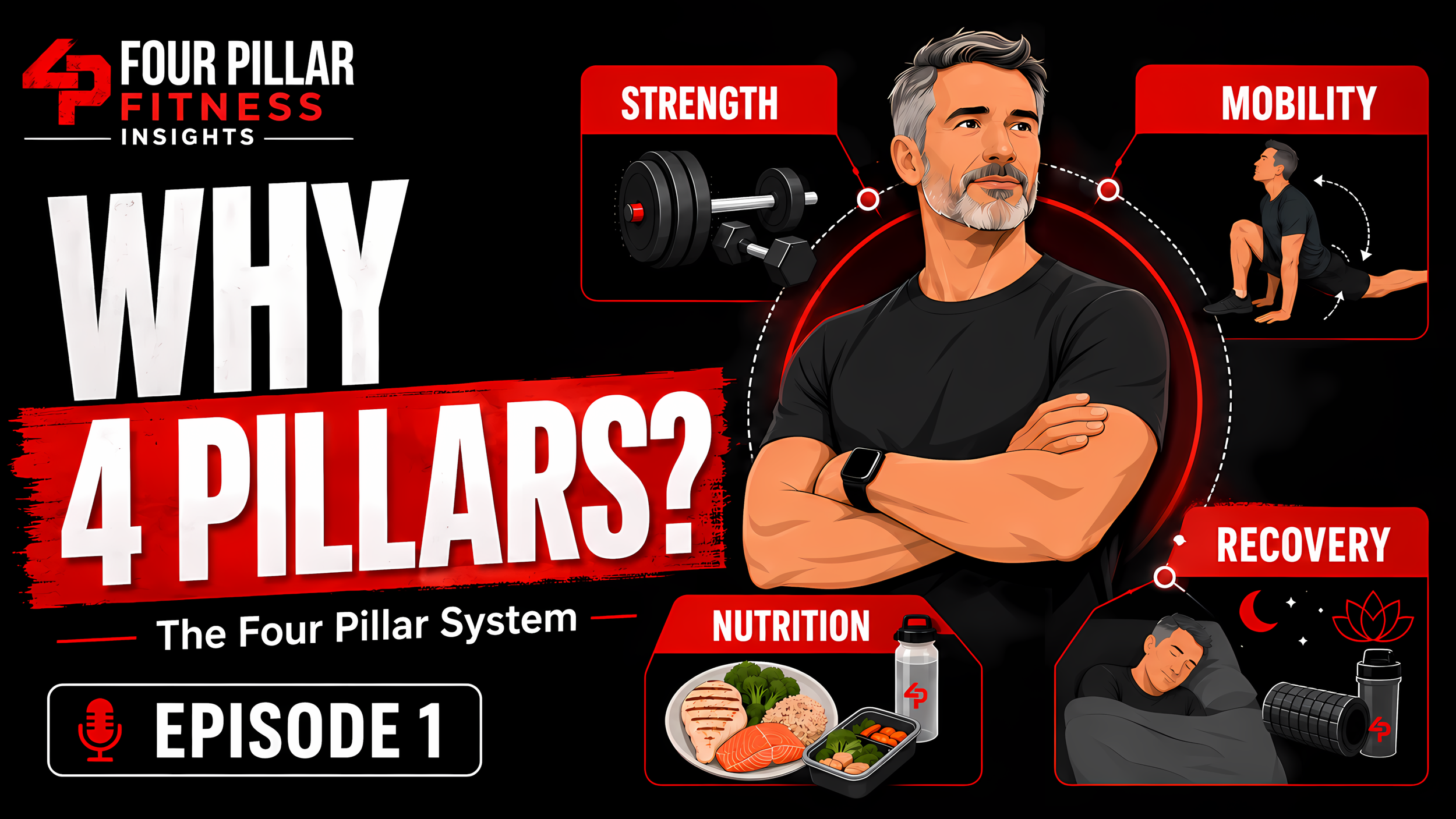
Four Pillar Fitness makes it simple:
Strength gives you the engine
Mobility keeps the machine moving well
Nutrition fuels the work
Recovery makes the results show up
If you want to train like an athlete without feeling wrecked, keep the plan balanced and protect your hard days.
What’s the hardest part for you in a hybrid week right now: fatigue, time, motivation, or figuring out the schedule? Leave a comment below.
Stephan Earl is a NASM Certified Personal Trainer, Nutrition Coach, and Corrective Exercise Specialist dedicated to helping people build lasting strength and mobility at every age. With a focus on practical, sustainable fitness, he combines science-based training with mindful movement and nutrition.
He's the author of Yoga Strong: 100 Asanas for Strength of Body and Mind and the forthcoming book The Four Pillars of Fitness: A Simple, Science-Backed System For Strength and Longevity, which explores how to stay strong, flexible, and energized for life. His mission is to help others move better, feel better, and live fully at every stage of their fitness journey.
Learn More
Four Pillar Fitness is built on one clear idea. Strength, Mobility, Nutrition, and Recovery work together to keep you strong and independent at every age. To dive deeper into each pillar visit 4PFitness.com.
References
Bull, F. C., Al-Ansari, S. S., Biddle, S., Borodulin, K., Buman, M. P., Cardon, G., et al. (2020). World Health Organization 2020 guidelines on physical activity and sedentary behaviour. British Journal of Sports Medicine, 54(24), 1451–1462. https://doi.org/10.1136/bjsports-2020-102955
U.S. Department of Health and Human Services. (2018). Physical Activity Guidelines for Americans (2nd ed.). https://health.gov/sites/default/files/2019-09/Physical_Activity_Guidelines_2nd_edition.pdf
Wilson, J. M., Marin, P. J., Rhea, M. R., Wilson, S. M. C., Loenneke, J. P., & Anderson, J. C. (2012). Concurrent training: A meta-analysis examining interference of aerobic and resistance exercises. Journal of Strength and Conditioning Research, 26(8), 2293–2307. https://doi.org/10.1519/JSC.0b013e31823a3e2d
Coffey, V. G., & Hawley, J. A. (2017). Concurrent exercise training: do opposites distract? The Journal of Physiology, 595(9), 2883–2896. https://doi.org/10.1113/JP272270
Robineau, J., Babault, N., Piscione, J., Lacome, M., & Bigard, A. X. (2016). Specific training effects of concurrent aerobic and strength exercises depend on recovery duration. Journal of Strength and Conditioning Research, 30(3), 672–683. https://doi.org/10.1519/JSC.0000000000000798
Vikestad, V., & Dalen, T. (2024). Effect of strength and endurance training sequence on endurance performance. Sports, 12(8), 226. https://doi.org/10.3390/sports12080226
Jäger, R., Kerksick, C. M., Campbell, B. I., Cribb, P. J., Wells, S. D., Skwiat, T. M., et al. (2017). International Society of Sports Nutrition Position Stand: protein and exercise. Journal of the International Society of Sports Nutrition, 14, 20. https://doi.org/10.1186/s12970-017-0177-8
Cleveland Clinic. (n.d.). Rate of Perceived Exertion (RPE) Scale. https://my.clevelandclinic.org/health/articles/17450-rated-perceived-exertion-rpe-scale
Watson, N. F., Badr, M. S., Belenky, G., Bliwise, D. L., Buxton, O. M., Buysse, D., et al. (2015). Recommended amount of sleep for a healthy adult: A joint consensus statement of the American Academy of Sleep Medicine and Sleep Research Society. Journal of Clinical Sleep Medicine, 11(6), 591–592. https://doi.org/10.5664/jcsm.4758
Hirshkowitz, M., Whiton, K., Albert, S. M., Alessi, C., Bruni, O., DonCarlos, L., et al. (2015). National Sleep Foundation’s updated sleep duration recommendations: final report. Sleep Health, 1(4), 233–243. https://doi.org/10.1016/j.sleh.2015.10.004
More Health & Fitness Insights…
Visit the 4P Fitness PRO Shop
Gear up with fitness-inspired apparel, drinkware, journals, instant downloads, and a little gym and coach humor for the people who train hard, recover smart, and still know how to laugh between sets.
Shop the 4P Fitness Pro Shop and find something that fits your fitness life.

The 4P Fitness Pro Shop Gift Card is a simple, flexible gift for lifters, athletes, coaches, clients, and everyday warriors. Available from $25 to $200, it lets them choose apparel, drinkware, fitness gear, books, journals, or other 4P Fitness favorites. No sizing guesswork. No color worries. Just motivation they can pick for themselves.
Features
Available in denominations from $25 to $200
Redeemable toward eligible products in the 4P Fitness Pro Shop
Great for apparel, drinkware, fitness accessories, books, journals, and more
Perfect for athletes, gym lovers, coaches, clients, and fitness-minded friends
A flexible gift option for holidays, birthdays, milestones, and special occasions
No physical product required, making it easy to send and easy to use