

The GLP-1 Muscle Crisis: How to Preserve Lean Mass While Losing Weight
A few years ago, most people chasing fat loss were asking one big question: “How do I lose weight fast?” Now in 2026, a different question is taking over: “How do I lose weight on a GLP-1 medication without losing muscle too?” That shift is real. The American College of Sports Medicine placed exercise for weight management among its top fitness trends for 2026 and specifically noted the growing role of obesity medications such as GLP-1 receptor agonists. At the same time, more coverage is focusing on a real concern during rapid weight loss: loss of lean mass, not just body fat. That distinction matters. Lean mass includes muscle, but it also includes other fat-free tissues and body water. In everyday conversation people often say “muscle loss,” but the research usually measures changes in lean mass or fat-free mass.
That concern is valid. But let’s get one thing straight right away. GLP-1 medications are not the villain here. For many people, they are a useful medical tool. They can support meaningful weight loss, improve blood sugar control, and lower cardiometabolic risk when prescribed appropriately. The real problem starts when someone loses weight without a plan to protect strength, function, and lean tissue along the way.
That is where a lot of people get into trouble, especially when fast weight loss becomes the only goal.

Losing weight is not the same as improving your body
Before we go further, here is the key point: lean mass is not exactly the same thing as skeletal muscle. Muscle is a major part of lean mass, but it is not the whole category. That means headlines about “GLP-1 muscle loss” often simplify what the studies actually measure.
When the scale drops, people celebrate. I get it. Progress feels good. But the scale does not tell you what you lost. It cannot tell the difference between body fat, water, glycogen, and lean tissue. If you lose a lot of weight but also lose a meaningful amount of lean mass, that is not a clear win in the long run. And if part of that lean mass loss includes actual muscle tissue, that becomes even more important for strength, function, and metabolic health.
Muscle and other lean tissues matter for much more than appearance. They help support resting metabolic rate, blood sugar control, physical function, strength, mobility, and healthy aging. In older adults especially, protecting lean mass is closely tied to preserving independence and reducing frailty risk. Recent research on GLP-1 and GLP-1/GIP medications shows that weight loss usually includes substantial fat loss along with a smaller, but still important, reduction in fat-free mass. The good news is that fat loss still accounts for the majority of weight lost in many cases. The bad news is that too many people are doing nothing to improve that ratio.
That is the real crisis. Not just weight loss. Unmanaged lean mass loss during weight loss.
Why GLP-1 users are at higher risk of losing lean mass
GLP-1 medications help reduce appetite and food intake. That is one reason they work. But eating less can become a problem when protein intake falls too low, total calories drop too hard, and strength training disappears from the weekly routine.
This is where many people make a costly mistake. They assume that because the medication is helping with appetite, exercise and nutrition matter less. In reality, they matter more. A 2025 review on optimizing GLP-1 therapies noted that strategies to help preserve lean mass include protein intakes above 1.2 grams per kilogram per day, spread evenly across meals, combined with resistance training. Other reviews and trials point in the same direction: exercise, especially resistance training, helps improve the quality of weight loss by helping preserve lean tissue.
In plain English, here is what that means: if your appetite is low, your protein is low, and you are not giving your muscles a reason to stay, your body may start giving up lean tissue along with body fat.
That is bad for body composition. It's bad for performance. And over time, it may be bad for healthy aging.
The Three-Part Fix: Lift, eat protein, and stop chasing the smallest body possible
If you are on a GLP-1 medication, or coaching someone who is, the goal should not be “lose as much as possible.” The goal should be “lose fat while keeping strength, function, and as much lean mass as possible.”
Here's the simple framework.
1. Prioritize strength training
This is the anchor. Strength training is the main signal that tells your body, “This tissue is still needed.” The Centers for Disease Control and Prevention recommend muscle-strengthening work at least two days per week for all major muscle groups. For body composition and longevity, many adults do well with two to four well-designed sessions each week.
You don't need marathon workouts. You do need consistency.
Focus on the basics:
Squat or leg press
Hinge pattern like deadlifts or Romanian deadlifts
Push movements
Pull movements
Carries, core work, and basic mobility
Think progressive overload, not punishment. A little more load, a few more reps, or better control over time. That is what helps keep muscle on the body.
There is also good reason to combine lifting with regular walking or other aerobic activity. Adults should still aim for at least 150 minutes of moderate-intensity aerobic activity each week for general health, and walking is often one of the most realistic places to start.
2. Eat enough protein, even if your appetite is low
This is where GLP-1 users often fall short. If you are eating much less, your protein needs do not magically disappear. In fact, protecting lean mass may require more intentional protein planning. Current reviews on GLP-1 therapy and lean mass preservation point toward protein targets above 1.2 grams per kilogram per day as a useful strategy. Broader healthy-aging research also suggests that many adults, especially older adults, benefit from protein intakes above the basic Recommended Dietary Allowance of 0.8 grams per kilogram per day. Older research on meal distribution also supports aiming for about 25 to 30 grams of protein per meal as a practical target.
That means protein should not be an afterthought. It should be built into breakfast, lunch, dinner, and possibly one snack.
Simple options include Greek yogurt, eggs, chicken, fish, lean beef, cottage cheese, protein smoothies, tofu, tempeh, and other high-protein meals that are easier to tolerate when hunger is low.
3. Avoid aggressive under-eating
Yes, these medications reduce appetite. That does not mean your best move is to eat like a bird and call it discipline. If the calorie deficit gets too extreme, training quality drops, recovery slips, and the risk of losing lean mass goes up. Meta-analytic evidence outside the GLP-1 setting also shows that energy deficiency can impair lean mass gains during resistance training. That should be a warning sign for anyone chasing the fastest possible drop on the scale.
That's why fast weight loss is not always smart weight loss. The goal is not to become smaller at any cost. The goal is to become healthier with a stronger engine.
What I’d tell a client using a GLP-1 right now
I’d tell them this:
Use the medication if it is medically appropriate and prescribed by your doctor. But do not act like the medication replaces the work. It does not. It changes the playing field, and now your job is to protect what matters.
Track your protein. Lift weights each week. Walk regularly. Sleep well. Stay hydrated. Monitor your strength, not just your scale weight.
If your body weight is dropping but your lifts are crashing, your recovery is poor, and you are eating barely any protein, that is a warning sign. You may be losing more than fat.
And here is the part many people miss: preserving muscle is not just about looking toned. It is about protecting metabolic health, movement quality, and independence for the long haul. That is why this topic belongs squarely inside the world of strength training for longevity.
In Closing
GLP-1 medications can be a useful tool. For some people, they can be life-changing. But body weight alone is not the whole story.
If you want better health, better function, and a body that serves you for decades, you cannot just chase weight loss. You have to protect lean mass while the fat comes off.
That means combining smart medical care with smart training and nutrition.
Your path to strength and longevity should involve science, but it doesn’t have to be rocket science.
Lift. Eat protein. Recover well. Lose fat, not your foundation.
If you were using a GLP-1 for weight loss, would your bigger concern be losing fat fast, or keeping your strength and muscle while the weight comes down? Leave a comment below.

Stephan Earl is a NASM Certified Personal Trainer, Nutrition Coach, and Corrective Exercise Specialist dedicated to helping people build lasting strength and mobility at every age. With a focus on practical, sustainable fitness, he combines science-based training with mindful movement and nutrition.
He's the author of Yoga Strong: 100 Asanas for Strength of Body and Mind and the forthcoming book The Four Pillars of Fitness: A Simple, Science-Backed System For Strength and Longevity, which explores how to stay strong, flexible, and energized for life. His mission is to help others move better, feel better, and live fully at every stage of their fitness journey.
Learn More
Four Pillar Fitness is built on one clear idea. Strength, Mobility, Nutrition, and Recovery work together to keep you strong and independent at every age. To dive deeper into each pillar visit 4PFitness.com.
References
Centers for Disease Control and Prevention. Adult Activity: An Overview.
American College of Sports Medicine. The Future of Fitness: ACSM Announces Top Trends for 2026.
Wang Z, et al. Body Composition Changes After Bariatric Surgery or GLP-1 Receptor Agonist Treatment.JAMA Network Open, 2026.
Noronha JC, et al. Optimizing GLP-1 therapies for obesity and diabetes. 2025.
Tinsley GM, et al. Preservation of lean soft tissue during weight loss induced by GLP-1 receptor agonism and caloric restriction. 2025.
Rossi G, et al. Muscle loss and GLP-1R agonists use. 2025.
Codella R, et al. GLP-1 agonists and exercise: the future of lifestyle prioritization. 2025.
Nowson C, O'Connell S. Protein Requirements and Recommendations for Older People. 2015.
Paddon-Jones D, Rasmussen BB. Protein and healthy aging.American Journal of Clinical Nutrition, 2015.
Murphy C, Koehler K. Energy deficiency impairs resistance training gains in lean mass but not strength: A meta-analysis and meta-regression. 2022.
Jensen SBK, et al. Bone Health After Exercise Alone, GLP-1 Receptor Agonist Treatment, or Both Combined in Adults With Obesity: A Randomized Clinical Trial.JAMA Network Open, 2024.
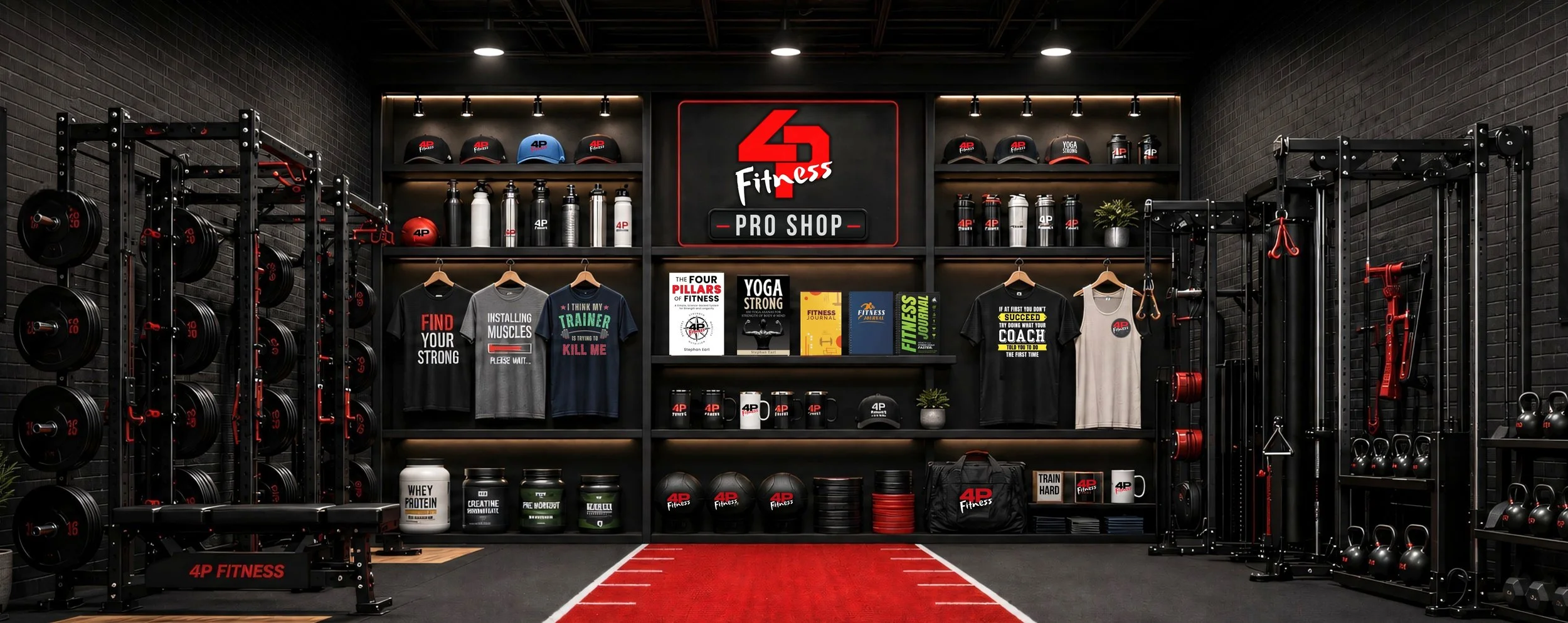
Gear up with fitness-inspired apparel, drinkware, journals, instant downloads, and a little gym and coach humor for the people who train hard, recover smart, and still know how to laugh between sets.
Shop the 4P Fitness Pro Shop and find something that fits your fitness life.

The 4P Fitness Pro Shop Gift Card is a simple, flexible gift for lifters, athletes, coaches, clients, and everyday warriors. Available from $25 to $200, it lets them choose apparel, drinkware, fitness gear, books, journals, or other 4P Fitness favorites. No sizing guesswork. No color worries. Just motivation they can pick for themselves.
Features
Available in denominations from $25 to $200
Redeemable toward eligible products in the 4P Fitness Pro Shop
Great for apparel, drinkware, fitness accessories, books, journals, and more
Perfect for athletes, gym lovers, coaches, clients, and fitness-minded friends
A flexible gift option for holidays, birthdays, milestones, and special occasions
No physical product required, making it easy to send and easy to use