

The Longevity Blueprint: Peptides for the "Over 40" Athlete
If you're over 40 and still hitting the gym, you've likely noticed that things feel a bit different. Recovery takes longer. That nagging shoulder tweak doesn't just "go away" overnight anymore. You might feel like you're working twice as hard just to stay in the same place.
We recently looked at how peptides are trending in 2026, but today I want to focus on why these tools are so helpful for those of us in the "over 40" crowd. Let's see if we can do this in a way that refers to the science without making this rocket science.
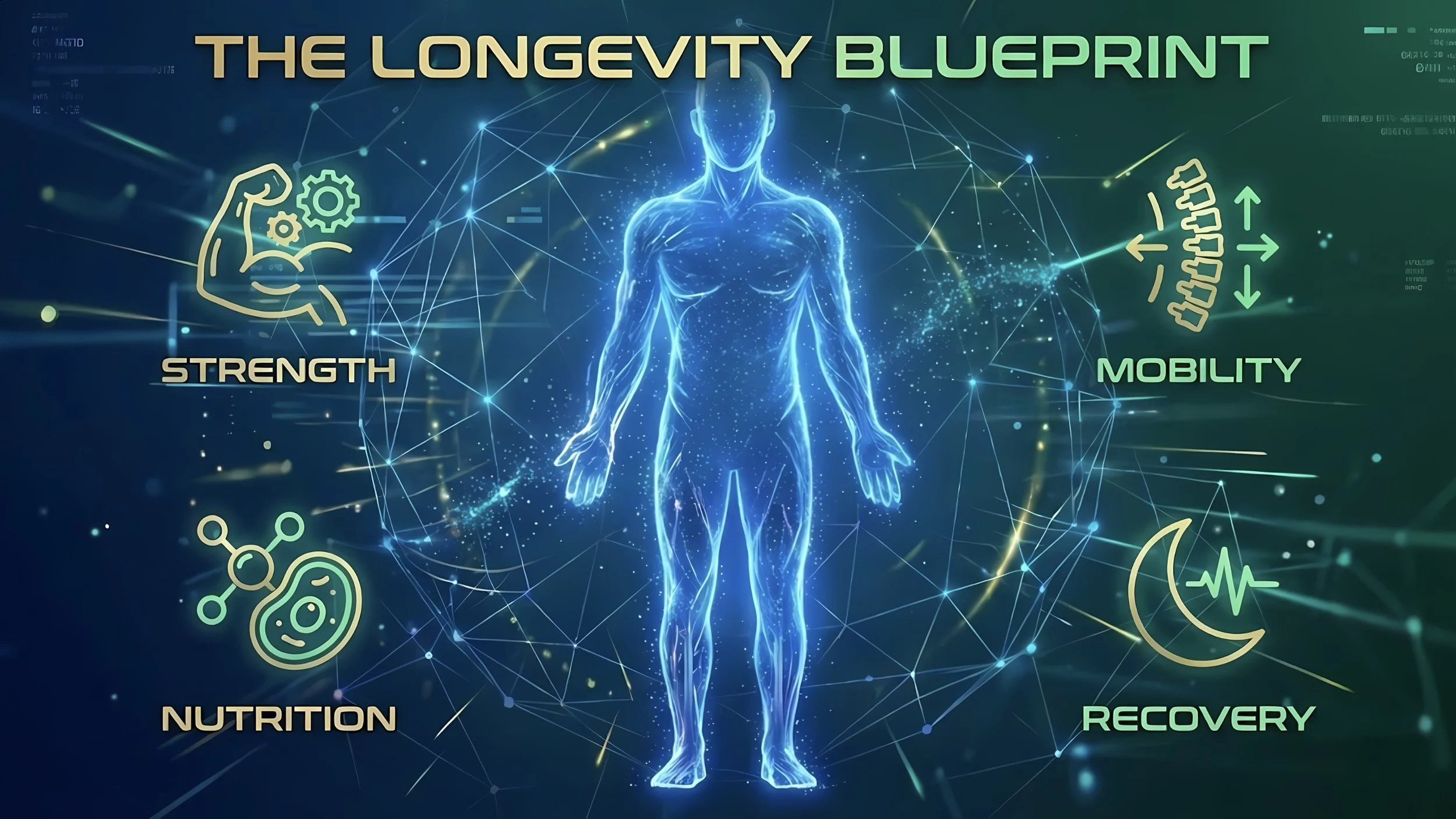
When we talk about my Four Pillars of Fitness—Strength, Mobility, Nutrition, and Recovery—the "Recovery" pillar is usually the first one to crumble as we age. But there's a reason for that, and it's hidden in your biology.
The Science: Why the Dip Happens
As we cross the age of 40, our bodies naturally start to slow down the production of key growth factors. One of the biggest players is called IGF-1 (Insulin-like Growth Factor 1). This hormone is like the foreman on a construction site. It tells your cells to repair tissue, build muscle, and keep your bones strong.
Studies show that IGF-1 levels drop significantly as we get older (1). When this foreman goes on vacation, your body’s ability to "bounce back" from a hard workout drops with it. This isn't just about feeling tired; it's about a real biological change where your muscle cells become less responsive to the work you're doing. This "anabolic resistance" means that even if you're eating right and lifting hard, your body might struggle to actually build the new tissue it needs (4). This is where a "Pillar-based" approach to recovery becomes vital.
Peptides: A Nudge in the Right Direction
Peptides aren't magic, and they aren't steroids. They're short chains of amino acids that act as messengers. Think of them as a "nudge" to help your body remember how to heal itself like it did in its 20s.
For the "Over 40" athlete, two main types of peptides are changing the game in 2026:
1. Growth Hormone Secretagogues (CJC-1295 & Ipamorelin)
These peptides don't replace your hormones. Instead, they signal your pituitary gland to release its own natural stores of growth hormone. This can lead to better sleep, improved fat metabolism, and faster muscle repair (2). CJC-1295 works like a slow-burning candle to keep your levels steady, while Ipamorelin provides a more immediate "pulse" of activity.
The real secret weapon here is the sleep. Growth hormone is mostly released while you're in deep, non-REM sleep. By helping your body reach these deeper stages, these peptides ensure you wake up feeling refreshed rather than feeling like you've been hit by a truck. By pairing these with solid Mobility work, you're giving your joints the biological "grease" they need to stay fluid and pain-free.
2. The "Wolverine" Healing Peptides (BPC-157)
BPC-157 is often called the "Body Protection Compound." While more human research is still happening, early studies and clinical use show it's incredible at helping tendons and ligaments heal (3). Unlike muscle, which has a lot of blood flow, tendons and ligaments are like dry sponges—they're hard to "hydrate" with the nutrients they need to fix themselves.
BPC-157 helps by encouraging the growth of new blood vessels, a process called angiogenesis. This brings more "construction materials" to the site of an old injury, helping your body build stronger connective tissue instead of just patching things up with stiff scar tissue. For an athlete over 40, keeping those connective tissues healthy is the secret to staying in the game longer.
The Pillar-Based Strategy
Using peptides shouldn't be your only strategy. It works best when you lean on all four pillars:
Strength:Keep lifting heavy to maintain bone density. Peptides can support your strength by boosting protein synthesis, which helps you maintain that lean muscle mass even as your natural hormone levels dip.
Mobility:Use your increased recovery to push for better range of motion. When your tissues aren't constantly inflamed or sore, you can actually improve how your joints move rather than just managing pain.
Nutrition: Feed your body the protein it needs to actually do the repairs the peptides are signaling for. Peptides are the messengers, but amino acids from your food are the bricks and mortar. Without enough protein, the message to "build" won't have the materials to finish the job.
Recovery: Use tools like peptides under medical supervision to bridge the age gap. Think of it as keeping your recovery engine tuned up so you can keep your foot on the gas in the gym.
Final Note from Coach
I always tell my clients that peptides are powerful tools, but they aren't magic. You can't "out-peptide" a bad diet or a lack of sleep. If your lifestyle is a mess, these messengers won't have the right environment to do their jobs. My job as your coach is to help you build the Four Pillars of Fitness first: Strength, Mobility, Nutrition, and Recovery.
Once those pillars are solid, we can look at these advanced tools to take your results to the next level. You don't have to accept "slowing down" as a part of life. By understanding the science of how your body ages and keeping your core habits in check, we can use modern technology to keep your internal systems running at their best.
Keep training smart, keep moving, and remember that science is your best teammate.
What's the biggest recovery challenge you've faced since turning 40, and do you think a "nudge" from science could help you stay in the game? Leave a coment below.

Stephan Earl is a NASM Certified Personal Trainer, Nutrition Coach, and Corrective Exercise Specialist dedicated to helping people build lasting strength and mobility at every age. With a focus on practical, sustainable fitness, he combines science-based training with mindful movement and nutrition.
He's the author of Yoga Strong: 100 Asanas for Strength of Body and Mind and the forthcoming book The Four Pillars of Fitness: A Simple, Science-Backed System For Strength and Longevity, which explores how to stay strong, flexible, and energized for life. His mission is to help others move better, feel better, and live fully at every stage of their fitness journey.
Learn More
Four Pillar Fitness is built on one clear idea. Strength, Mobility, Nutrition, and Recovery work together to keep you strong and independent at every age. To dive deeper into each pillar visit 4PFitness.com.
References
Junnila, R. K., et al. (2013). "The GH/IGF-1 Axis in Ageing and Longevity." Nature Reviews Endocrinology.
Teichman, S. L., et al. (2006). "Prolonged Stimulation of Growth Hormone (GH) and Insulin-Like Growth Factor I (IGF-I) Secretion by CJC-1295." The Journal of Clinical Endocrinology & Metabolism.
Sikiric, P., et al. (2025). "BPC 157 Therapy: Targeting Angiogenesis and Musculoskeletal Healing." Pharmaceuticals.
Dillon, E. L., et al. (2024). "Age-Associated Differences in Recovery from Exercise-Induced Muscle Damage." PMC.
Disclaimer: Stephan Earl is a NASM Certified Personal Trainer and Nutrition Coach. This article is for educational purposes only. Always consult with a medical professional before starting any new supplement or peptide protocol.
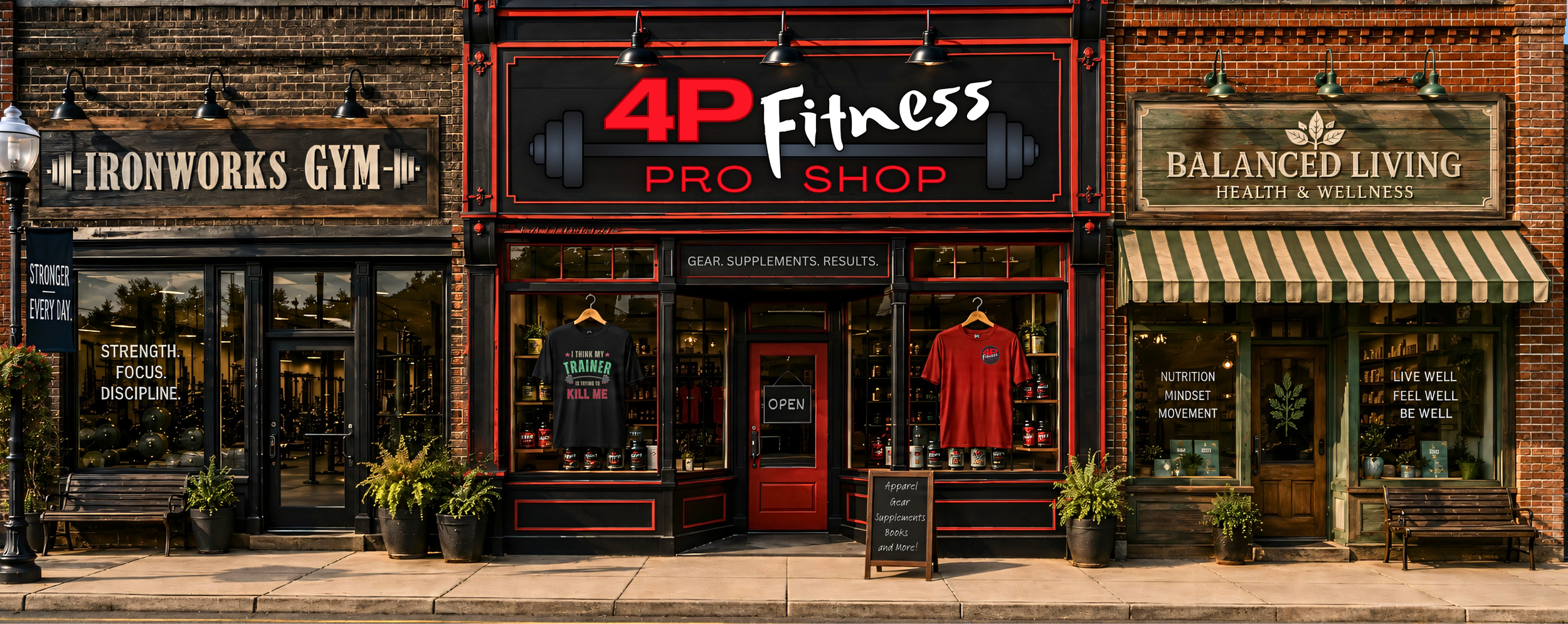
Gear up with fitness-inspired apparel, drinkware, journals, instant downloads, and a little gym and coach humor for the people who train hard, recover smart, and still know how to laugh between sets.
Shop the 4P Fitness Pro Shop and find something that fits your fitness life.

The 4P Fitness Pro Shop Gift Card is a simple, flexible gift for lifters, athletes, coaches, clients, and everyday warriors. Available from $25 to $200, it lets them choose apparel, drinkware, fitness gear, books, journals, or other 4P Fitness favorites. No sizing guesswork. No color worries. Just motivation they can pick for themselves.
Features
Available in denominations from $25 to $200
Redeemable toward eligible products in the 4P Fitness Pro Shop
Great for apparel, drinkware, fitness accessories, books, journals, and more
Perfect for athletes, gym lovers, coaches, clients, and fitness-minded friends
A flexible gift option for holidays, birthdays, milestones, and special occasions
No physical product required, making it easy to send and easy to use