

Lift for Your Brain: How Strength Training Supports Memory, Focus, and Healthy Aging
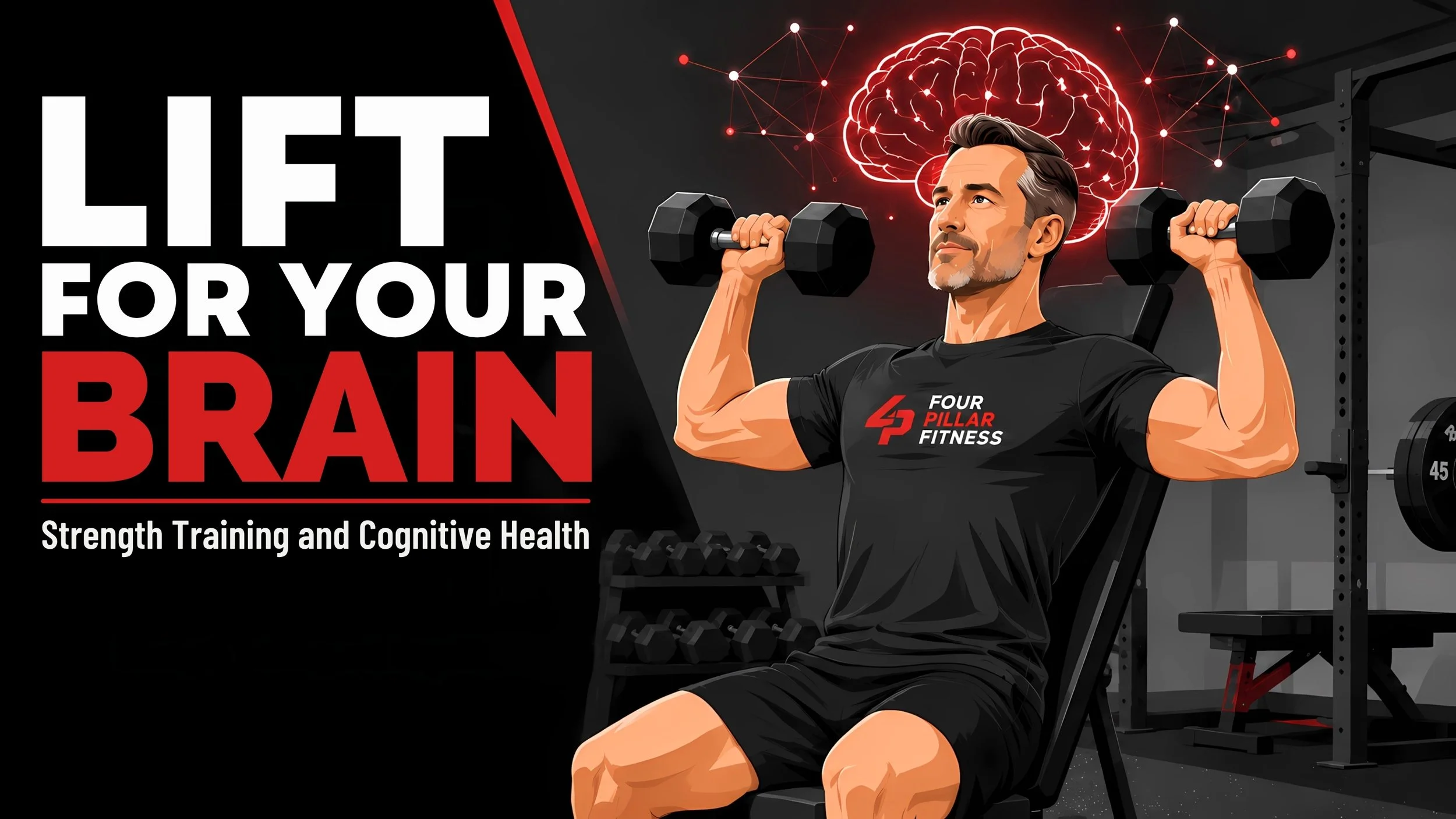
Strength training is not just for muscle. New research suggests it may also support brain health, cognitive function, and healthy aging.
Most people start strength training for reasons they can see or feel. They want stronger legs, better posture, less joint pain, more muscle, better body composition, or the confidence that comes from knowing they can handle daily life with less struggle. Those are all great reasons to train, but they’re not the whole story.
A growing body of research suggests that lifting weights may also support the brain. Strength training challenges your muscles, bones, joints, balance, coordination, nervous system, and attention. It asks your body and brain to work together. Over time, that repeated challenge may help support memory, focus, mood, and healthier brain aging.
What the 2026 Brain Aging Study Found
In February 2026, researchers published a randomized controlled trial in GeroScience titled “Randomized Controlled Trial of Resistance Exercise and Brain Aging Clocks.” The study used data from the Live Active Successful Aging trial, also known as LISA, and included 309 adults between the ages of 62 and 70.
Participants were assigned to one of three groups: heavy resistance training, moderate-intensity resistance training, or a non-exercise control group. The researchers used resting-state functional magnetic resonance imaging (fMRI) and brain clock models to estimate brain age based on patterns of brain connectivity.
Here’s the key finding in plain English: resistance training was associated with a lower estimated brain age compared with the control group. The study reported that moderate and heavy resistance training reduced estimated brain age by about 1.4 to 2.3 years across the follow-up period. Heavy resistance training also showed increased functional connectivity in prefrontal areas of the brain, which are tied to higher-level thinking and self-regulation.
That matters because the prefrontal cortex is involved in planning, attention, decision-making, and self-control. That’s the part of the brain you rely on for focus, better choices, and follow-through when motivation is having a lazy day.
Now, let’s keep this grounded. This study does not prove that strength training prevents dementia. It doesn’t mean everyone who lifts weights will have a younger brain, and it doesn’t mean heavy training is automatically better. But it does support a practical message: resistance training appears to have benefits that reach beyond the mirror, the scale, and the squat rack.










Why Strength Training May Support the Brain
Strength training is often described as a muscle-building tool, but that’s too narrow. Every rep is a conversation between your brain and body. Your brain sends signals through the nervous system. Your muscles respond. Your joints provide feedback. Your breathing, balance, and attention help you control position, tempo, and effort.
That’s not just exercise. That’s brain-body training.
This is especially true with movements that require coordination, posture, and awareness. A squat, deadlift, row, lunge, carry, or push-up is not just a muscle task. It’s a full-body skill. You have to organize your body in space, create tension, control movement, and adjust based on feedback.
Strength training may also support the brain through several pathways. It can support better blood flow and vascular health, which matters because the brain depends on healthy circulation. It can improve insulin sensitivity, which matters because poor blood sugar control is associated with cognitive decline over time.
It may also help reduce chronic low-grade inflammation and support better sleep and mood. A consistent training routine can help some people regulate stress, build confidence, and sleep better.
Finally, strength training improves physical capacity. When you’re stronger, more mobile, and more confident, you’re more likely to stay active, independent, and engaged with life.
What Other Research Says
A 2025 systematic review and meta-analysis published in Frontiers in Psychiatry looked at randomized controlled trials on resistance exercise and cognitive function in older adults. The review included 17 trials with 739 participants aged 60 and older. The researchers found that resistance training was associated with improvements in overall cognitive function, working memory, verbal learning and memory, and spatial memory span.
That doesn’t mean every area of cognition improved. That keeps the message honest. Strength training is not a magic bullet. It’s one powerful tool among several.
Earlier research also supports the idea. A 2010 randomized controlled trial found that resistance training once or twice per week improved selective attention and conflict resolution in older women. A 2020 randomized controlled trial found that instability resistance training improved working memory, processing speed, and response inhibition in healthy older adults.
Not every study shows the same result, and that’s normal in exercise science. But when we step back, the direction is strong enough to matter. Strength training is not just about muscle. It may also be part of a brain-health lifestyle.
What Kind of Strength Training Is Best
The research does not give us one perfect routine. That’s okay. Most people don’t need a perfect routine. They need a consistent one.
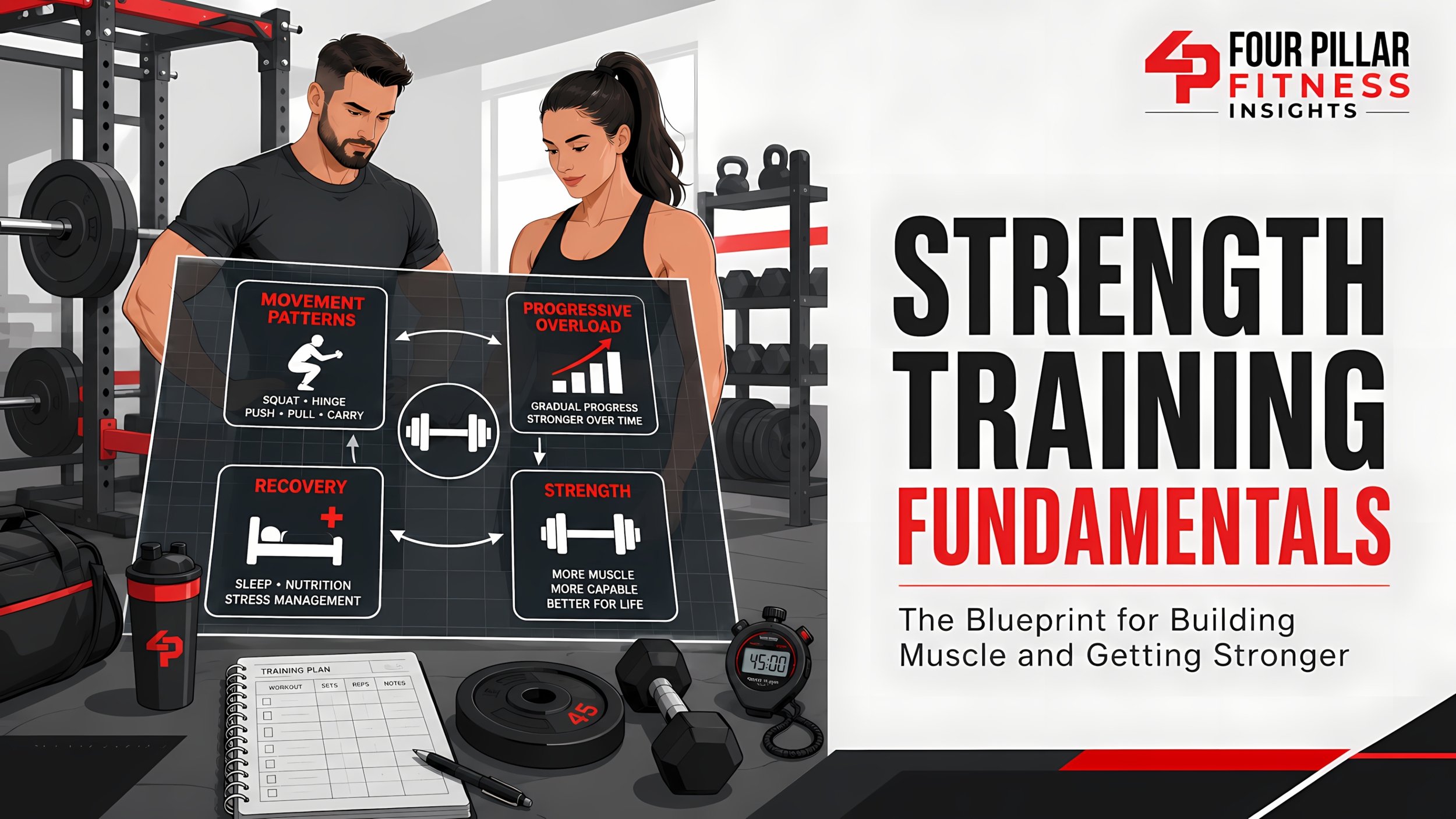
A practical goal is to strength train two to four days per week, depending on your schedule, fitness level, recovery, and goals. For most adults, a simple full-body approach works well. Include a mix of squat, hinge, push, pull, carry, and core stability movements across the week.
You don’t have to train like a competitive powerlifter to get benefits. Heavy training can be useful, but it has to be appropriate. Moderate training done consistently can also matter. That’s one reason the 2026 study is encouraging. Both heavy and moderate resistance training were associated with reduced estimated brain age compared with the control group.
A simple three-day plan could include one lower-body movement, one upper-body push, one upper-body pull, one hinge or glute movement, one carry or core exercise, and five to ten minutes of mobility work. That small dose of mobility matters because better movement quality helps make strength training more sustainable.
Keep most working sets in the moderate effort range. On a scale of 1 to 10, many sets should feel like a 7 or 8. That means the set is challenging, but you’re not grinding like your life depends on it. Start with two to three sets per exercise, use a weight you can control, and progress gradually.
For brain health, don’t rush through every rep like you’re trying to escape the gym before someone asks you to do burpees. Focus. Breathe. Control the movement. Feel your position. Strength training works better when your brain is actually invited to the party.
Don’t Forget Walking, Sleep, and Food
Strength training is powerful, but it doesn’t carry the whole load by itself. Walking supports circulation, blood sugar control, recovery, and stress management. It’s one of the simplest ways to add more movement without beating up your joints.
Sleep supports memory, learning, mood, hormones, muscle repair, and appetite regulation. If you train hard but sleep like a raccoon in a dumpster, your results will suffer.
Nutrition matters too. A brain-supportive fitness plan should include enough protein, fiber-rich carbohydrates, healthy fats, and plenty of colorful plants. Protein helps repair and preserve muscle. Carbohydrates support training energy. Healthy fats and micronutrients support the systems that help your brain and body function well.
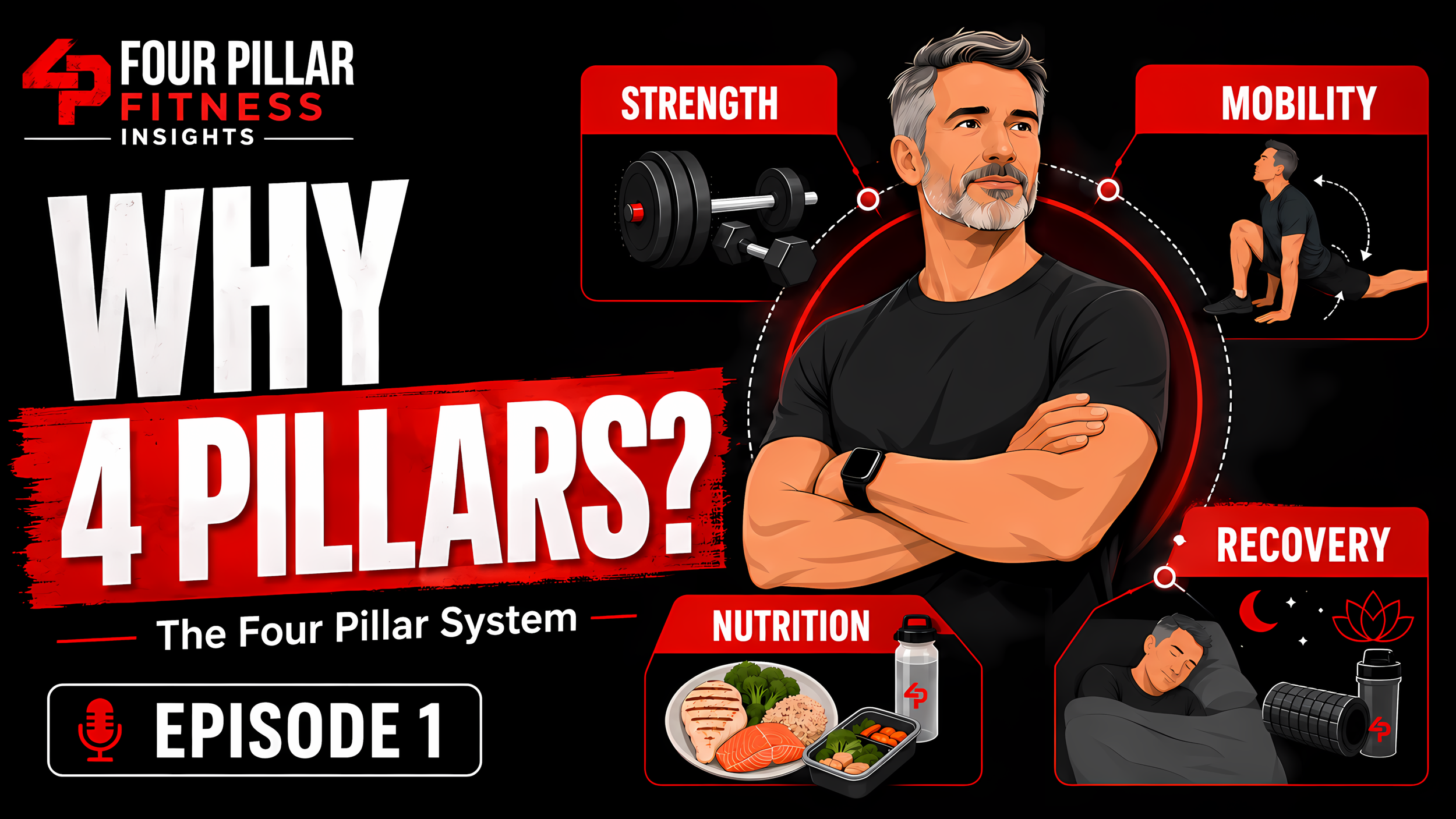
This is where smart training beats random effort. Strength gives your body a reason to adapt. Mobility helps you move well enough to keep training. Nutrition provides the building blocks. Recovery gives your brain and body time to rebuild.
What This Does Not Mean
Let’s keep this grounded. Strength training is not a cure for dementia. It doesn’t guarantee better memory. It doesn’t replace medical care. It doesn’t mean everyone should jump into heavy lifting without coaching, preparation, or respect for their current ability.
What the research suggests is more practical and more believable: resistance training may support brain health as part of a consistent lifestyle, especially when paired with good nutrition, regular movement, sleep, and recovery. In a world full of complicated health advice, strength training remains one of the clearest investments you can make.
It helps you build muscle. It supports bone health. It improves function. It can support body composition. It builds confidence. And research continues to suggest it may also help support the aging brain.
Not bad for picking things up and putting them down with purpose.
Putting It All Together
Strength training is often sold as a way to look better. That’s fine, but it undersells the real value. The deeper reason to train is capacity: capacity to move well, handle stress, stay independent, and keep doing the things that make life feel full.
The 2026 brain-aging study gives us one more reason to take resistance training seriously. In older adults, moderate and heavy resistance training were associated with a younger estimated brain age compared with a non-exercise control group. Other research also suggests that resistance training may support certain areas of cognition, including working memory and overall cognitive function.
That doesn’t mean strength training is magic. It means strength training matters. Your muscles are not separate from the rest of you. They’re part of your metabolism, your movement, your independence, and your daily confidence. They may also be connected to how well your brain ages.
So the next time you lift, don’t think of it as just another workout. Think of it as practice for your future self.
Stronger body. Sharper mind. Better life. That’s the real goal.
Your path to strength and longevity should involve science, but it doesn’t have to be rocket science.
Have you noticed that strength training helps your focus, mood, or mental clarity? Share your experience in the comments.
Stephan Earl is a NASM Certified Personal Trainer, Nutrition Coach, and Corrective Exercise Specialist dedicated to helping people build lasting strength and mobility at every age. With a focus on practical, sustainable fitness, he combines science-based training with mindful movement and nutrition.
He's the author of Yoga Strong: 100 Asanas for Strength of Body and Mind and the forthcoming book The Four Pillars of Fitness: A Simple, Science-Backed System For Strength and Longevity, which explores how to stay strong, flexible, and energized for life. His mission is to help others move better, feel better, and live fully at every stage of their fitness journey.
Learn More
Four Pillar Fitness is built on one clear idea. Strength, Mobility, Nutrition, and Recovery work together to keep you strong and independent at every age. To dive deeper into each pillar visit 4PFitness.com.
References
Gonzalez-Gomez, R., Demnitz, N., Coronel, C., Gates, A. T., Kjaer, M., Siebner, H. R., Boraxbekk, C. J., and Ibanez, A. M. (2026). Randomized controlled trial of resistance exercise and brain aging clocks. GeroScience. https://doi.org/10.1007/s11357-026-02141-x
Wu, J., and Huang, C. (2025). A systematic review and meta-analysis of the effects of resistance exercise on cognitive function in older adults. Frontiers in Psychiatry, 16, 1708244. https://doi.org/10.3389/fpsyt.2025.1708244
Liu-Ambrose, T., Nagamatsu, L. S., Graf, P., Beattie, B. L., Ashe, M. C., and Handy, T. C. (2010). Resistance training and executive functions: A 12-month randomized controlled trial. Archives of Internal Medicine, 170(2), 170-178. https://doi.org/10.1001/archinternmed.2009.494
Eckardt, N., Braun, C., and Kibele, A. (2020). Instability resistance training improves working memory, processing speed and response inhibition in healthy older adults: A double-blinded randomised controlled trial. Scientific Reports, 10, 2506. https://doi.org/10.1038/s41598-020-59105-0
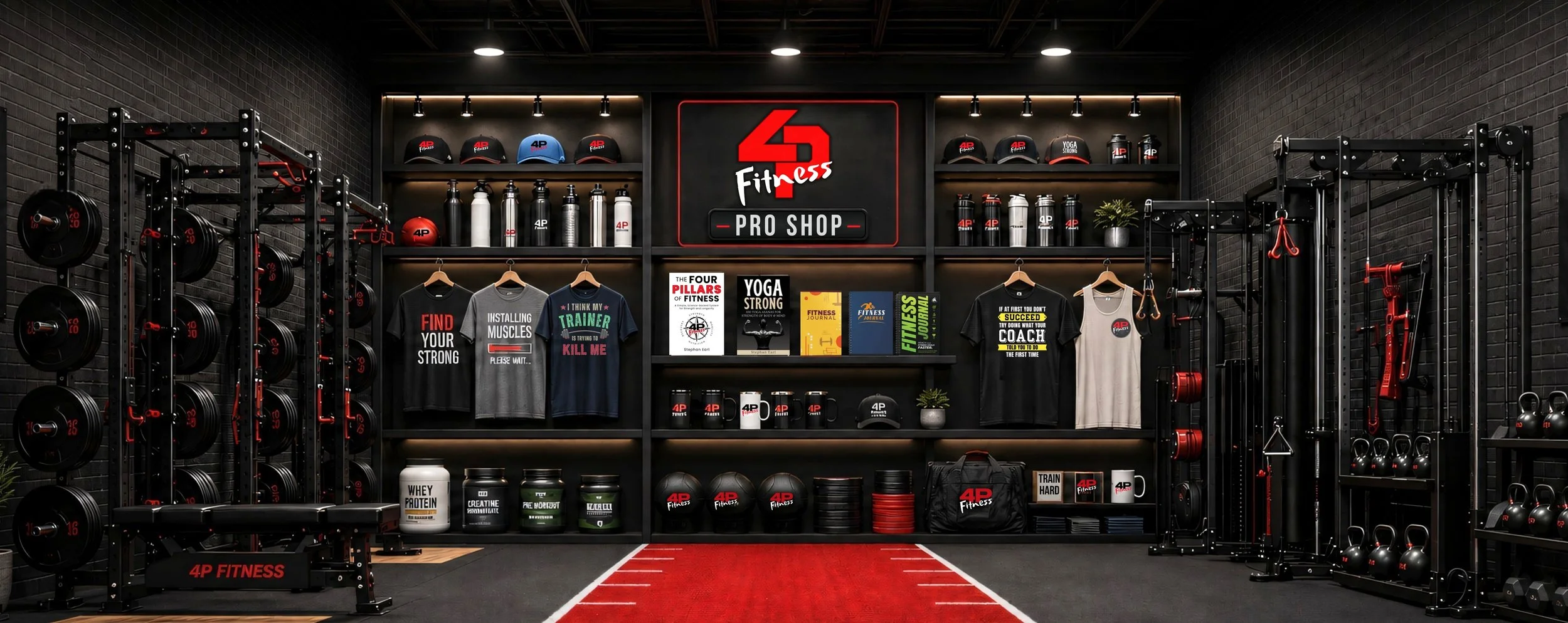
Gear up with fitness-inspired apparel, drinkware, journals, instant downloads, and a little gym and coach humor for the people who train hard, recover smart, and still know how to laugh between sets.
Shop the 4P Fitness Pro Shop and find something that fits your fitness life.



The 4P Fitness Pro Shop Gift Card is a simple, flexible gift for lifters, athletes, coaches, clients, and everyday warriors. Available from $25 to $200, it lets them choose apparel, drinkware, fitness gear, books, journals, or other 4P Fitness favorites. No sizing guesswork. No color worries. Just motivation they can pick for themselves.
Features
Available in denominations from $25 to $200
Redeemable toward eligible products in the 4P Fitness Pro Shop
Great for apparel, drinkware, fitness accessories, books, journals, and more
Perfect for athletes, gym lovers, coaches, clients, and fitness-minded friends
A flexible gift option for holidays, birthdays, milestones, and special occasions
No physical product required, making it easy to send and easy to use