

Why You Feel Strong One Day and Weak the Next
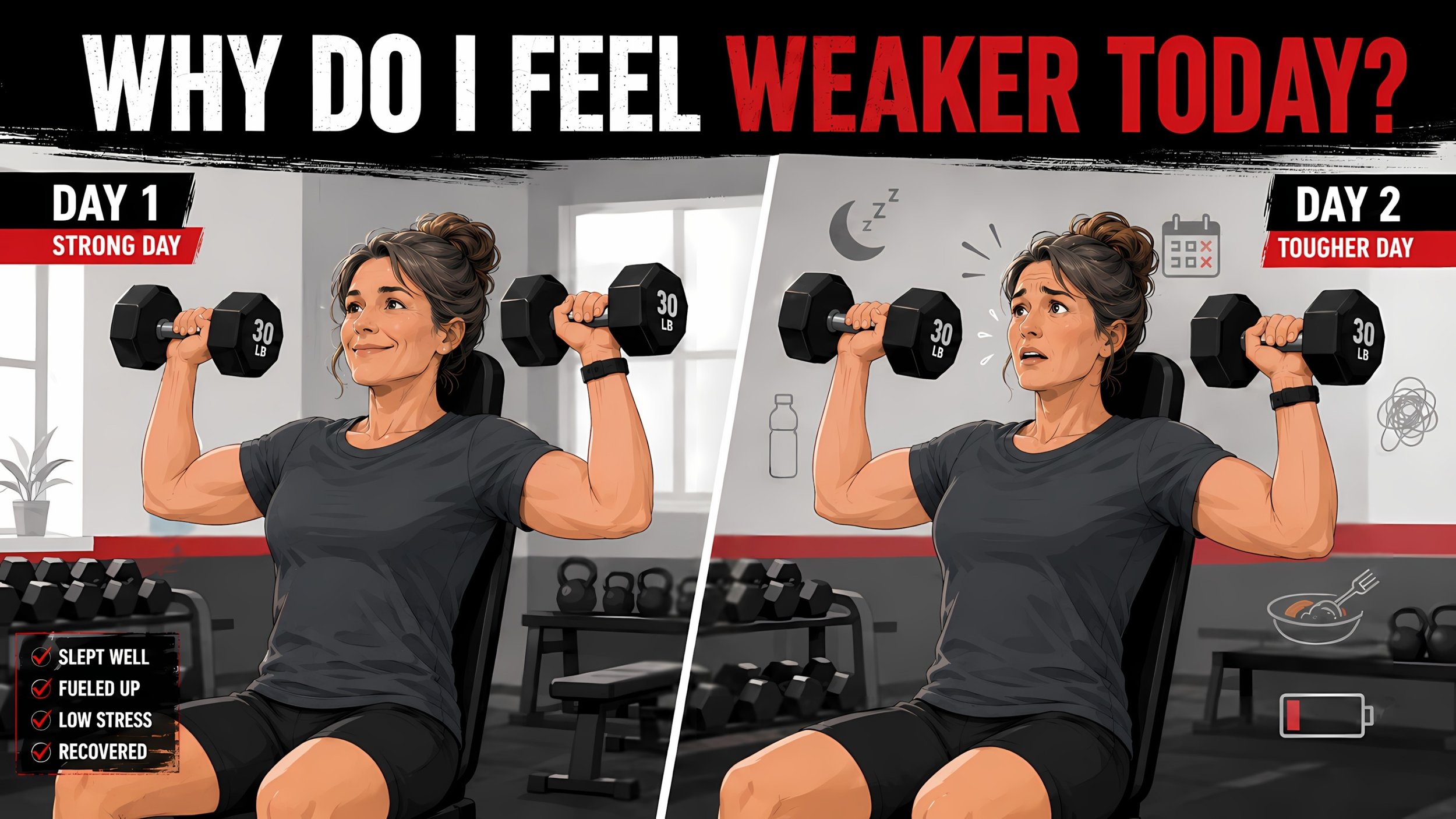
You walk into the gym expecting a normal workout. Last week, a certain weight moved smoothly. Your form felt good, your repetitions were controlled, and you left feeling strong. Then you try the same exercise again, and suddenly the weight feels much heavier.
Your first thought may be, “Am I getting weaker?”
It’s a common concern, but the answer is usually less dramatic than people think. One difficult workout doesn’t mean you’ve lost strength, ruined your progress, or need a new training program.
Strength isn’t a fixed number that shows up exactly the same way every time you train. Your performance can vary based on sleep, stress, nutrition, hydration, accumulated fatigue, exercise order, and several other factors. What matters most is the trend over time, not how one weight feels on one particular day.
Your Strength Has a Range
Most people think of strength as a permanent setting. If you lifted 100 pounds last week, you expect 100 pounds to feel the same this week. In reality, your body doesn’t enter the gym under identical conditions every day.
Think of your body like a phone. The device is the same, but its available power depends on how fully it’s charged and how many apps are running in the background.
There’s an important difference between long-term strength and daily readiness. Long-term strength develops over weeks and months of consistent training. Daily readiness reflects how prepared you are to perform during a particular session.
A lower-readiness day doesn’t erase your progress. It simply means you may not be able to express all your strength at that moment.
Sleep Can Affect the Workout
Sleep supports recovery, concentration, and exercise performance. However, one poor night of sleep doesn’t automatically make you weaker.
Research suggests that a single night of sleep loss may not noticeably reduce strength in every person or exercise. Repeated nights of restricted sleep appear more likely to reduce force production and make workouts feel harder.
That doesn’t mean you should skip training after a restless night. Instead, extend your warm-up, pay attention to your technique, and avoid forcing a personal record when your focus or coordination feels off.
Adjusting your expectations after inadequate sleep isn’t weakness. It’s a practical way to protect the quality of your training.






Stress Follows You Into the Gym
Your body doesn’t completely separate emotional stress from physical stress. Work deadlines, family responsibilities, financial pressure, poor sleep, and demanding training all contribute to your total load.
Research has linked higher psychological stress with slower recovery after resistance exercise. Experts also recognize that athletic recovery depends on balancing training demands with stress from life outside the gym.
You may arrive at the gym physically capable of training but mentally drained. Your concentration may be lower, and your normal level of effort may feel unusually demanding.
Training can still be productive, but not every workout needs to become a performance test. On a stressful day, completing a solid maintenance session may be more useful than chasing numbers your body isn’t ready to deliver.
Food and Carbohydrates Matter, but Context Matters Too
Strength training requires energy, but you don’t need a large carbohydrate load before every workout. Research suggests that additional carbohydrate may provide little benefit for a typical resistance-training session when you’ve eaten normally and the workout volume is moderate.
Carbohydrates may become more useful when you’re training after a long fast, performing a longer session, completing a high volume of hard sets, or consistently eating too little.
For many people, the bigger issue isn’t the lack of a special pre-workout meal. It’s inconsistent eating or an overly aggressive calorie deficit. If you regularly arrive at the gym hungry and low on energy, your performance may suffer.
A simple meal or snack containing protein and carbohydrates before training may help support performance, depending on your schedule, goals, and digestion. The point isn’t to eat heavily before every workout. It’s to avoid consistently asking your body to perform demanding work without enough fuel.
Hydration May Influence Performance
Hydration can affect a workout, particularly when fluid losses become significant. Research indicates that hypohydration may reduce strength, power, and high-intensity exercise performance, although the effect varies between individuals and training conditions.
You don’t need to obsess over every glass of water, but hot weather, heavy sweating, alcohol the previous evening, and long workouts can contribute to a session feeling harder than usual.
Regular fluid intake throughout the day is generally more practical than trying to drink a large amount immediately before training. Your needs will depend on the environment, your workout, and how much you sweat.
The Previous Workout May Still Be With You
Sometimes the explanation is simple: you’re still carrying fatigue from earlier training.
Fatigue can build from hard strength sessions, increased training volume, unfamiliar exercises, intense cardio, sports, or physically demanding work. You may not feel particularly sore, but your body may still be recovering.
Exercises also overlap more than many people realize. Your grip, core, upper back, hips, and stabilizing muscles contribute to multiple movements. What feels like a completely different workout may still involve muscles that haven’t fully recovered.
This is why thoughtful programming matters. Productive training requires enough work to stimulate adaptation and enough recovery to benefit from it.
The Workout May Not Be Truly Identical
Two workouts can look the same in your training log without being identical.
You may perform an exercise later in the session, after other muscles have already become fatigued. You may use a different machine with different leverage. Your rest periods may be shorter, your range of motion may be deeper, or your technique may be stricter.
In some cases, lifting less with better control represents improvement. If you used momentum last week but completed cleaner repetitions this week, the number alone doesn’t tell the full story.
That’s why training numbers need context. The weight matters, but so do the quality of your repetitions, the exercise setup, and where the movement appears within the workout.
What About the Menstrual Cycle?
Some women report changes in energy, comfort, motivation, or perceived effort at different points in the menstrual cycle. Symptoms such as cramping, disrupted sleep, headaches, or fatigue may influence how a particular workout feels.
However, current research suggests that average changes in strength across cycle phases are generally small or inconsistent. The evidence doesn’t support automatically changing an entire training program according to the calendar.
A better approach is to track your own performance, energy, and symptoms over time. If a consistent personal pattern emerges, small adjustments may be useful. If not, there’s no reason to force one.
Let the Warm-Up Guide the Session
Your warm-up does more than prepare your muscles and joints. It also provides information about your readiness.
Pay attention to how the weight moves. Notice your coordination, range of motion, joint comfort, and overall energy. Sometimes you’ll feel sluggish at first and improve as you warm up.
On a green-light day, movement feels smooth and your warm-up weights move well. Continue with the planned session.
On a yellow-light day, you feel slower or less energetic, but your movement remains safe and controlled. You can often train effectively by reducing the load, volume, or intensity slightly.
On a red-light day, you experience sharp pain, dizziness, illness symptoms, unusual weakness, or poor coordination. That’s a reason to stop or significantly modify the workout. Persistent or unexplained weakness should be discussed with a qualified healthcare professional.
Should You Lower the Weight?
Reducing the weight isn’t giving up. It may allow you to maintain good technique, a full range of motion, and productive effort.
You might reduce the load by 5 to 10 percent, perform one fewer set, extend your rest periods, or stop a few repetitions earlier than planned. These are reasonable adjustments, not signs of failure.
Not every hard set requires a change. Some workouts are simply challenging. The decision should be based on your technique, safety, and the purpose of the session rather than frustration or ego.
Don’t Turn Every Workout Into a Test
Training and testing aren’t the same thing. Testing asks, “What’s the most I can do today?” Training asks, “What work will help me improve over time?”
Most workouts should build strength through consistent, high-quality effort. A successful session may mean adding weight, but it may also mean matching last week’s performance, improving your form, completing the planned work, or making a smart adjustment on a low-energy day.
One weaker session usually means very little. Several declining sessions deserve closer attention. If your loads keep dropping and you’re also experiencing persistent fatigue, poor sleep, ongoing soreness, irritability, or low motivation, review your training volume, nutrition, stress, and recovery. A planned reduction in training stress, often called a deload, may sometimes be appropriate.
Keeping a simple training log can help you identify trends instead of relying on memory. Record the exercise, weight, sets, repetitions, and a brief note about effort or recovery. You don’t need to document every detail. A few useful notes can help reveal patterns.
You haven’t necessarily lost strength because a familiar weight felt heavier today. Your performance reflects your training, sleep, stress, nutrition, hydration, recovery, and everything else your body is managing.
Warm up, assess your readiness, make intelligent adjustments when necessary, and keep moving forward. Progress is measured by the overall direction of your training, not one difficult Tuesday.
Have you ever had a workout where your usual weights suddenly felt much heavier? What do you think contributed to it? Leave a comment below.
Stephan Earl is a NASM Certified Personal Trainer, Nutrition Coach, and Corrective Exercise Specialist dedicated to helping people build lasting strength and mobility at every age. With a focus on practical, sustainable fitness, he combines science-based training with mindful movement and nutrition.
He's the author of Yoga Strong: 100 Asanas for Strength of Body and Mind and the forthcoming book The Four Pillars of Fitness: A Simple, Science-Backed System For Strength and Longevity, which explores how to stay strong, flexible, and energized for life. His mission is to help others move better, feel better, and live fully at every stage of their fitness journey.
Learn More
Four Pillar Fitness is built on one clear idea. Strength, Mobility, Nutrition, and Recovery work together to keep you strong and independent at every age. To dive deeper into each pillar visit 4PFitness.com.
References
Knowles OE, Drinkwater EJ, Urwin CS, Lamon S, Aisbett B. Inadequate sleep and muscle strength: Implications for resistance training. Journal of Science and Medicine in Sport. 2018;21(9):959-968.
Craven J, McCartney D, Desbrow B, et al. Effects of acute sleep loss on physical performance: A systematic and meta-analytical review. Sports Medicine. 2022;52:2669-2690.
Stults-Kolehmainen MA, Bartholomew JB. Psychological stress impairs short-term muscular recovery from resistance exercise. Medicine & Science in Sports & Exercise. 2014;46(11):2220-2227.
Kellmann M, Bertollo M, Bosquet L, et al. Recovery and performance in sport: Consensus statement. International Journal of Sports Physiology and Performance. 2018;13(2):240-245.
Henselmans M, Bjørnsen T, Hedderman R, Vårvik FT. The effect of carbohydrate intake on strength and resistance training performance: A systematic review. Nutrients. 2022;14(4):856.
King A, Helms E, Zinn C, Jukic I. The ergogenic effects of acute carbohydrate feeding on resistance exercise performance: A systematic review and meta-analysis. Sports Medicine. 2022;52:2691-2712.
Judelson DA, Maresh CM, Farrell MJ, et al. Effect of hydration state on strength, power, and resistance exercise performance. Medicine & Science in Sports & Exercise. 2007;39(10):1817-1824.
Sawka MN, Burke LM, Eichner ER, et al. American College of Sports Medicine position stand: Exercise and fluid replacement. Medicine & Science in Sports & Exercise. 2007;39(2):377-390.
Blagrove RC, Bruinvels G, Pedlar CR. Variations in strength-related measures during the menstrual cycle in eumenorrheic women: A systematic review and meta-analysis. Journal of Science and Medicine in Sport. 2020;23(12):1220-1227.
Colenso-Semple LM, D’Souza AC, Elliott-Sale KJ, Phillips SM. Current evidence shows no influence of women’s menstrual-cycle phase on acute strength performance or adaptations to resistance exercise training. Frontiers in Sports and Active Living. 2023;5:1054542.
Bell L, Ruddock A, Maden-Wilkinson T, Rogerson D. Integrating deloading into strength and physique sports training programmes: An international Delphi consensus approach. Sports Medicine Open. 2023;9:87.
More Health & Fitness Insights…


Visit the 4P Fitness PRO Shop
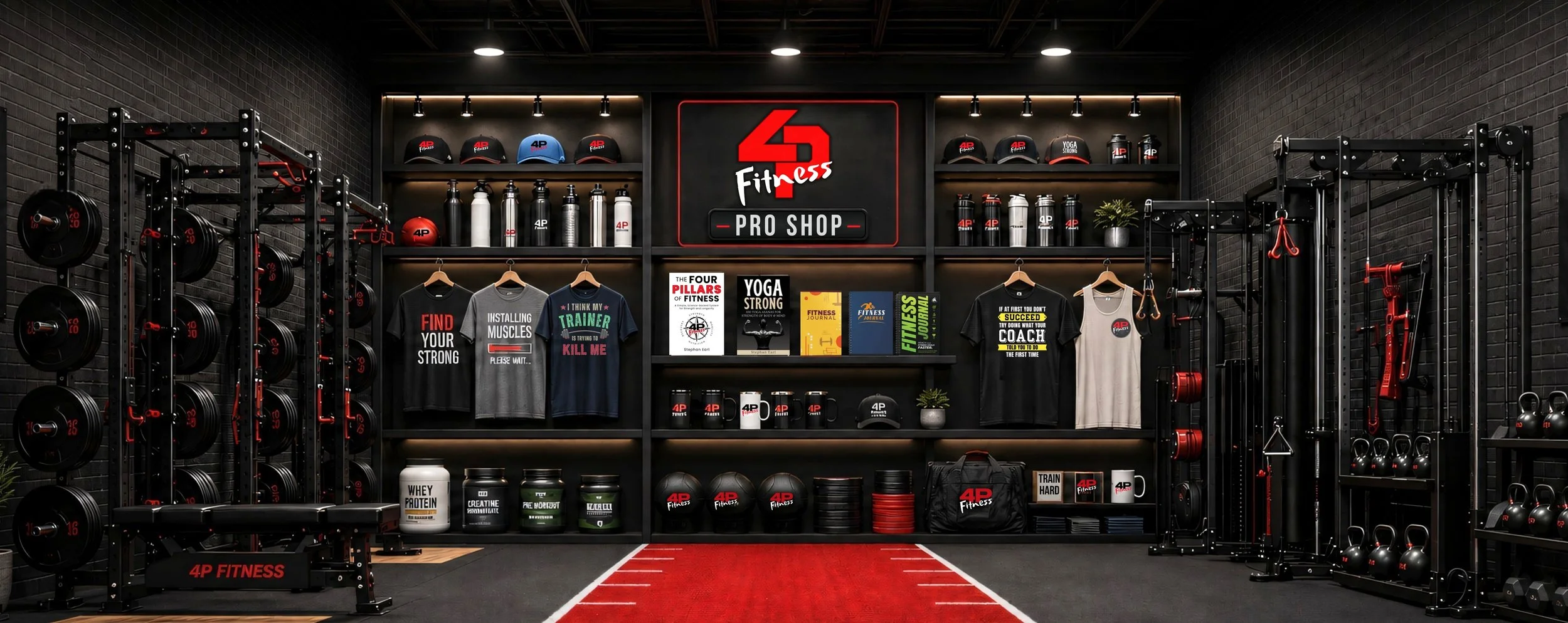
Gear up with fitness-inspired apparel, drinkware, journals, instant downloads, and a little gym and coach humor for the people who train hard, recover smart, and still know how to laugh between sets.
Shop the 4P Fitness Pro Shop and find something that fits your fitness life.

The 4P Fitness Pro Shop Gift Card is a simple, flexible gift for lifters, athletes, coaches, clients, and everyday warriors. Available from $25 to $200, it lets them choose apparel, drinkware, fitness gear, books, journals, or other 4P Fitness favorites. No sizing guesswork. No color worries. Just motivation they can pick for themselves.
Features
Available in denominations from $25 to $200
Redeemable toward eligible products in the 4P Fitness Pro Shop
Great for apparel, drinkware, fitness accessories, books, journals, and more
Perfect for athletes, gym lovers, coaches, clients, and fitness-minded friends
A flexible gift option for holidays, birthdays, milestones, and special occasions
No physical product required, making it easy to send and easy to use