

The Three Stages of Fitness: Build, Maintain, Defend
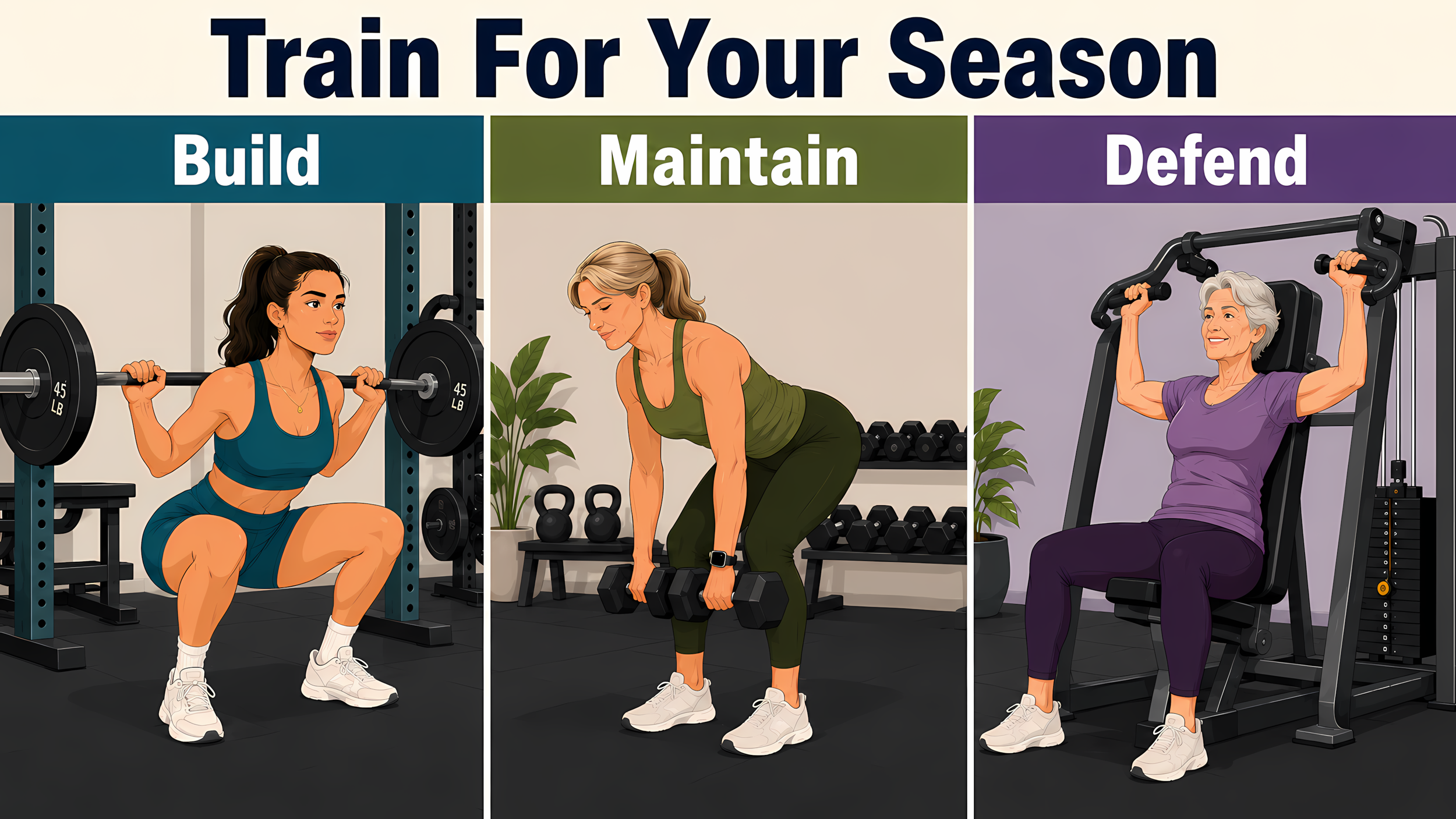
How to Train for the Season You’re In
I coached three different people in the same week, and each one reminded me why fitness can’t be treated like a one-size-fits-all plan. One was a high school competitive lifter working to build strength and sharpen technique. One was a busy woman in her 30s who wanted to lose fat, feel more toned, and get her athletic edge back. One was in her 60s and told me, “Coach, I just want my knees to stop yelling at me. I want to stay strong enough to do life.”
Same gym. Same coaching principles. Very different needs. That’s where a simple framework becomes useful: Build, Maintain, Defend. This is not a strict age rule, and it’s not a negative story about getting older. It’s a way to match your training, nutrition, mobility, and recovery to the season of life you’re actually in. The best fitness plan is not always the hardest one. It’s the one that fits your body, your goals, your recovery, and your life right now.
What Build, Maintain, and Defend Mean
The Build stage is when you’re adding capacity. You’re building strength, muscle, skill, coordination, confidence, and work capacity. This often fits teens, young adults, newer lifters, and athletes developing their base, but it can apply to anyone whose body and lifestyle can support growth.
The Maintain stage is when you’re protecting what you’ve built while still improving. This often shows up during the busy adult years, when work, family, stress, inconsistent sleep, and nutrition habits start competing with recovery. In this stage, the goal is to keep progressing without constantly burning yourself out or starting over.
The Defend stage is when you’re protecting muscle, bone, balance, mobility, and independence. This usually becomes more important with age, but defending your body starts earlier than most people think. You can build at 60, defend at 35, and maintain at 25 if life is running you into the ground. The real point is simple: train for your season.





Stage 1: Build
Build is the stage where progress can come quickly, especially for younger athletes and newer lifters. Strength can jump fast, technique can improve fast, and confidence can grow fast. That is exciting, but it can also create a problem because quick progress tempts people to rush. Heavy lifts every week, too much volume, too little recovery, and sloppy form under load can turn early momentum into frustration.
In the Build stage, the goal is not to prove how tough you are every day. The goal is to earn your strength. That means learning how to squat, hinge, push, pull, carry, brace, and move with control before trying to load everything as heavy as possible. For a competitive lifter, this may mean focusing on the squat, bench press, and deadlift while using accessory work to build weak points. For a general fitness client, it may mean learning full-body strength patterns and improving confidence in the gym.
Mobility work in this stage should be short, specific, and connected to training. Most people don’t need an hour of stretching before they lift. They need consistent work for the areas that limit their movement, often the ankles, hips, shoulders, thoracic spine, and breathing position. Five to eight focused minutes done consistently will usually beat one random giant mobility session every other month.
Nutrition and recovery matter just as much as the workouts. Build does not mean eating junk just because you’re active. It means eating enough quality food to support training, recovery, and performance. Protein matters, carbohydrates matter, and sleep matters more than most young athletes want to admit. You don’t get stronger from the workout alone. You get stronger from recovering from the workout.
Stage 2: Maintain
Maintain is where many adults live. You’re not old. You’re busy. You may have work stress, family responsibilities, travel, inconsistent sleep, and a schedule that changes every week. This is also the stage where many people want to lose fat, look more toned, feel athletic again, and stop feeling like their body is slowly drifting away from them.
The good news is that you can still build muscle and strength in your 30s, 40s, and beyond. You can still lose fat. You can still improve performance. But the plan has to respect your recovery budget. This is where a lot of people make the mistake of trying to train like they did when life was simpler while recovering like a stressed adult who sleeps too little and carries too much pressure.
In the Maintain stage, quality matters more than punishment. A workout does not need to destroy you to be effective. If your goal is fat loss and tone, strength training still needs to be the priority because muscle is what gives the body shape. It also helps support metabolism and function as you age. A smart Maintain plan might include three full-body strength days per week, or four days using a push, pull, lower, and full-body split. It may also include short cardio sessions, daily walking when possible, and mobility work built into warm-ups.
Nutrition is often the difference-maker in this stage. You can’t train hard, sleep poorly, under-eat protein, wing it on weekends, and expect your body to cooperate forever. For fat loss, the goal is usually a modest calorie deficit, not starvation. Protein should stay high enough to support muscle, meals should be built around simple whole-food habits, and total food intake should keep you functioning well.
Stage 3: Defend
Defend is where strength becomes more than fitness. It becomes independence. It’s getting up from the floor, carrying groceries, climbing stairs, maintaining balance, and feeling confident in your body. It’s not about trying to impress anyone. It’s about keeping the body useful, capable, and resilient.
As we age, the body tends to lose muscle mass and strength, especially when we don’t train. That does not mean decline is automatic or hopeless. It means strength training becomes more important, not less. The goal in the Defend stage is to protect muscle, bone, balance, coordination, and confidence. That requires resistance training, not just walking or light cardio.
A strong Defend plan includes lower-body strength, pushing movements, pulling movements, core stability, balance work, grip strength, and controlled power when appropriate. Exercise selection should be personal. Some people do well with barbells. Others are better served with dumbbells, machines, cables, bands, and bodyweight work. There is no prize for choosing the hardest version of an exercise when a smarter version gets the job done.
For many older adults, two to three strength sessions per week is a strong target. Some can do more, but only if recovery, joints, and lifestyle support it. Warm-ups may need to be longer in this stage, and that’s not a bad thing. Joint prep, balance, controlled movement, and gradual loading all help create better sessions.
Nutrition also becomes more important in the Defend stage, especially protein. Many older adults eat light during the day and get most of their calories later at night, which can make it harder to support muscle. A better approach is to spread protein across meals and avoid aggressive dieting unless it’s truly needed and carefully managed. The goal is to lose fat if needed while protecting strength, muscle, and function.
What Changes From Stage to Stage?
The foundation stays the same, but the emphasis changes. In Build, you’re adding capacity. You can often handle more training stress, but you still need technique, food, and sleep. In Maintain, you’re managing capacity. You can still improve, but recovery has to be planned, and quality matters more than random punishment. In Defend, you’re protecting capacity. Strength, mobility, nutrition, and recovery become tools for independence.
That’s the real shift. It’s not younger versus older, and it’s not hard versus easy. It’s matching the plan to the person. A 25-year-old athlete, a 42-year-old parent, and a 68-year-old retiree may all need strength training, but they do not need the exact same plan. Their bodies, stress levels, goals, and recovery needs are different, so their training should reflect that.
Putting It All Together
Build is about adding capacity. Maintain is about protecting progress while life is busy. Defend is about preserving strength, mobility, and independence. No matter what stage you’re in, the pillars still matter. Strength gives your body something to keep. Mobility helps you move well. Nutrition fuels the work. Recovery decides how much progress you can actually keep.
The best plan is not the one that looks impressive on paper. It’s the one you can execute, recover from, and build on. Train for your season, not someone else’s, not your old self, and not some internet template that ignores your actual life.
Which stage feels most like your life right now: Build, Maintain, or Defend? What’s one thing you want to improve first? Leave a comment below.
Stephan Earl is a NASM Certified Personal Trainer, Nutrition Coach, and Corrective Exercise Specialist dedicated to helping people build lasting strength and mobility at every age. With a focus on practical, sustainable fitness, he combines science-based training with mindful movement and nutrition.
He's the author of Yoga Strong: 100 Asanas for Strength of Body and Mind and the forthcoming book The Four Pillars of Fitness: A Simple, Science-Backed System For Strength and Longevity, which explores how to stay strong, flexible, and energized for life. His mission is to help others move better, feel better, and live fully at every stage of their fitness journey.
Learn More
Four Pillar Fitness is built on one clear idea. Strength, Mobility, Nutrition, and Recovery work together to keep you strong and independent at every age. To dive deeper into each pillar visit 4PFitness.com.
References
U.S. Department of Health and Human Services. Physical Activity Guidelines for Americans, 2nd Edition.
Centers for Disease Control and Prevention. Physical Activity Guidelines for Adults and Older Adults.
National Strength and Conditioning Association. Resistance Training for Older Adults: Position Statement.
Bauer, J., et al. Evidence-Based Recommendations for Optimal Dietary Protein Intake in Older People: A Position Paper From the PROT-AGE Study Group.
Volpi, E., et al. Muscle Tissue Changes With Aging.
More Health & Fitness Insights…
Visit the 4P Fitness PRO Shop
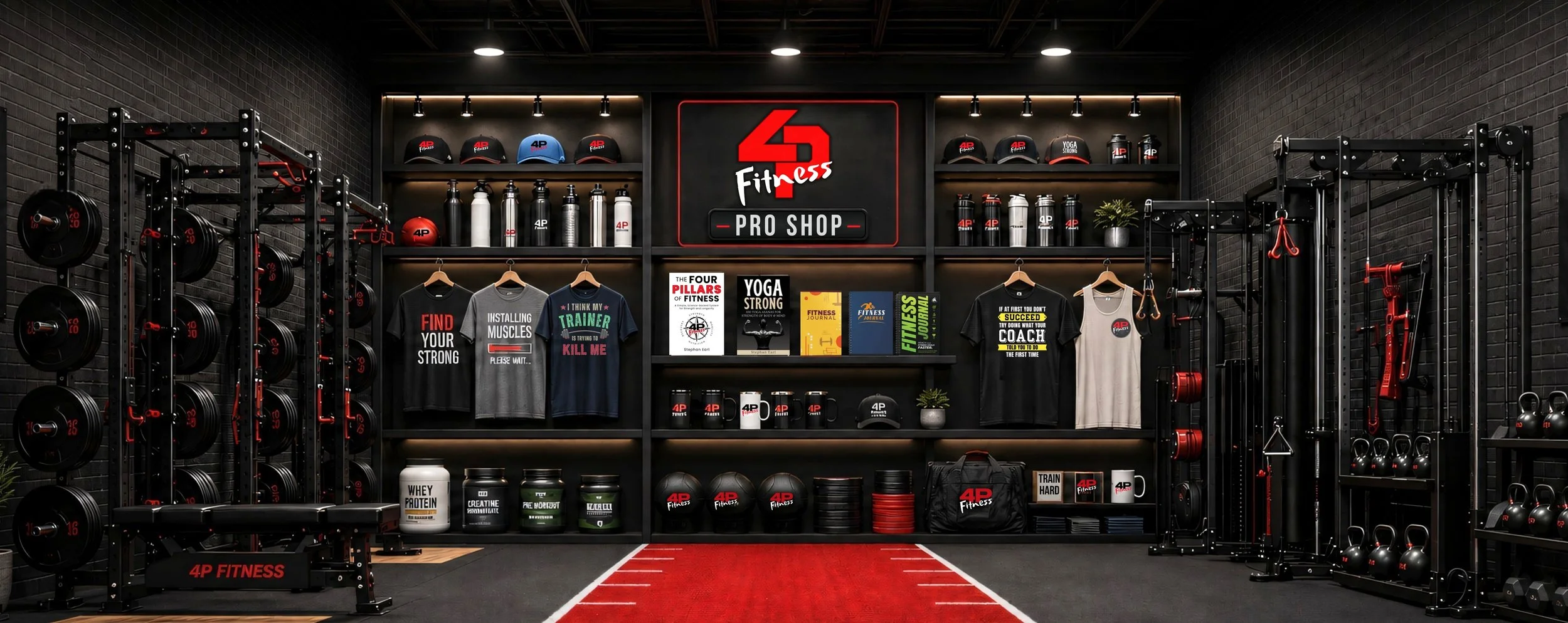
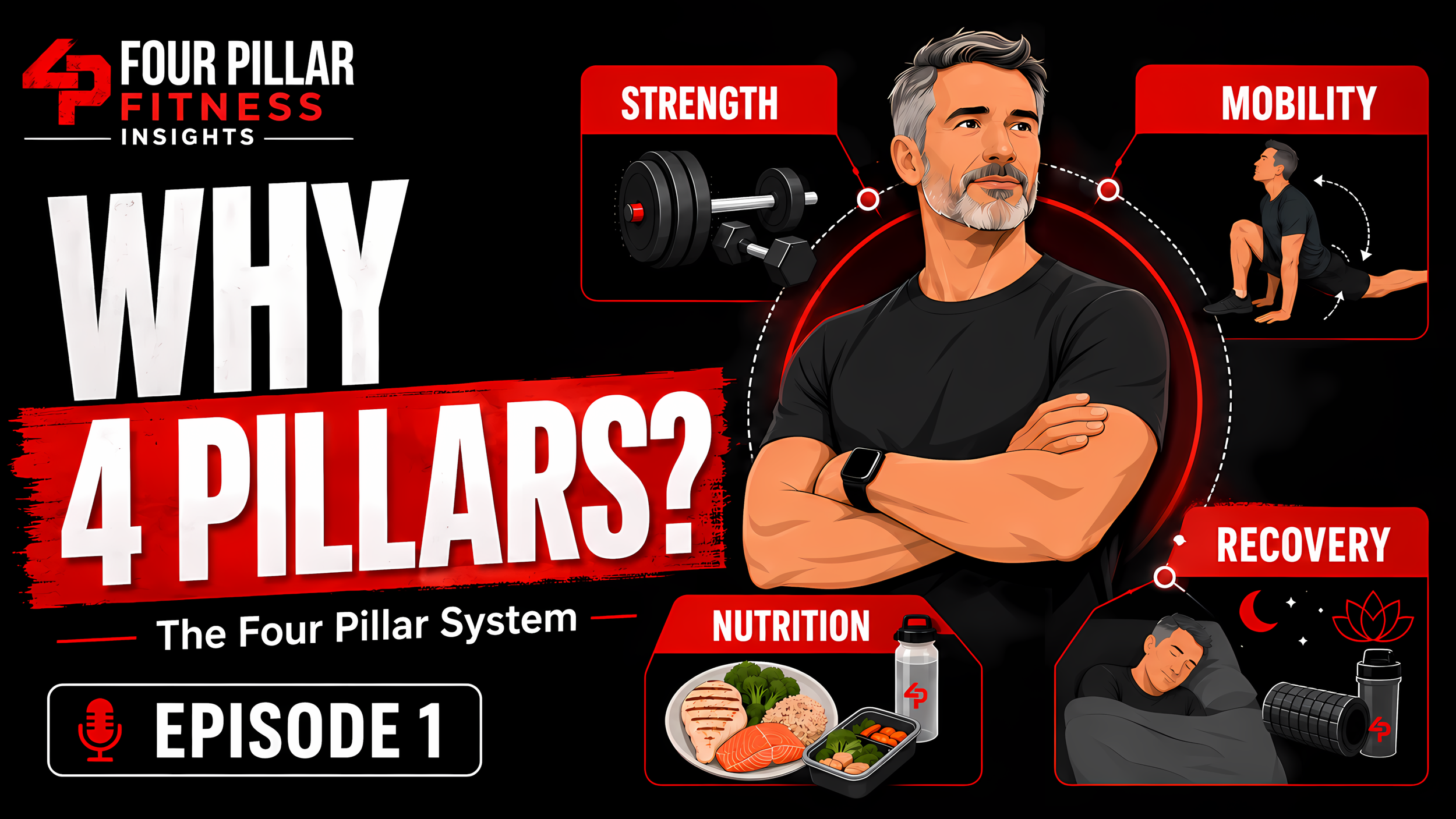
Gear up with fitness-inspired apparel, drinkware, journals, instant downloads, and a little gym and coach humor for the people who train hard, recover smart, and still know how to laugh between sets.
Shop the 4P Fitness Pro Shop and find something that fits your fitness life.

The 4P Fitness Pro Shop Gift Card is a simple, flexible gift for lifters, athletes, coaches, clients, and everyday warriors. Available from $25 to $200, it lets them choose apparel, drinkware, fitness gear, books, journals, or other 4P Fitness favorites. No sizing guesswork. No color worries. Just motivation they can pick for themselves.
Features
Available in denominations from $25 to $200
Redeemable toward eligible products in the 4P Fitness Pro Shop
Great for apparel, drinkware, fitness accessories, books, journals, and more
Perfect for athletes, gym lovers, coaches, clients, and fitness-minded friends
A flexible gift option for holidays, birthdays, milestones, and special occasions
No physical product required, making it easy to send and easy to use