

Strength Training Fundamentals: The Blueprint for Building Muscle and Getting Stronger
Walk into almost any gym and you’ll see plenty of effort. What you won’t always see is a clear plan. Some people repeat the same weights for months. Others change exercises every week, chase soreness, or copy advanced techniques from social media without understanding why they’re using them.
Most people don’t need a harder workout. They need a better system.
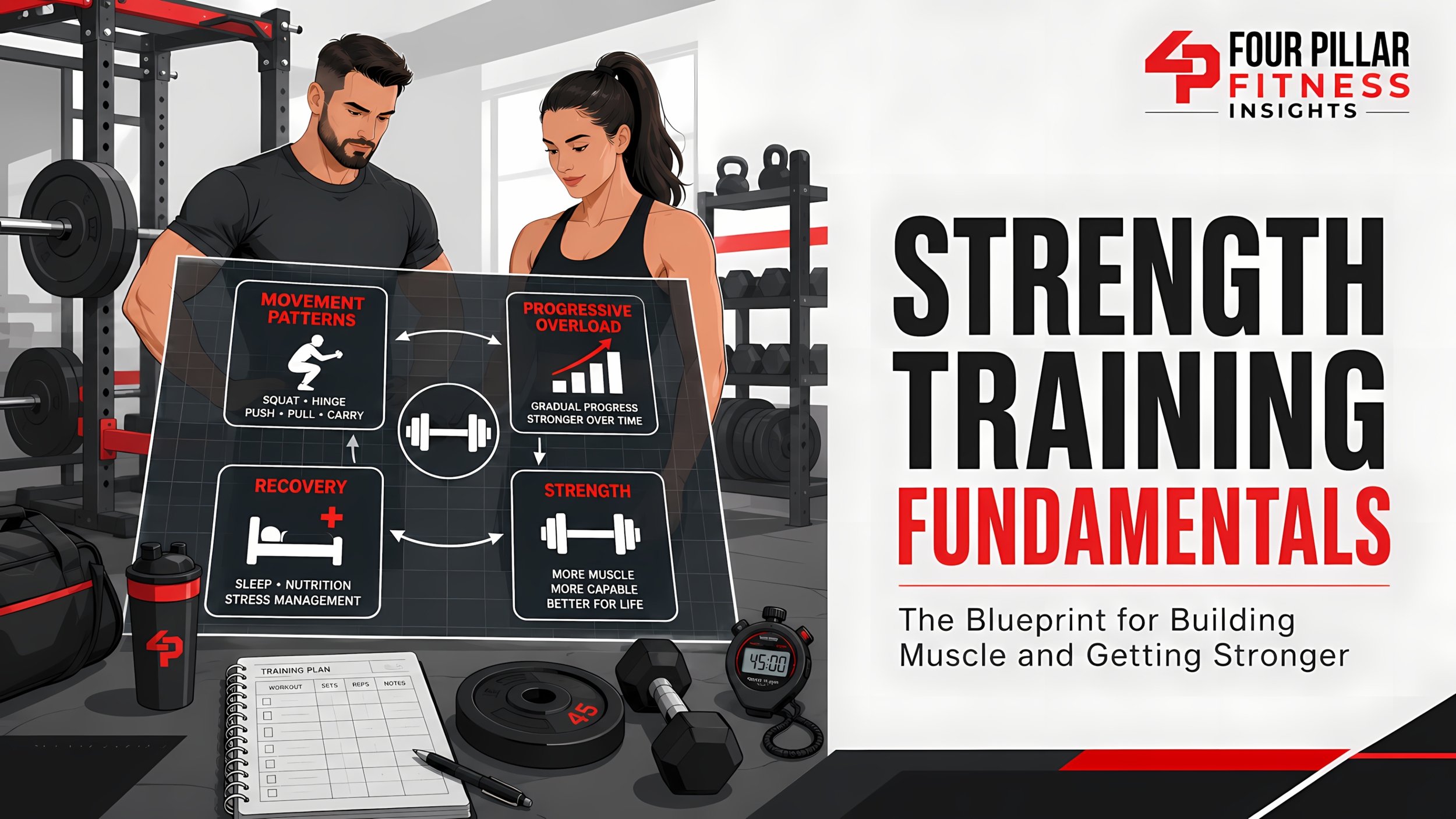
Strength training works when you choose movements you can perform well, train them with enough effort, track what you’re doing, and gradually increase the challenge. That process is called progressive overload, and it’s the foundation of getting stronger and building muscle. Drop sets, supersets, rest-pause sets, and failure training can have a place, but they’re supporting tools. They aren’t substitutes for the basics.
Here’s the blueprint.
What Strength Training Is Actually Trying to Do
Strength training gives your muscles and nervous system a reason to adapt. You apply a controlled challenge, recover from it, and come back better prepared to handle that challenge again. Over time, resistance training can support greater strength, more lean mass, stronger bones, better physical function, and greater independence.
The workout itself provides the signal. Much of the adaptation happens afterward, when your body has enough time, sleep, food, and protein to repair and rebuild. That’s why more work isn’t always better work. The goal is to create enough training stress to support progress without creating so much fatigue that your performance and recovery begin to suffer.
Updated guidance from the American College of Sports Medicine reinforces a simple point: consistency matters more than complexity. For most adults, the biggest step is moving from little or no resistance training to regular resistance training, not searching for a perfect program.
Build Around the Basic Movement Patterns
A complete strength program doesn’t require 20 exercises. It needs a balanced selection of movements that train the major muscle groups and match your current ability.
Most programs can be built around six broad categories:
Squat or knee-dominant movement
Hinge or hip-dominant movement
Push
Pull
Carry
Core stabilization
That might include a goblet squat, Romanian deadlift, dumbbell press, cable row, farmer’s carry, and plank variation. Someone else may use machines, barbells, resistance bands, or bodyweight exercises. The tools can change while the movement patterns remain similar.
The best exercise isn’t the one that looks most impressive online. It’s one you can perform with control, through an appropriate range of motion, without pain, and gradually improve over time. Your mobility, training experience, injury history, available equipment, and goals should all influence exercise selection.




Sets, Repetitions, and Training Effort
Repetition ranges are useful, but they aren’t magic borders. Lower-repetition sets with heavier resistance are generally more specific to building maximal strength. Muscle growth can occur across a wider range of repetitions and loads, provided the sets are challenging enough and the program includes sufficient training volume.
For most general strength and muscle-building programs, two to four working sets per exercise can be a practical starting point. Many compound and machine exercises can be performed for roughly 6 to 15 repetitions, while isolation exercises often work well in the 10-to-20-repetition range. These aren’t strict limits. They’re useful starting points that can be adjusted to the exercise, goal, and person.
The number on the dumbbell matters less than what you can do with it. If you finish 10 repetitions but could easily complete 10 more, the set may not provide much of a muscle-building stimulus. If your technique falls apart halfway through, the load may be too heavy for the intended exercise and repetition range.
A useful way to judge effort is repetitions in reserve, or RIR. If you finish with 2 RIR, you believe you could have completed about two more clean repetitions. For many working sets, finishing with approximately 1 to 3 repetitions in reserve is a practical default. Some sets may reasonably stop farther from failure, while selected sets may be taken closer to it.
Learning to estimate RIR takes practice, especially for beginners. Your estimate won’t always be perfect, but it gives you a practical way to connect effort with exercise selection, repetitions, and recovery.
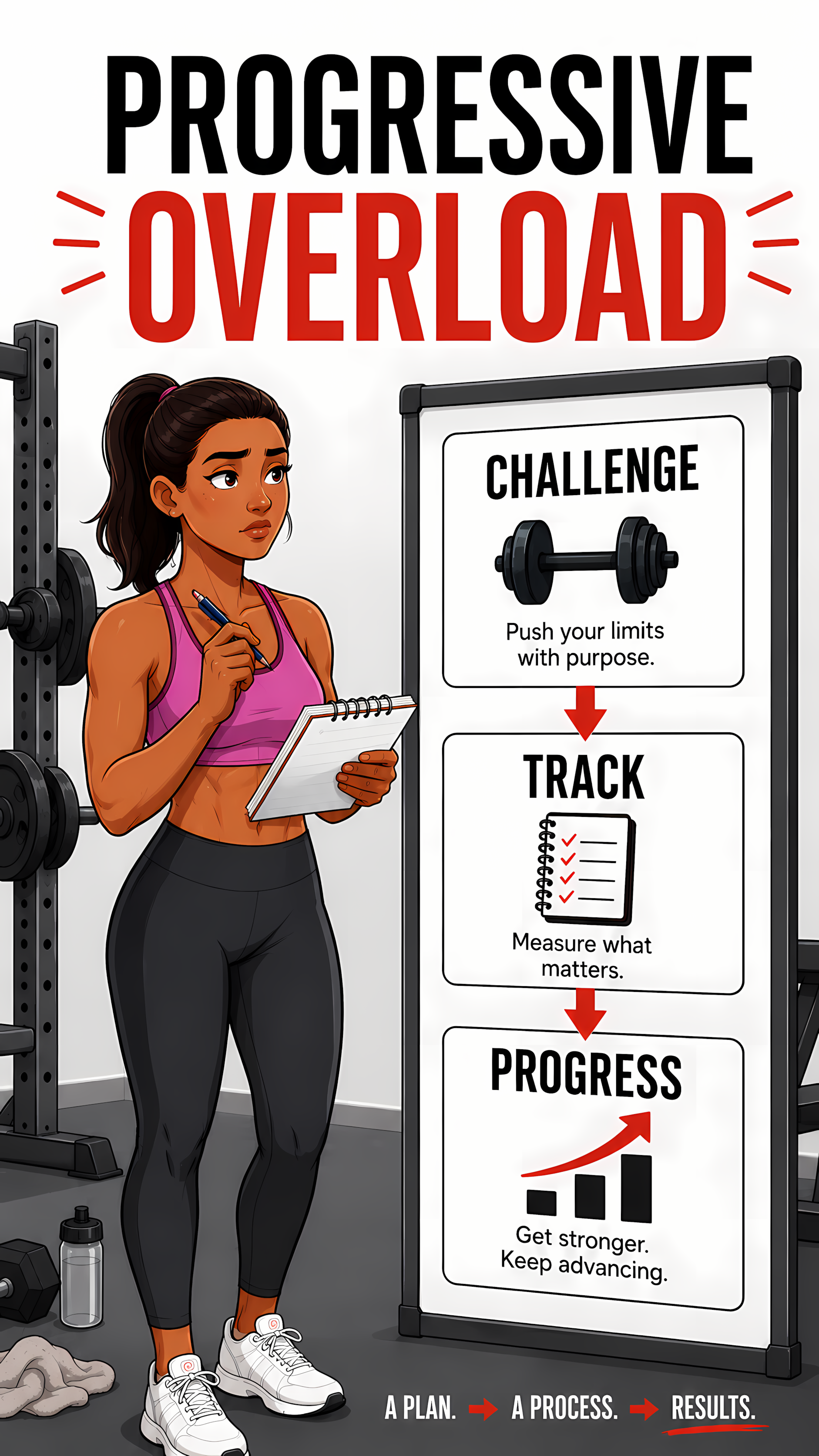
Progressive Overload: The Engine of Progress
Progressive overload means gradually increasing the training demand as your body adapts. That doesn’t mean adding weight every time you enter the gym. Progress can take several forms:
Adding a small amount of weight
Completing more repetitions with the same weight
Adding an appropriate working set
Improving exercise technique
Increasing your usable range of motion
Performing repetitions with greater control
Progressing to a more demanding exercise variation
For most clients, one of the simplest approaches is double progression.
Let’s say your program calls for three sets of 8 to 12 repetitions. You choose a weight that allows you to complete 10, 9, and 8 clean reps. Over the next few workouts, you try to add repetitions while keeping your form and effort consistent. Once you can complete all three sets at or near 12 reps, increase the resistance slightly. Your repetitions may drop back toward eight, and the process begins again.
This method gives you a clear answer to one of the most common training questions: “When should I increase the weight?” Increase it when your performance shows you’re ready, not simply because the calendar says it’s time.
Progress should be gradual. A small increase you can control is more useful than a large jump that shortens your range of motion, changes the exercise, or turns the final repetitions into interpretive dance.
Rest Long Enough to Perform Well
Rest periods are part of the workout. They aren’t wasted time.
Heavy compound exercises may require two to three minutes or more between demanding sets. Moderate accessory work may need 60 to 120 seconds, while smaller isolation movements can sometimes use shorter rest periods. Shorter rests, such as 30 to 60 seconds, can also be used intentionally to keep heart rate elevated and increase metabolic demand, which may support conditioning or weight-loss-focused goals.
The correct rest period is long enough for you to perform the next set with the intended weight, repetitions, and technique. If your performance drops sharply because you’re rushing, you may be turning a strength workout into a conditioning session. That isn’t automatically bad, but it may not match the goal of the program.
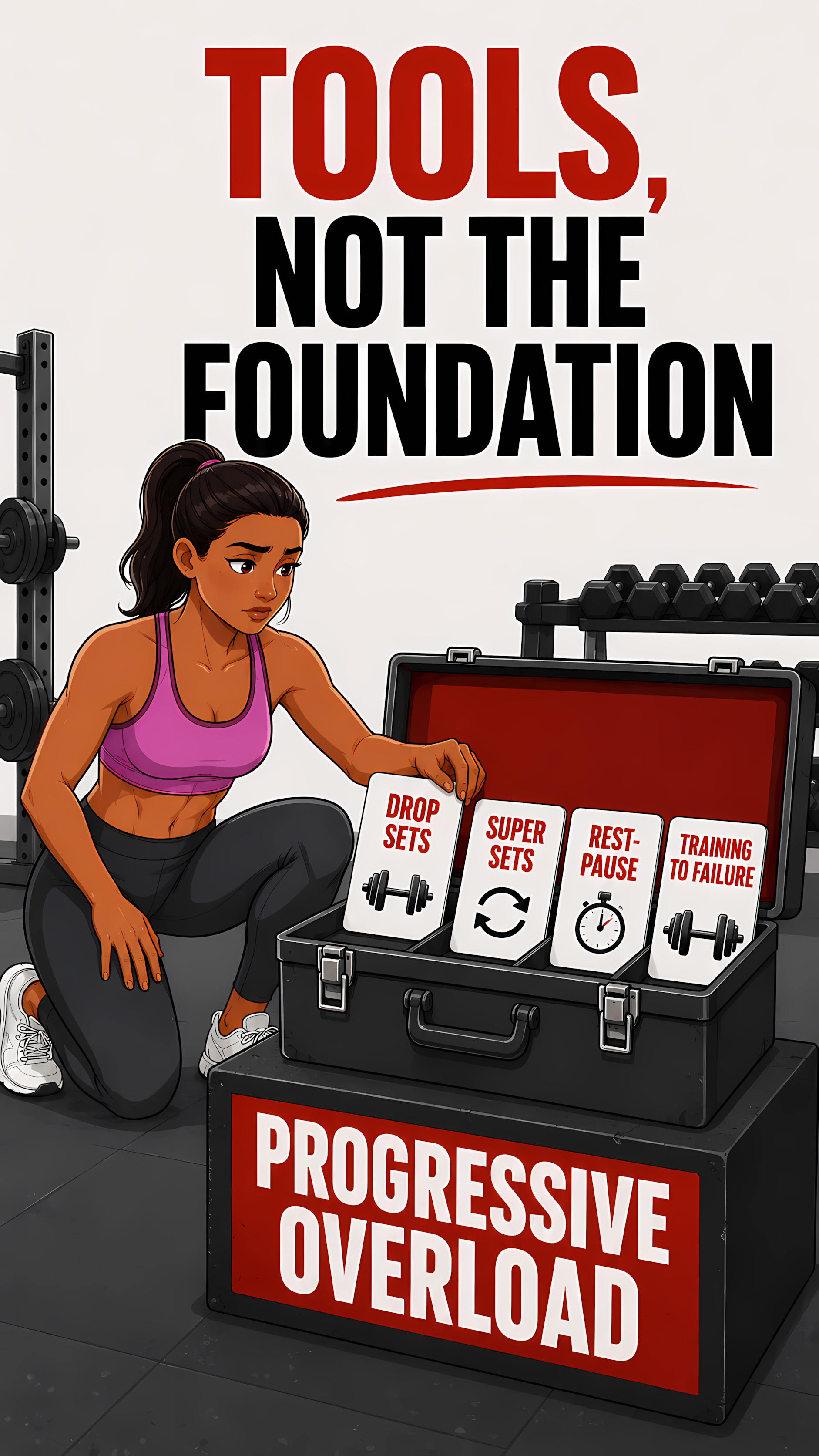
Advanced Techniques: Tools, Not Requirements
Advanced techniques can make training more demanding, add variety, or improve time efficiency. They should be used for a reason, not scattered through every workout simply because they feel intense.
A drop set begins with a challenging set. You then reduce the weight and continue performing repetitions with little rest.
A superset pairs two exercises back-to-back. You might combine movements for opposing muscle groups, such as a chest press and a row, or pair exercises for the same muscle group.
A rest-pause set uses a brief break after a difficult set, followed by a small number of additional repetitions.
A slow eccentric emphasizes control during the lowering phase of an exercise. For example, you might take three seconds to lower a dumbbell before beginning the next repetition. Slower repetitions can be useful for teaching control and increasing time under tension, but slower isn’t automatically better.
Training to failure means continuing until you can’t complete another repetition with acceptable form. Failure training can be useful in selected situations, but research doesn’t show that every set must reach failure to produce strength or muscle gains. Taking every set to failure can also increase fatigue and reduce the quality of later sets or exercises.
Research on drop sets, supersets, rest-pause training, and other advanced systems generally suggests that they can produce results similar to traditional sets when overall training demands are comparable. Their primary advantages may be saving time, increasing variety, or creating a strong stimulus with fewer traditional sets, rather than producing dramatically better results.
Use these methods mostly on stable machine or isolation exercises, especially when you’re training alone. A drop set of cable curls is one thing. Taking a heavy barbell squat to failure without safety equipment or a spotter is another. Choose the tool based on the exercise, goal, fatigue cost, and risk.
Advanced methods can add intensity, but they can’t rescue a poorly designed program.
Track the Work
If you don’t record your training, you’re relying on memory, and memory is a lousy workout log.
Write down the exercise, weight, sets, repetitions, and approximate RIR. Add a short note when technique feels off, an exercise causes discomfort, or your performance changes. A notebook, spreadsheet, or training app is enough.
Tracking helps you see whether you’re progressing, maintaining, or moving backward. It also keeps you from repeating the same comfortable workout for six months while wondering why nothing has changed.
Recovery Completes the Program
Training provides the stimulus. Recovery gives your body an opportunity to adapt.
Support your workouts with adequate sleep, sufficient food and protein, hydration, and enough time between demanding sessions for the same muscle groups. Pay attention when performance declines across several workouts, soreness lingers, sleep worsens, motivation drops, or joints begin to feel unusually irritated.
Sometimes the answer is a deload, which is a short period of reduced training stress. You might lower the weight, reduce the number of sets, stop farther from failure, or use a combination of these approaches. A deload doesn’t mean you’re losing progress. It can help you manage accumulated fatigue so you can return to productive training.
The Four Pillar Fitness Strength Blueprint
When you’re training on your own, keep the plan simple. Choose exercises that cover the major movement patterns. Use loads you can control. Perform most working sets with approximately 1 to 3 good repetitions left in reserve, adjusting when the exercise or goal calls for something different. Track your weights, sets, and reps. Use double progression to help decide when to add resistance. Rest long enough to maintain the quality of your work.
Add drop sets, supersets, rest-pause work, slow eccentrics, or failure training only when they serve a clear purpose. Then support the work with sound nutrition and recovery habits.
A basic program performed consistently will outperform a complicated program that changes every week.
When you look at your current routine, are you following a clear progression plan, or are you simply repeating workouts and hoping they eventually produce better results? Leave a comment below.
Strength Training Fundamentals 10-min Audio Podcast.
Stephan Earl is a NASM Certified Personal Trainer, Nutrition Coach, and Corrective Exercise Specialist dedicated to helping people build lasting strength and mobility at every age. With a focus on practical, sustainable fitness, he combines science-based training with mindful movement and nutrition.
He's the author of Yoga Strong: 100 Asanas for Strength of Body and Mind and the forthcoming book The Four Pillars of Fitness: A Simple, Science-Backed System For Strength and Longevity, which explores how to stay strong, flexible, and energized for life. His mission is to help others move better, feel better, and live fully at every stage of their fitness journey.
Learn More
Four Pillar Fitness is built on one clear idea. Strength, Mobility, Nutrition, and Recovery work together to keep you strong and independent at every age. To dive deeper into each pillar visit 4PFitness.com.
References
Bastos, V., Andrade, A. J., Salguero, A., & González-Boto, R. (2024). Feasibility and usefulness of repetitions-in-reserve scales for selecting resistance training intensity: A scoping review. Perceptual and Motor Skills, 131(4), 1123–1148.
Currier, B. S., McLeod, J. C., Banfield, L., Beyene, J., Welton, N. J., D’Souza, A. C., Keogh, J. A. J., Lin, L., Coletta, G., Yang, A., Colenso-Semple, L., Lau, K. J., Verboom, A., Phillips, S. M., & others. (2026). Resistance training prescription for muscle function, hypertrophy, and physical performance in healthy adults: An overview of reviews. Medicine & Science in Sports & Exercise.
Grgic, J., Schoenfeld, B. J., Orazem, J., & Sabol, F. (2022). Effects of resistance training performed to repetition failure or non-failure on muscular strength and hypertrophy: A systematic review and meta-analysis. Journal of Sport and Health Science, 11(2), 202–211.
Refalo, M. C., Helms, E. R., Hamilton, D. L., Fyfe, J. J., & Halperin, I. (2023). Influence of resistance training proximity-to-failure on skeletal muscle hypertrophy: A systematic review with meta-analysis. Sports Medicine, 53, 649–665.
Sødal, L. K., Kristiansen, E., Larsen, S., van den Tillaar, R., & Iversen, V. M. (2023). Effects of drop sets on skeletal muscle hypertrophy: A systematic review and meta-analysis. Sports Medicine - Open, 9, 63.
Tsartsapakis, I., Gleeson, M., & Delextrat, A. (2026). Effects of advanced resistance training systems on muscle hypertrophy and strength: A systematic review and meta-analysis. Journal of Functional Morphology and Kinesiology, 11(1), 80.
More Health & Fitness Insights…


Visit the 4P Fitness PRO Shop
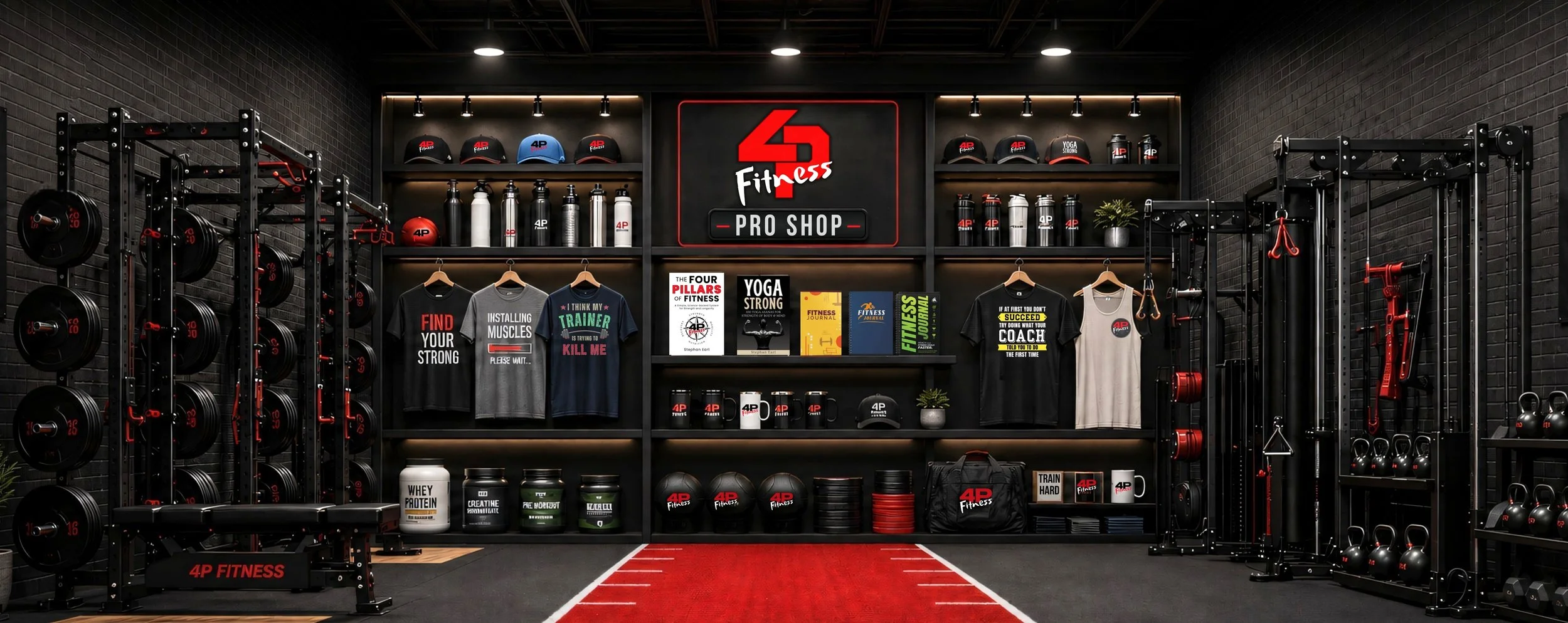
Gear up with fitness-inspired apparel, drinkware, journals, instant downloads, and a little gym and coach humor for the people who train hard, recover smart, and still know how to laugh between sets.
Shop the 4P Fitness Pro Shop and find something that fits your fitness life.

The 4P Fitness Pro Shop Gift Card is a simple, flexible gift for lifters, athletes, coaches, clients, and everyday warriors. Available from $25 to $200, it lets them choose apparel, drinkware, fitness gear, books, journals, or other 4P Fitness favorites. No sizing guesswork. No color worries. Just motivation they can pick for themselves.
Features
Available in denominations from $25 to $200
Redeemable toward eligible products in the 4P Fitness Pro Shop
Great for apparel, drinkware, fitness accessories, books, journals, and more
Perfect for athletes, gym lovers, coaches, clients, and fitness-minded friends
A flexible gift option for holidays, birthdays, milestones, and special occasions
No physical product required, making it easy to send and easy to use