

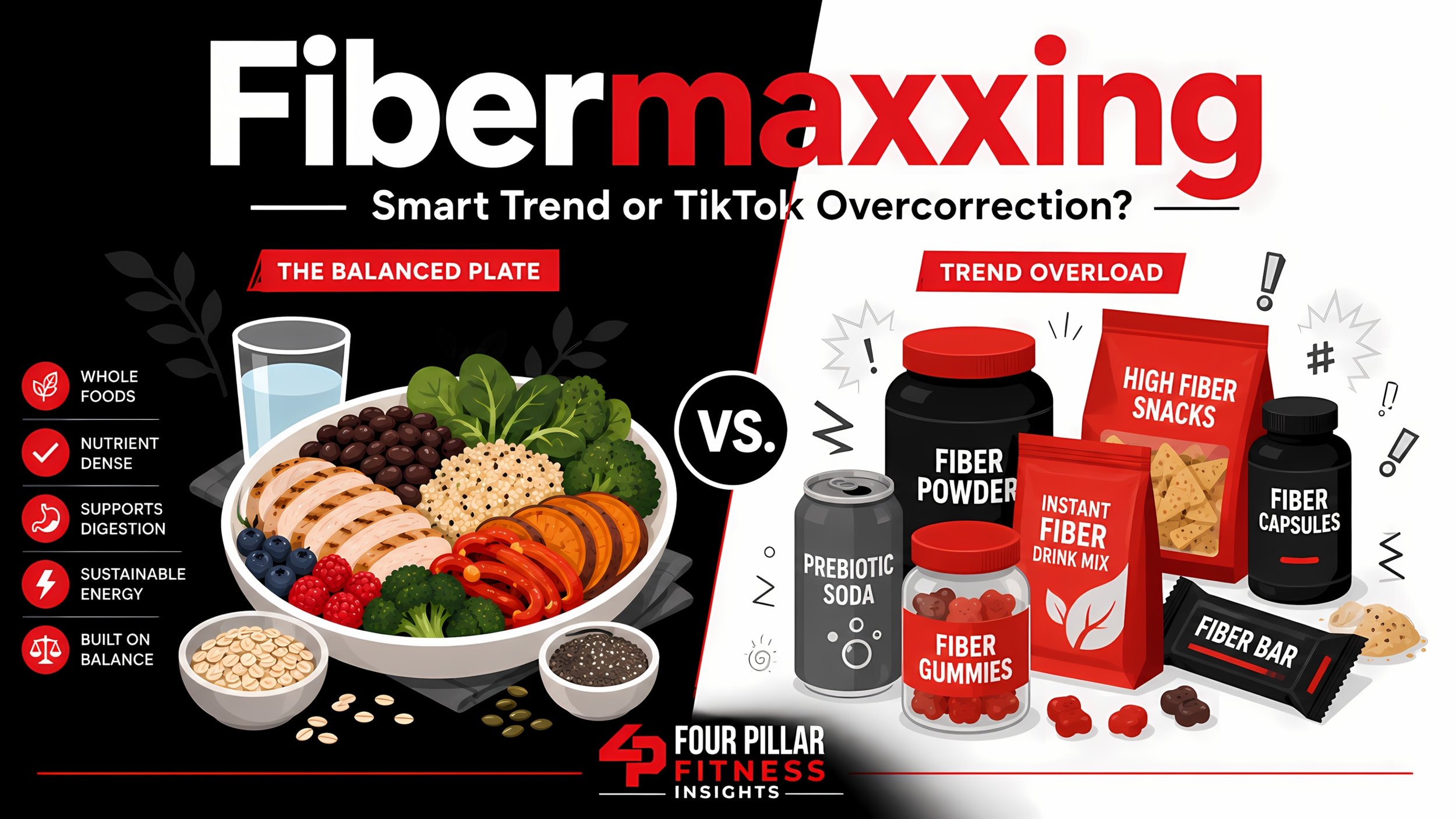
Fibermaxxing: Smart Nutrition Trend or Another TikTok Overcorrection?
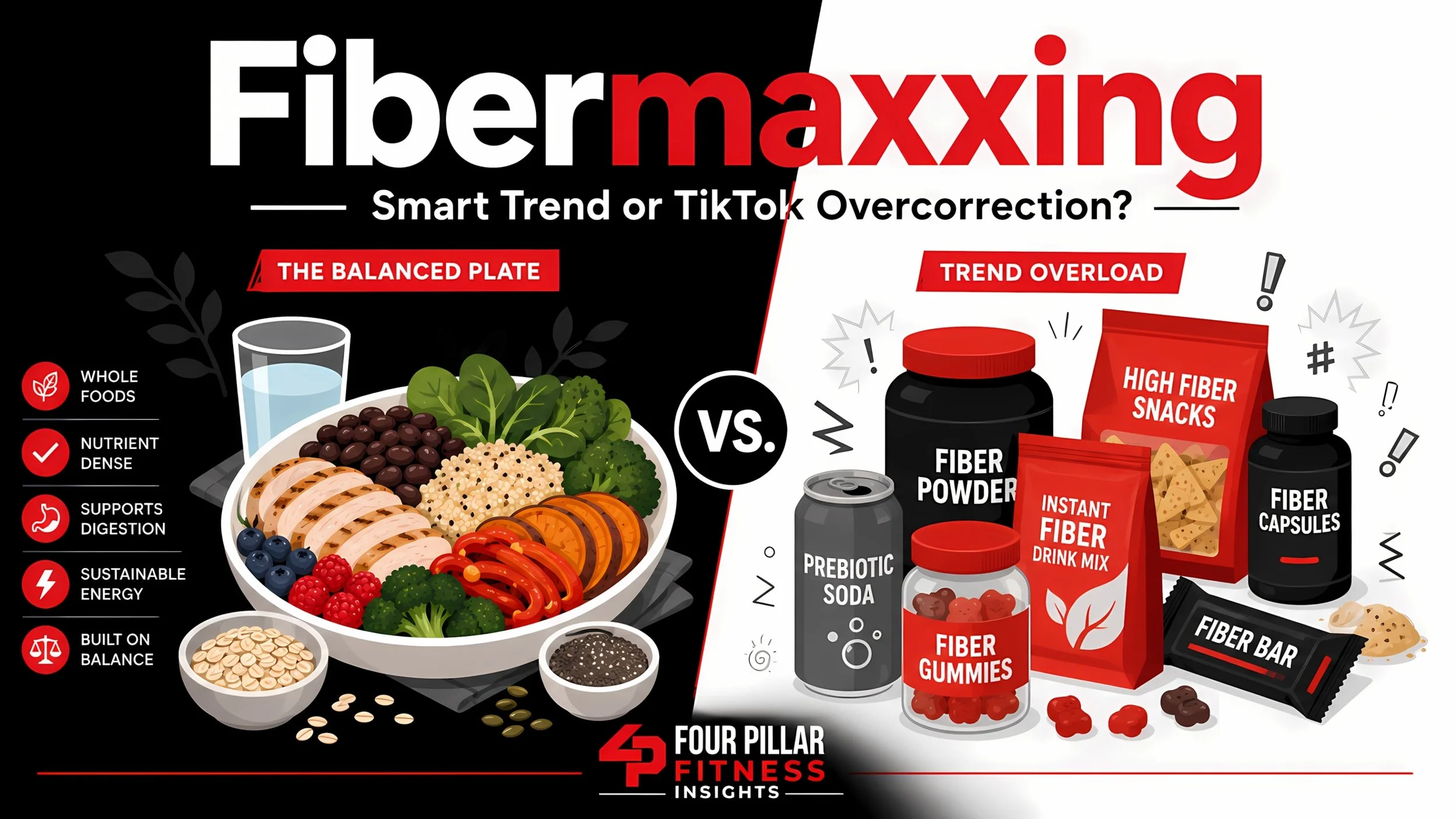
Fiber is having a moment, which is not a sentence most of us expected to read in 2026. For years, protein got most of the attention. Protein powders, protein bars, high-protein cereal, high-protein coffee, high-protein everything. Then social media did what social media does. It found another nutrition idea, slapped a dramatic name on it, and turned it into a trend.
This one is called fibermaxxing.
The basic idea is simple: eat more fiber. That part is not new, flashy, or controversial. Most coaches, dietitians, and health professionals have been saying this for years. What’s new is the cultural attention around it. The New Yorker recently covered the rise of high-fiber recipes, fiber-focused products, and creators turning digestion into a mainstream wellness topic. In other words, fiber went from the quiet side character of nutrition to the new star of the show. Not bad for something found in beans, oats, berries, vegetables, seeds, and whole grains.
The coach question is not whether fiber matters. It does. The better question is whether fibermaxxing is a smart trend or another social media overcorrection. Like most nutrition trends, the answer is somewhere in the middle. Fiber is important, but more is not always better. And if you go from barely eating vegetables to pounding chia pudding, lentil pasta, fiber gummies, and prebiotic soda in the same day, your gut may file a formal complaint.
Fiber deserves attention, but it also deserves common sense.
Why Fiber Matters
Fiber is a type of carbohydrate your body does not fully digest. That may sound like a bad thing, but it’s one of the reasons fiber is useful. Instead of being broken down like sugar or starch, fiber moves through the digestive system and helps support regularity, fullness, gut bacteria, blood sugar control, and cholesterol management.
There are two main types of fiber: soluble and insoluble. Soluble fiber dissolves in water and forms a gel-like substance. You’ll find it in foods like oats, beans, apples, citrus, lentils, and chia seeds. It can support fullness and is associated with healthier cholesterol and blood sugar patterns. Insoluble fiber does not dissolve in water as easily. It adds bulk to stool and helps food move through the digestive tract. You’ll find it in foods like vegetables, whole grains, nuts, seeds, and many fruit skins.
You don’t need to obsess over which type you’re getting at every meal. A varied diet with plant foods usually gives you both. That’s why the best fiber strategy is not complicated. Eat more whole and minimally processed plant foods on a regular basis.
According to current dietary guidance, people age 2 and older are generally encouraged to get about 14 grams of fiber for every 1,000 calories eaten. The Academy of Nutrition and Dietetics notes this works out to about 25 grams per day for many adult women and 38 grams per day for many adult men, although individual needs vary.
The problem is that many people fall short. USDA data has described low fiber intake as a public health concern, with U.S. consumers averaging only about 8.1 grams per 1,000 calories in 2017 to 2018. That is only about 58 percent of the recommended 14 grams per 1,000 calories.
So yes, fiber deserves more attention. Most people do not need to “hack” their gut. They need more beans, berries, vegetables, oats, potatoes with the skin, lentils, nuts, seeds, and whole grains.









The Good Side of Fibermaxxing
The best part of the fibermaxxing trend is that it moves the nutrition conversation beyond calories and protein. Protein still matters, especially if you strength train, want to maintain lean muscle, or are trying to improve body composition. But protein is not the whole meal. A chicken breast and good intentions will only take you so far.
Fiber is often the missing piece.
When people increase fiber wisely, meals tend to become more filling. That can make it easier to manage appetite without feeling like you’re constantly negotiating with your pantry. Fiber-rich foods also tend to bring other useful nutrients with them, including vitamins, minerals, antioxidants, and phytonutrients. That is one reason whole foods should be the foundation before supplements or fortified snack products.
Mayo Clinic notes that fiber can support digestion, regularity, fullness, blood sugar control, and cholesterol management. It also recommends increasing fiber gradually and drinking enough water, because adding too much too quickly can lead to gas, bloating, and cramping.
That last part matters. The internet loves a dramatic before-and-after story. Your digestive system prefers a ramp-up period.
Where the Trend Can Go Wrong
The problem is not fiber. The problem is the word “maxxing.”
Anytime nutrition becomes a contest, common sense usually gets escorted out of the room. We saw it with protein. Some people went from under-eating protein to thinking every snack needed to contain 40 grams of it. Now fiber may be getting the same treatment. Instead of asking, “How can I improve my daily intake?” people start asking, “How much can I possibly cram into one day?”
That is where things can get uncomfortable.
If you suddenly overload your gut with a lot more fiber than it is used to, you may deal with bloating, gas, constipation, cramps, or digestive urgency. That does not mean fiber is bad. It means your body needs time to adapt. Gut bacteria respond to changes in your diet, but they do not always respond quietly.
Another issue is the rise of fiber-fortified products. Some can be useful. A higher-fiber wrap, cereal, bar, or drink may help someone close a gap. But the more processed the product, the more important it is to look at the whole picture. If a product has added fiber but also brings a lot of added sugar, salt, or calories you did not need, it may not be the nutrition upgrade the marketing department promised.
Mayo Clinic also notes that fiber supplements can be part of daily intake, but it is best to get fiber from food because supplements do not provide the same vitamins, minerals, and other nutrients found in fiber-rich foods. Supplements may also cause bloating and gas at first, and people with certain digestive conditions or medication concerns should check with a healthcare professional.
That is not fear-mongering. That is just grown-up nutrition.
Protein Still Matters
One of the reasons I like this conversation is that it balances out the protein obsession. But I do not want people swinging the pendulum so far that they forget why protein became popular in the first place.
If you strength train, protein supports muscle repair, recovery, and lean mass. That matters for performance, metabolism, aging well, and body composition. Fiber does not replace that. Instead, fiber completes the plate.
A simple way to think about it is this: protein helps build and preserve the structure, while fiber helps support the system. One is not better than the other. They do different jobs.
For most people, a strong meal starts with a quality protein source, then adds fiber-rich carbohydrates, colorful plants, and healthy fats. That might look like eggs with berries and oats, Greek yogurt with chia and fruit, chicken with potatoes and vegetables, salmon with lentils and greens, turkey chili with beans, or tofu with brown rice and broccoli.
Not glamorous, but neither are leg curls. Both work.
How to Increase Fiber Without Declaring War on Your Stomach
The smartest way to increase fiber is gradually. If you currently eat around 10 to 15 grams per day, jumping straight to 35 or 40 grams may not feel great. A better move is to add about 5 grams per day for a week or two, then build from there.
Start with one meal. Add berries to breakfast. Add beans to a salad. Add a serving of vegetables to dinner. Swap white bread for a higher-fiber option. Add chia or ground flax to yogurt. Choose a potato with the skin. Have an apple instead of a low-fiber snack.
You do not need to turn every meal into a digestive science project. You just need repeated small wins.
Here are a few easy ways to build fiber without making life weird:
Add one fruit or vegetable to a meal you already eat.
Include beans, lentils, or chickpeas a few times per week.
Choose oats, quinoa, brown rice, or whole-grain bread more often.
Add chia seeds, ground flaxseed, nuts, or seeds to yogurt or smoothies.
Keep water intake steady as fiber increases.
That last point is important. Fiber works better with fluid. When you increase fiber but do not drink enough water, digestion may slow down instead of improve. That is when people blame the fiber, when the real issue is that they added bulk without enough fluid to help move things along.
The Four Pillar Fitness Take
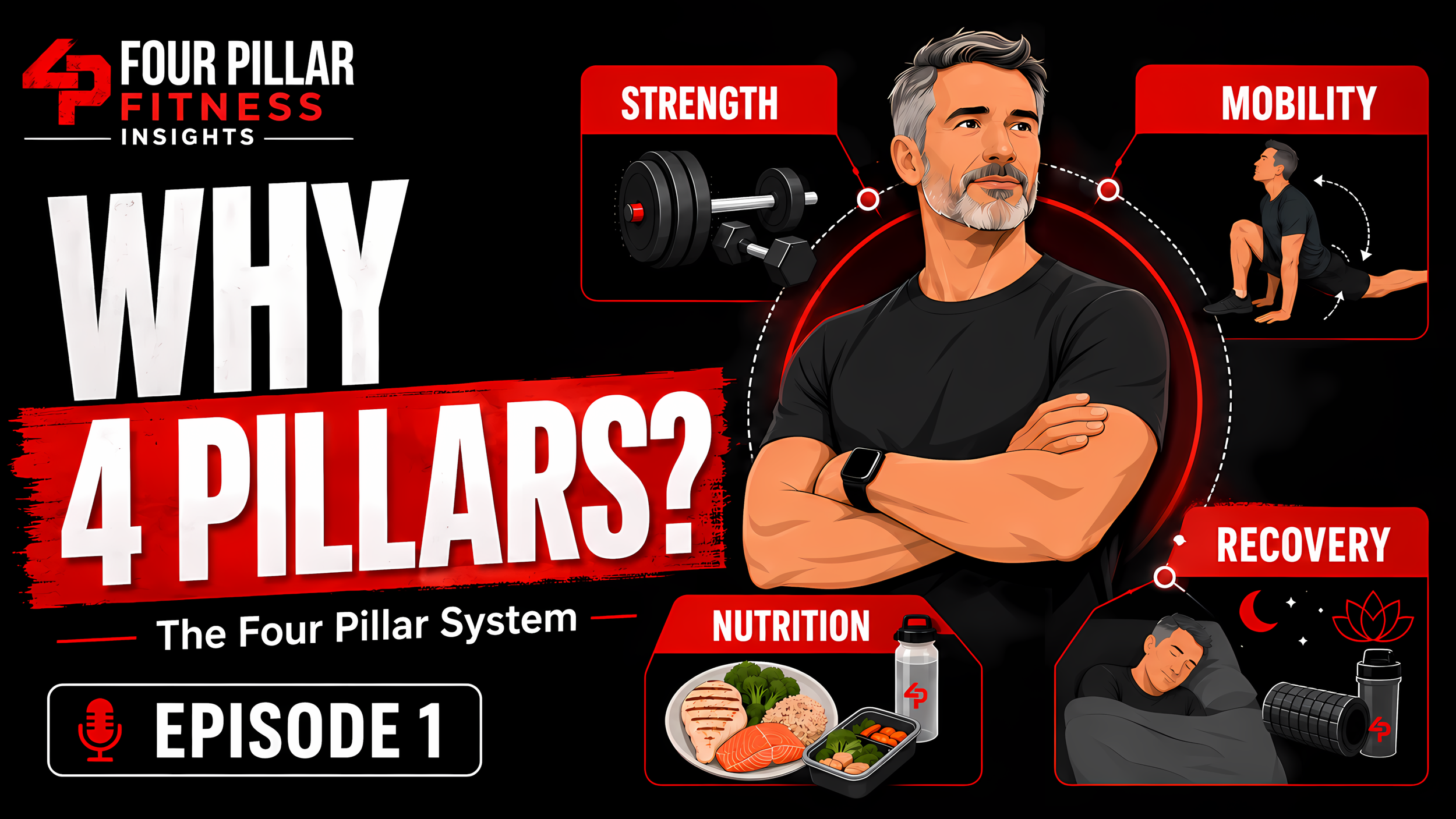
From a Four Pillar Fitness perspective, fiber fits directly into Nutrition, but it also touches the other pillars.
For Strength, fiber-rich meals can support better appetite control and more consistent fueling. You still need protein, but balanced meals can help you train with better energy instead of bouncing between cravings and crashes.
For Mobility, fiber is not going to magically open your hips or fix tight shoulders. But better overall nutrition can support healthier body composition, less sluggishness, and better daily movement habits.
For Recovery, gut comfort matters. If your digestion is a mess, sleep, energy, training quality, and mood can all take a hit. That does not mean fiber solves everything, but it is part of the foundation.
For Nutrition, the message is clear: stop treating fiber like an optional side quest. It is basic nutrition, and basic does not mean unimportant.
A Simple Daily Fiber Strategy
Instead of fibermaxxing, think fiber-building. That sounds less exciting, which probably means it is more useful.
Aim to include fiber at most meals, not all at once at the end of the day. A high-fiber breakfast, a plant-forward lunch, and a balanced dinner will usually feel better than eating low-fiber all day and trying to fix it with one giant bowl of beans at night.
A simple day could look like this:
Breakfast: Greek yogurt with berries, chia seeds, and oats.
Lunch: Chicken, turkey, tofu, or tuna over greens with beans, vegetables, and avocado.
Snack: Apple with peanut butter or a protein shake with ground flax.
Dinner: Salmon, lean beef, chicken, or tempeh with roasted vegetables and a potato with the skin.
That type of day gives you protein, fiber, micronutrients, and steady energy. It is not extreme. It is just well-built.
The Final Rep
Fibermaxxing is one of the better social media nutrition trends because it points people toward something most of us actually need more of. But the goal should not be to max out fiber like you’re trying to win a digestive CrossFit event. The goal is to improve your intake in a way your body can handle and your lifestyle can maintain.
Protein still matters. Calories still matter. Food quality still matters. But fiber deserves a seat at the table, preferably next to a glass of water and a meal that did not require a 12-part TikTok tutorial.
Start simple. Add one fiber-rich food today. Repeat that often enough, and you will not need to chase the trend. You will have built the habit.
What is one fiber-rich food you could add to your meals this week? Leave a comment below.
Stephan Earl is a NASM Certified Personal Trainer, Nutrition Coach, and Corrective Exercise Specialist dedicated to helping people build lasting strength and mobility at every age. With a focus on practical, sustainable fitness, he combines science-based training with mindful movement and nutrition.
He's the author of Yoga Strong: 100 Asanas for Strength of Body and Mind and the forthcoming book The Four Pillars of Fitness: A Simple, Science-Backed System For Strength and Longevity, which explores how to stay strong, flexible, and energized for life. His mission is to help others move better, feel better, and live fully at every stage of their fitness journey.
Learn More
Four Pillar Fitness is built on one clear idea. Strength, Mobility, Nutrition, and Recovery work together to keep you strong and independent at every age. To dive deeper into each pillar visit 4PFitness.com.
References
Academy of Nutrition and Dietetics. “Dietary Fiber.” EatRight.org.
Dahl, W. J., & Stewart, M. L. “Position of the Academy of Nutrition and Dietetics: Health Implications of Dietary Fiber.” Journal of the Academy of Nutrition and Dietetics.
Mayo Clinic. “Dietary Fiber: Essential for a Healthy Diet.”
Mayo Clinic News Network. “Mayo Clinic Q&A: Why Is Fiber Good for Your Overall Health?”
Mayo Clinic. “Fiber Supplements: Safe to Take Every Day?”
The New Yorker. “The Fibre Fad Keeps On Moving.”
USDA Economic Research Service. “Over Time, Racial and Ethnic Gaps in Dietary Fiber Consumption Narrowed.”
More Health & Fitness Insights…





Visit the 4P Fitness PRO Shop
Gear up with fitness-inspired apparel, drinkware, journals, instant downloads, and a little gym and coach humor for the people who train hard, recover smart, and still know how to laugh between sets.
Shop the 4P Fitness Pro Shop and find something that fits your fitness life.

The 4P Fitness Pro Shop Gift Card is a simple, flexible gift for lifters, athletes, coaches, clients, and everyday warriors. Available from $25 to $200, it lets them choose apparel, drinkware, fitness gear, books, journals, or other 4P Fitness favorites. No sizing guesswork. No color worries. Just motivation they can pick for themselves.
Features
Available in denominations from $25 to $200
Redeemable toward eligible products in the 4P Fitness Pro Shop
Great for apparel, drinkware, fitness accessories, books, journals, and more
Perfect for athletes, gym lovers, coaches, clients, and fitness-minded friends
A flexible gift option for holidays, birthdays, milestones, and special occasions
No physical product required, making it easy to send and easy to use