

GLP-1 Weight Loss Doesn’t Replace Strength Training
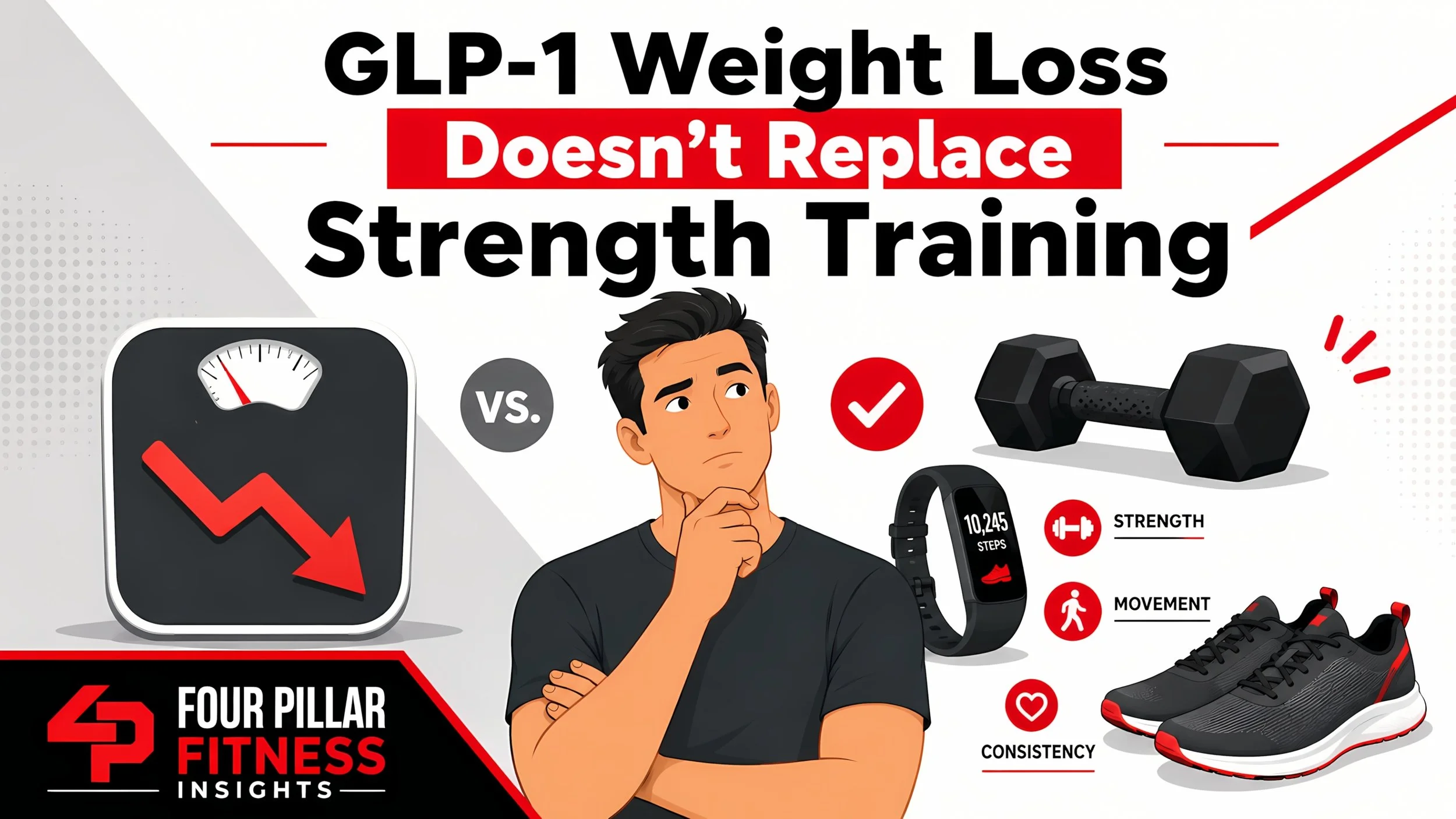
GLP-1 medications have become one of the biggest health and fitness topics of the last few years, and for good reason. For many people, they may support meaningful weight loss, improve blood sugar control, reduce appetite, and help break patterns that have been difficult to change through willpower alone. That matters. Obesity is not a character flaw, and medical tools that help people improve their health should not be dismissed just because they make some people uncomfortable.
But every tool has limits. In a previous Four Pillar Fitness Insight, we looked at the GLP-1 muscle loss concern and how to preserve lean mass while losing weight. That conversation is still important, but this article is about a different piece of the puzzle. The issue is not only that some of the weight lost on GLP-1 medications may come from lean mass. The newer concern is that some people may also move less after starting the medication.
A recent Endocrine Society report found that after beginning a GLP-1 receptor agonist, average daily steps dropped from 5,047 to 4,487. Moderate-to-vigorous physical activity also dropped from 28 minutes per day to 22 minutes per day. The report used linked electronic health record and Fitbit data from adults with obesity, and the researchers found no evidence that medication-driven weight loss led to people becoming more physically active.
That last point is the one people need to hear clearly. Losing weight does not automatically make you more active. Feeling lighter does not automatically build strength. A smaller body does not automatically become a healthier, more capable body. That still takes training.
The Medication Can Help Weight Loss, But It Cannot Train Your Body
GLP-1 medications can reduce appetite, slow gastric emptying, improve satiety, and make it easier for some people to maintain a calorie deficit. That can be a powerful medical tool when used under proper medical supervision. But medication does not load your muscles through a squat pattern. It does not strengthen your hips. It does not teach your shoulders to stabilize. It does not improve balance, coordination, grip strength, walking capacity, or your ability to get up from the floor.
That is not a knock on the medication. That is just not its job. The problem starts when people treat weight loss as the whole goal. If the scale is dropping, they assume the plan is working. Sometimes it is. But if body weight goes down while strength, steps, muscle, and daily movement also go down, the picture is more complicated. You may be lighter, but you may not be more capable.
As a coach, I care about weight loss when it supports health, confidence, mobility, and quality of life. But I care just as much about what you can do with the body you are building. Can you climb stairs without feeling wiped out? Can you carry groceries without your back barking at you? Can you train, recover, and move through your day with more control? Those are not scale victories, but they matter.
Why Movement May Drop
There are several possible reasons activity may drop after starting a GLP-1 medication. Some people experience nausea, fatigue, digestive discomfort, or lower food intake, especially early on. If you are eating less and not managing protein, hydration, and recovery well, your energy may take a hit. When energy drops, movement often drops with it.
There is also a behavioral side. When the scale is moving without as much effort, it is easy to unconsciously reduce the habits that used to support progress. You may stop walking after meals. You may skip workouts because weight is still coming down. You may start thinking, “The medication is doing the work.” That is understandable, but it is also where the trap begins.
Another factor is pain or discomfort. The Endocrine Society report noted that the largest activity declines were seen in men and in people with joint or muscle pain. If movement already feels uncomfortable, appetite reduction alone does not fix that. In some cases, people need a smarter entry point into training, not a harder one. Less pain, better mobility, and improved strength often require gradual programming, not random intensity.
This is where strength training becomes essential. Not extreme strength training. Not punishment workouts. Not “go hard or go home” nonsense. Just progressive resistance training done consistently enough to send the body a clear signal: keep this muscle, build this capacity, and stay useful.





The Real Risk Is Becoming Smaller But Weaker
When people talk about GLP-1s and muscle loss, the focus often goes straight to body composition. That makes sense, but there is another way to think about it. The real risk is not just losing lean mass on a scan. The real risk is becoming smaller while also losing strength, confidence, energy, and movement tolerance.
That matters at every age, but it becomes even more important as we get older. Muscle is not just for looking fit. It supports metabolism, glucose control, joint support, posture, balance, and independence. Strength is one of the biggest tools you have for staying capable through the decades.
If weight loss comes with lower protein, fewer steps, less resistance training, and poorer recovery, the scale may look better while the body becomes less resilient. That is not the outcome most people actually want. The better goal is not just weight loss. It is healthier weight loss.
That means preserving muscle, supporting metabolism, building strength, improving movement quality, and creating habits that still work if the medication dose changes, side effects appear, or the medication stops. The medication may help create the opening, but your habits decide what you build inside that opening.
Strength Training Is the Anchor
If you are using a GLP-1 medication, strength training should not be treated as optional decoration. It should be the anchor of your fitness plan, assuming your medical provider has cleared you to exercise. You do not need to train like a competitive athlete, but you do need enough resistance training to challenge the major movement patterns.
That includes some form of squat or leg press pattern, hip hinge, push, pull, carry, and core stability work. The exact exercises depend on your body, experience, equipment, and medical considerations, but the principle is simple: your muscles need a reason to stay.
Two to four strength sessions per week can be a realistic target for many adults. Beginners may start with two full-body sessions and build from there. More experienced lifters may use three or four structured days. The key is progression. Over time, you want to improve reps, load, control, range of motion, or exercise quality.
You do not need to destroy yourself. In fact, that approach usually backfires. The goal is repeatable training that lets you recover and come back again. Especially during weight loss, your program should challenge you without burying you.
Steps Still Matter
Strength training is the anchor, but daily movement is the glue. Steps are not glamorous, which is probably why social media has to keep inventing new names for walking. But walking works because it is simple, repeatable, low cost, and easy to scale.
If someone’s steps drop from around 5,000 to around 4,500 per day, that may not sound dramatic at first. But over weeks and months, that reduction adds up. It also tells us something important about behavior. If activity falls while weight is falling, the person may be losing one of the very habits they need for long-term maintenance.
This does not mean everyone needs 10,000 steps per day. That number is not magic. A better approach is to look at your current baseline and gradually build from there. If you are averaging 4,500 steps, aim for 5,000 to 5,500 first. If you are already at 7,000, maybe 8,000 is the next target. The goal is not perfection. The goal is to avoid letting daily movement quietly disappear.
A simple strategy is to add short walks after meals, park farther away, take a 10-minute walk after work, or use a walking pad during low-focus tasks. None of that is fancy. That is the point.
Nutrition Still Has to Support the Goal
When appetite drops, food quality matters more, not less. If you are eating less overall, each meal has to pull more weight. Protein becomes especially important because it supports muscle repair and helps preserve lean mass during weight loss. Strength training sends the signal to keep muscle. Protein helps provide the building blocks.
This is where people can get into trouble. If meals shrink too much and protein drops with them, the body may not get enough support for training, recovery, and muscle maintenance. The answer is not to force huge meals if appetite is low. The answer is to be strategic.
Prioritize protein first, then build meals around vegetables, fruit, fiber-rich carbohydrates, healthy fats, and hydration. Protein shakes can be useful when appetite is low, especially after training or between meals. They are not magic, but they are practical.
Hydration also deserves attention. Some people eat less, drink less, and then wonder why workouts feel terrible. If training performance falls, recovery worsens, or you feel flat, look at fluids, electrolytes, protein, and total calories before assuming you have lost motivation.
Recovery Is Part of the Plan
During weight loss, recovery can get overlooked because people are focused on the scale. But recovery is where adaptation happens. If you are eating less, sleeping poorly, training inconsistently, and moving less, your body is not getting a strong signal to become healthier. It is getting mixed messages.
Sleep, stress management, and smart programming matter. Hard workouts are only productive when the body can adapt to them. That is especially true if you are in a calorie deficit. More is not always better. Better is better.
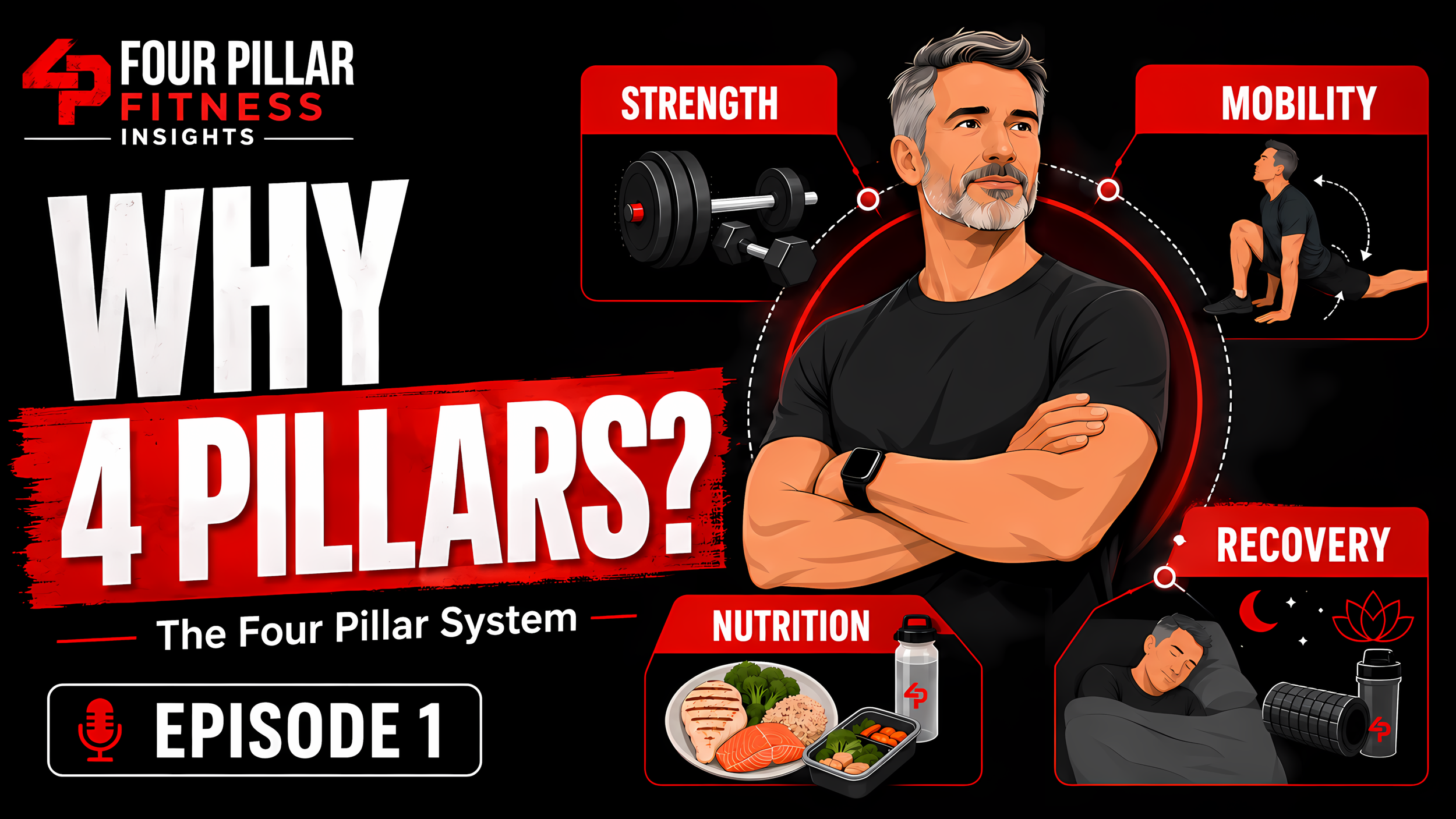
A good plan should include strength training, walking, mobility work, protein, hydration, sleep, and recovery. That is the Four Pillar Fitness approach for a reason. Strength, Mobility, Nutrition, and Recovery work together. Pull one pillar out, and the whole system gets shaky.
A Simple GLP-1 Training Framework
If you are taking a GLP-1 medication and your medical provider has cleared you for exercise, start with a plan you can actually repeat. Aim for two to three strength sessions per week, built around full-body movements. Add daily walking based on your current baseline. Include simple mobility work for hips, ankles, shoulders, and spine, especially if joint discomfort limits movement.
Track more than weight. Track steps, strength, energy, protein, sleep, and how you feel during daily tasks. If the scale is dropping but your strength is crashing, your steps are falling, and you feel weaker every week, that is useful information. It does not mean panic. It means adjust the plan.
A realistic starter week might look like two full-body strength sessions, three to five short walks, one or two brief mobility sessions, and consistent protein at each meal. That is not flashy, but it is sustainable. Sustainable usually beats dramatic.
The Final Rep
GLP-1 medications can be helpful tools, but they do not replace strength training, walking, nutrition, or recovery. They may help reduce appetite and support weight loss, but they do not automatically build a stronger body. That part still requires movement.
The new concern is not just muscle loss. It is movement loss. If you are using a GLP-1 medication, the goal should not be to simply weigh less. The goal should be to become healthier, stronger, more mobile, and more capable as the weight comes down. That means keeping strength training in the plan, protecting daily movement, eating enough protein, and recovering well enough to keep going.
The medication may help open the door, but you still have to walk through it. If you are currently using a GLP-1 or considering one, ask yourself this: as the scale changes, are you also building the strength and habits you will need to keep your progress?
If you’re using a GLP-1 medication or considering one, what are you doing to make sure the weight you lose also leads to a stronger, more capable body? Leave a comment below.
Stephan Earl is a NASM Certified Personal Trainer, Nutrition Coach, and Corrective Exercise Specialist dedicated to helping people build lasting strength and mobility at every age. With a focus on practical, sustainable fitness, he combines science-based training with mindful movement and nutrition.
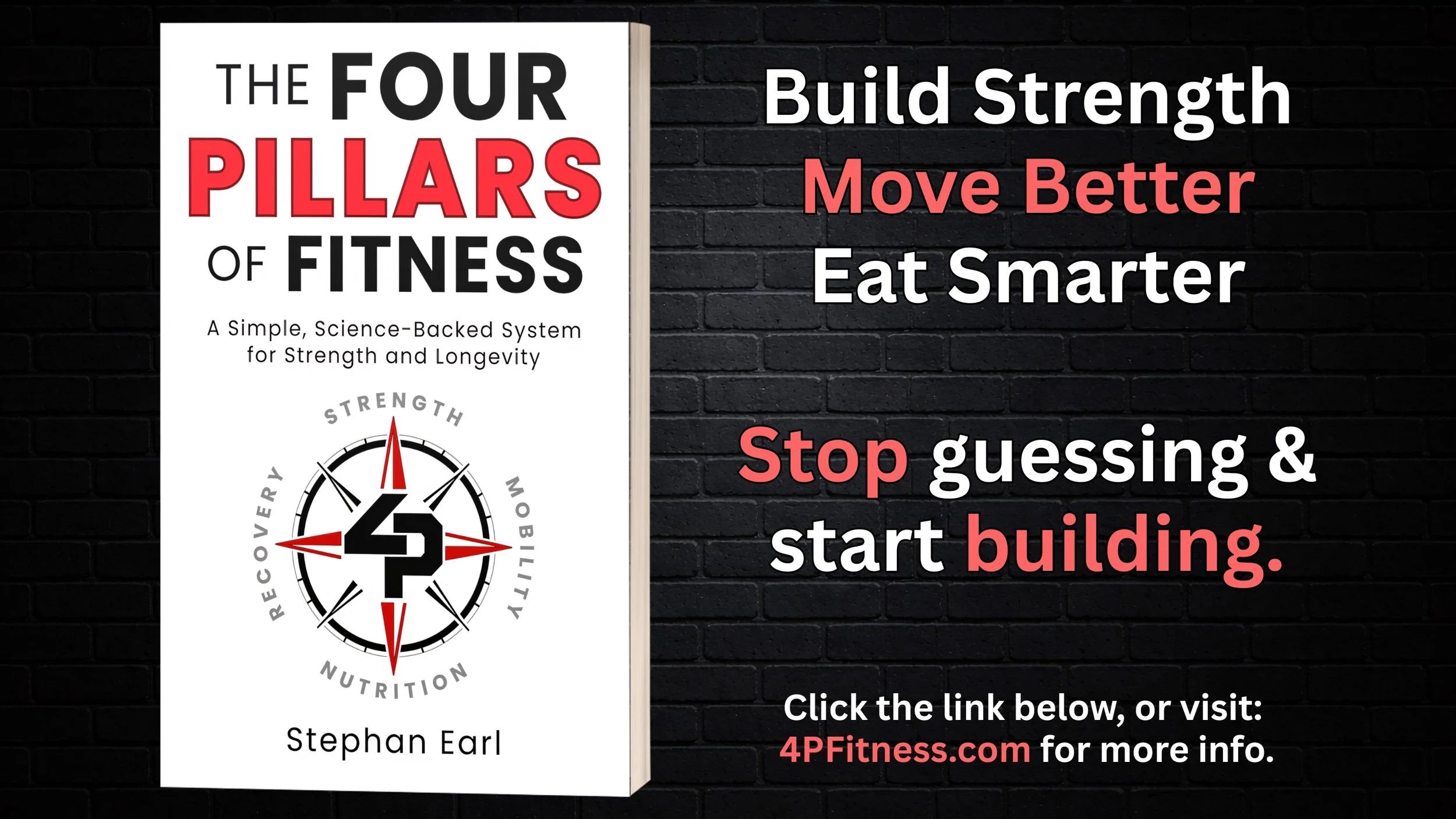
He's the author of Yoga Strong: 100 Asanas for Strength of Body and Mind and the forthcoming book The Four Pillars of Fitness: A Simple, Science-Backed System For Strength and Longevity, which explores how to stay strong, flexible, and energized for life. His mission is to help others move better, feel better, and live fully at every stage of their fitness journey.
Learn More
Four Pillar Fitness is built on one clear idea. Strength, Mobility, Nutrition, and Recovery work together to keep you strong and independent at every age. To dive deeper into each pillar visit 4PFitness.com.
References
Currier, B. S., et al. (2026). American College of Sports Medicine position stand: Resistance training prescription for muscle function, hypertrophy, and physical performance in healthy adults. Medicine & Science in Sports & Exercise.
Endocrine Society. (2026, June 13). Exercise decreases among people taking GLP-1 medication. Endocrine Society.
Jäger, R., Kerksick, C. M., Campbell, B. I., Cribb, P. J., Wells, S. D., Skwiat, T. M., Purpura, M., Ziegenfuss, T. N., Ferrando, A. A., Arent, S. M., Smith-Ryan, A. E., Stout, J. R., Arciero, P. J., Ormsbee, M. J., Taylor, L. W., Wilborn, C. D., Kalman, D. S., Kreider, R. B., Willoughby, D. S., … Antonio, J. (2017). International Society of Sports Nutrition position stand: Protein and exercise. Journal of the International Society of Sports Nutrition, 14, Article 20.
Maharjan, S. (2026). Losing pounds, not gaining steps: Physical activity after GLP-1 initiation. ENDO 2026, Endocrine Society Annual Meeting.
Wilding, J. P. H., Batterham, R. L., Calanna, S., Davies, M., Van Gaal, L. F., Lingvay, I., McGowan, B. M., Rosenstock, J., Tran, M. T. D., Wadden, T. A., Wharton, S., Yokote, K., Zeuthen, N., & Kushner, R. F. (2021). Once-weekly semaglutide in adults with overweight or obesity. The New England Journal of Medicine, 384(11), 989–1002.
More Health & Fitness Insights…

Visit the 4P Fitness PRO Shop
Gear up with fitness-inspired apparel, drinkware, journals, instant downloads, and a little gym and coach humor for the people who train hard, recover smart, and still know how to laugh between sets.
Shop the 4P Fitness Pro Shop and find something that fits your fitness life.

The 4P Fitness Pro Shop Gift Card is a simple, flexible gift for lifters, athletes, coaches, clients, and everyday warriors. Available from $25 to $200, it lets them choose apparel, drinkware, fitness gear, books, journals, or other 4P Fitness favorites. No sizing guesswork. No color worries. Just motivation they can pick for themselves.
Features
Available in denominations from $25 to $200
Redeemable toward eligible products in the 4P Fitness Pro Shop
Great for apparel, drinkware, fitness accessories, books, journals, and more
Perfect for athletes, gym lovers, coaches, clients, and fitness-minded friends
A flexible gift option for holidays, birthdays, milestones, and special occasions
No physical product required, making it easy to send and easy to use