

You’re Planning for a Longer Career. Are You Training for One?
Professionals prepare carefully for the future. They contribute to retirement accounts, build networks, earn advanced degrees, and make strategic career moves. Yet one question rarely makes it into the long-term plan: Will your body still be able to support the life and career you’re building?
I coach professionals ranging from their 30s through their 70s, including physicians, attorneys, executives, educators, entrepreneurs, and thought leaders. Many have achieved remarkable things through intelligence, discipline, and sustained effort. I understand that world because I spent 25 years in corporate event technology, including 18 years in executive leadership roles. I know how easily meetings, travel, deadlines, family responsibilities, and professional expectations can crowd out personal health.
Some have reached the highest levels of their professions, yet struggle with basic physical tasks. They may need to hold onto something when bending their knees, become short of breath during routine activities, or feel drained after an ordinary workday. Others waited to have children and are now raising younger children in midlife. They want to participate fully, but professional success doesn’t automatically provide the strength or energy needed to keep up.
They aren’t lazy or unmotivated. They simply invested heavily in one area of life while making too few deposits into another.
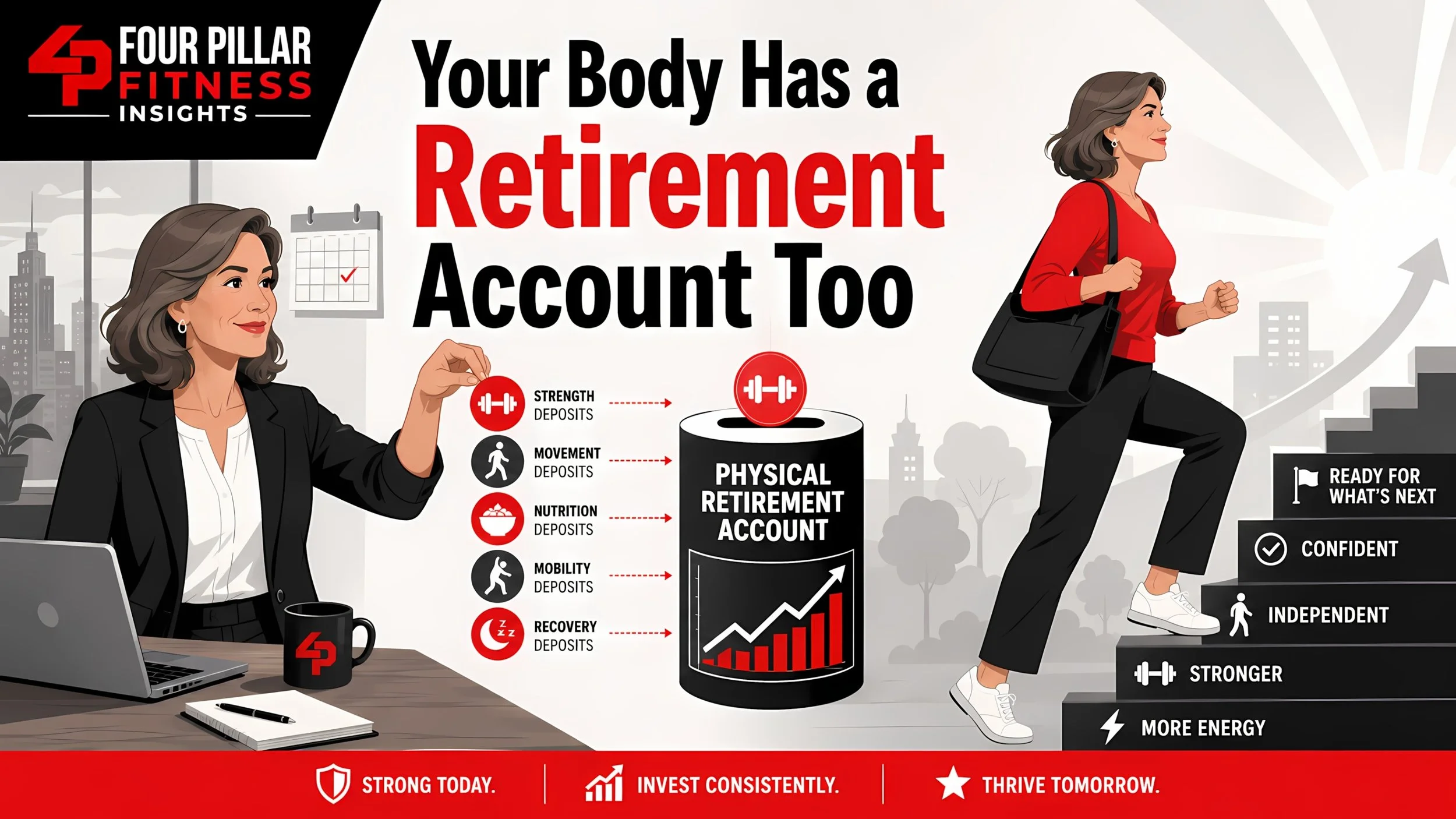
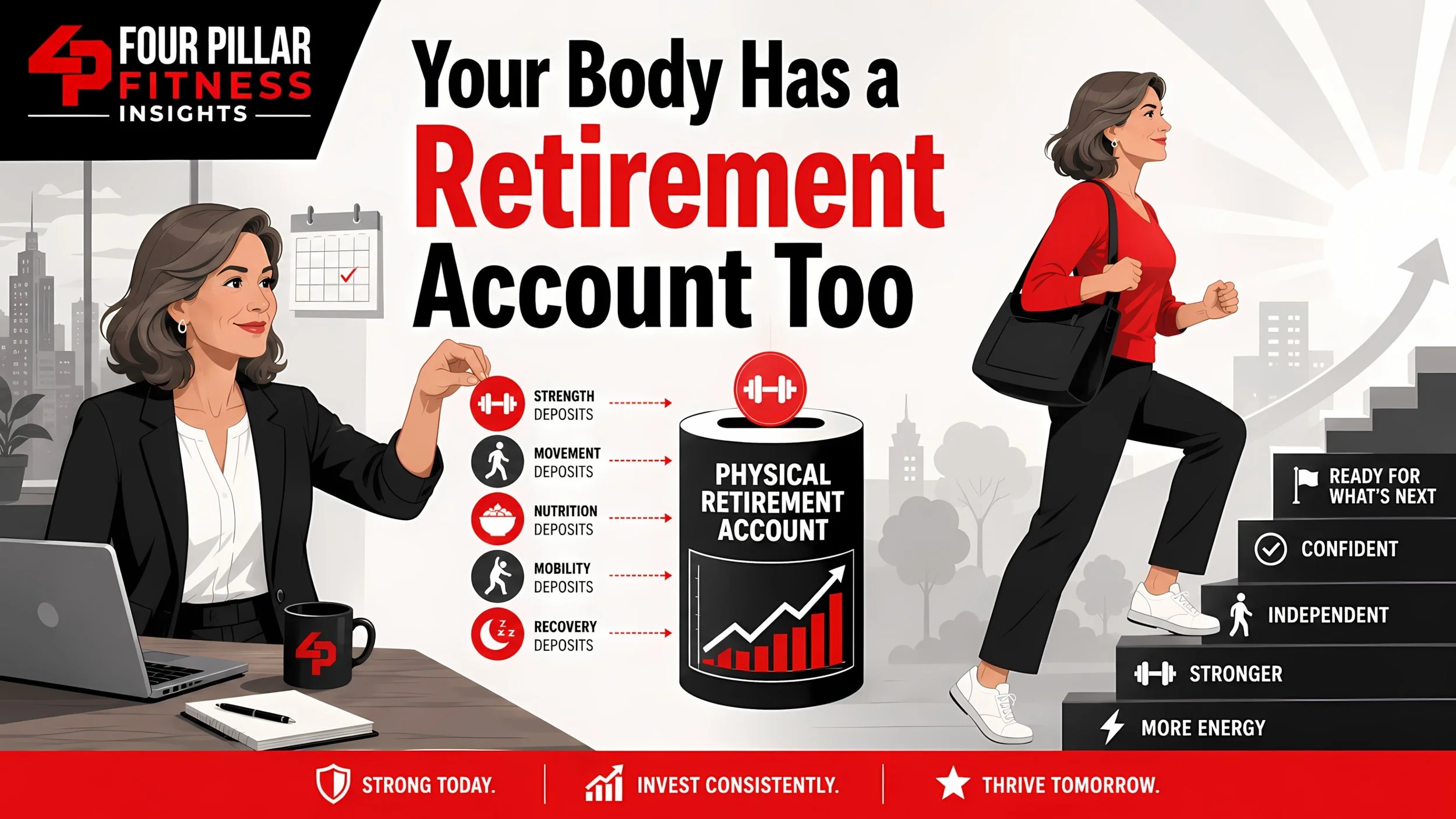
Your Body Has a Retirement Account Too
A financial retirement account grows through regular contributions made over time. Your physical capacity works in a similar way. Every strength workout, walk, balanced meal, good night of sleep, and short mobility session can be viewed as a deposit. Long periods of inactivity, poor nutrition, unmanaged stress, and inadequate recovery can act like withdrawals.
One workout won’t create lasting strength, just as one retirement contribution won’t create financial security. The value is in repetition. This doesn’t mean your habits can prevent every illness, injury, or age-related change. Genetics, medical conditions, accidents, and other circumstances still matter. Regular physical activity, however, can support strength, function, and health throughout adulthood.
The World Health Organization recommends regular aerobic activity, muscle-strengthening activity, and less sedentary time to support health and physical function. You may have a retirement plan for your money, but you also need one for your muscle, movement, energy, and independence.
A Long Career Requires Physical Capacity
Many professional jobs aren’t physically demanding in the traditional sense, but they still place demands on the body. Hours spent sitting can limit how often you use your muscles and move your joints through varied ranges. Business travel can interrupt sleep, meals, and exercise. Deadlines increase mental strain, while long workdays can make convenience food and skipped workouts more likely.
The concern is what happens when these patterns accumulate for years. You may notice that stairs feel harder, your hips feel stiff after sitting, or getting to the floor isn’t as comfortable as it once was. Eventually, ordinary activities may require more effort or assistance.
Research has associated greater activity and less sedentary time with a lower risk of premature mortality. It’s about maintaining enough capacity to handle work, family, recreation, travel, and daily life without your body constantly negotiating the terms.
Strength Is Your Physical Reserve
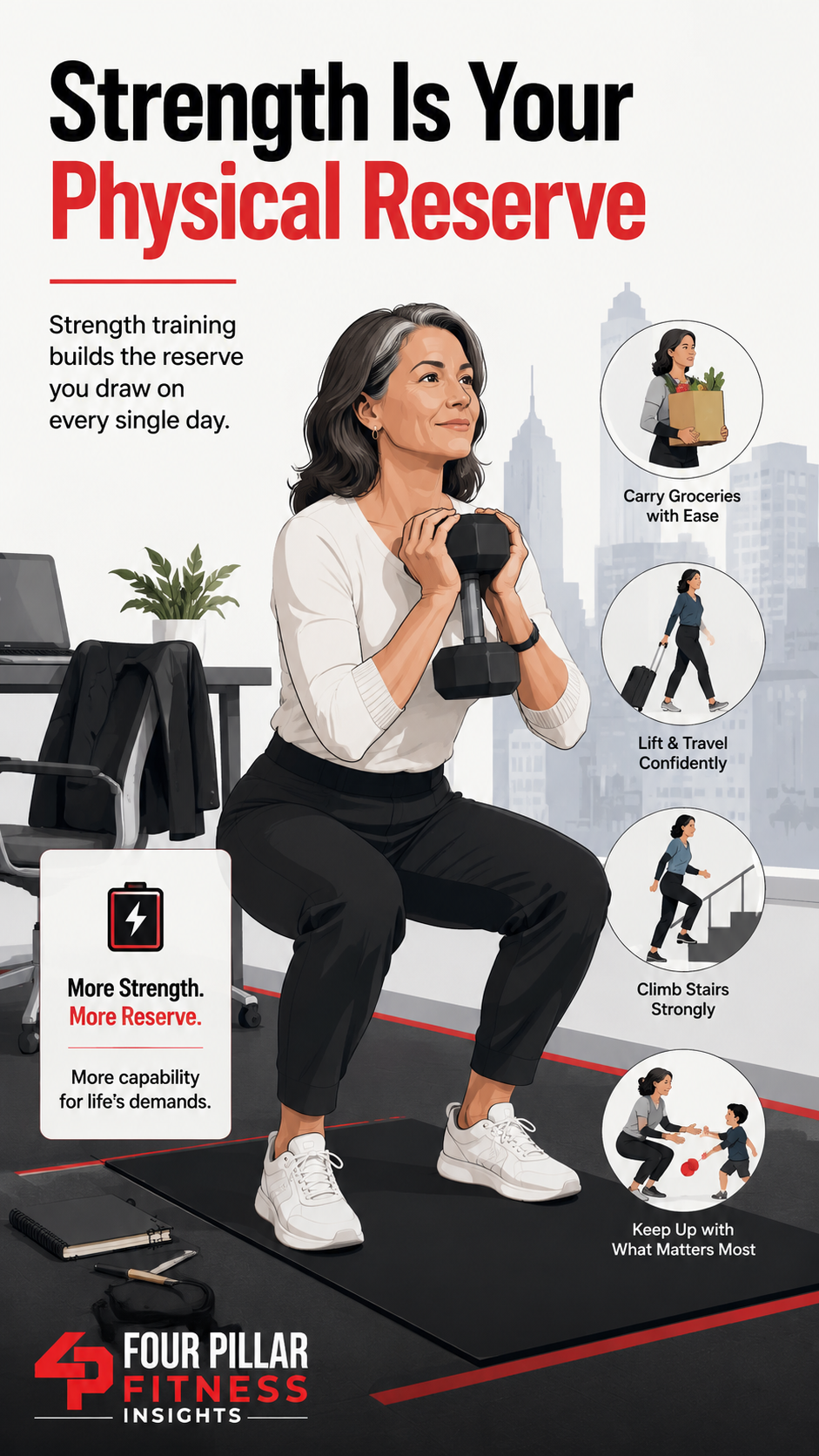
Muscle is often discussed mainly in terms of appearance, but it also supports movement, balance, joint stability, and force production. You use strength when you rise from a chair, carry groceries, lift a suitcase, climb stairs, play with your children, or catch yourself when you lose your balance. When strength declines, ordinary life becomes more demanding.
This is why I pay attention when a successful professional can’t bend their knees comfortably without holding onto something. The issue isn’t whether that person can perform a picture-perfect squat. The issue is whether their available strength and movement capacity match what daily life requires.
Resistance training is associated with better strength and functional capacity in older adults. Research also suggests that lower-volume training can improve physical function, even if more may be needed to maximize strength. That’s good news for busy professionals. You don’t need to live in the gym to begin rebuilding your physical reserve.
Two or three well-planned strength sessions each week can provide a practical foundation. The program should challenge the major muscle groups, progress gradually, and fit your life.
Mobility Keeps Your Options Open
Strength is most useful when you can apply it through comfortable, controlled movement. Mobility is simply your ability to move through the ranges needed for daily life and exercise.
If most of your day is spent sitting at a desk, driving, flying, or looking at a screen, your body becomes highly practiced at those positions. Sitting isn’t automatically harmful, but it shouldn’t be the only position your body regularly experiences. You also need opportunities to stand, walk, reach, rotate, bend, and move under control.
Brief movement breaks, walking, controlled joint exercises, and strength training through an appropriate range can all support mobility. The practical test isn’t whether you can touch your toes. It’s whether you can get down to the floor and back up, reach overhead, turn comfortably, climb stairs, and move through your day with confidence.
Nutrition Supports the Body Doing the Work
Many professionals treat food as fuel for productivity or something to control for weight loss. Nutrition has a broader job. Your body needs protein and energy to maintain tissue and recover from exercise. Fiber-rich carbohydrates, healthy fats, fruits, vegetables, and sufficient hydration can support energy, digestion, training, and overall health.
Protein becomes especially important when you’re resistance training, reducing calories, or trying to maintain muscle as you age. Research indicates that more protein can provide small additional improvements in lean mass and some strength outcomes when combined with resistance training. Protein supports the training process, but it doesn’t replace the need to train.
That doesn’t require a complicated meal plan. Build repeatable meals around a quality protein source, fruits or vegetables, fiber-rich foods, and enough total food to support your activity. The best nutrition plan is the one you can maintain during business travel, demanding work periods, family dinners, and ordinary Tuesdays.
Recovery Is Part of the Strategy
High-achieving professionals are often excellent at applying effort, but less skilled at recovery. When energy drops, the common response is to add caffeine, work later, push through another workout, or promise to rest after the next deadline. Unfortunately, there’s always another deadline.
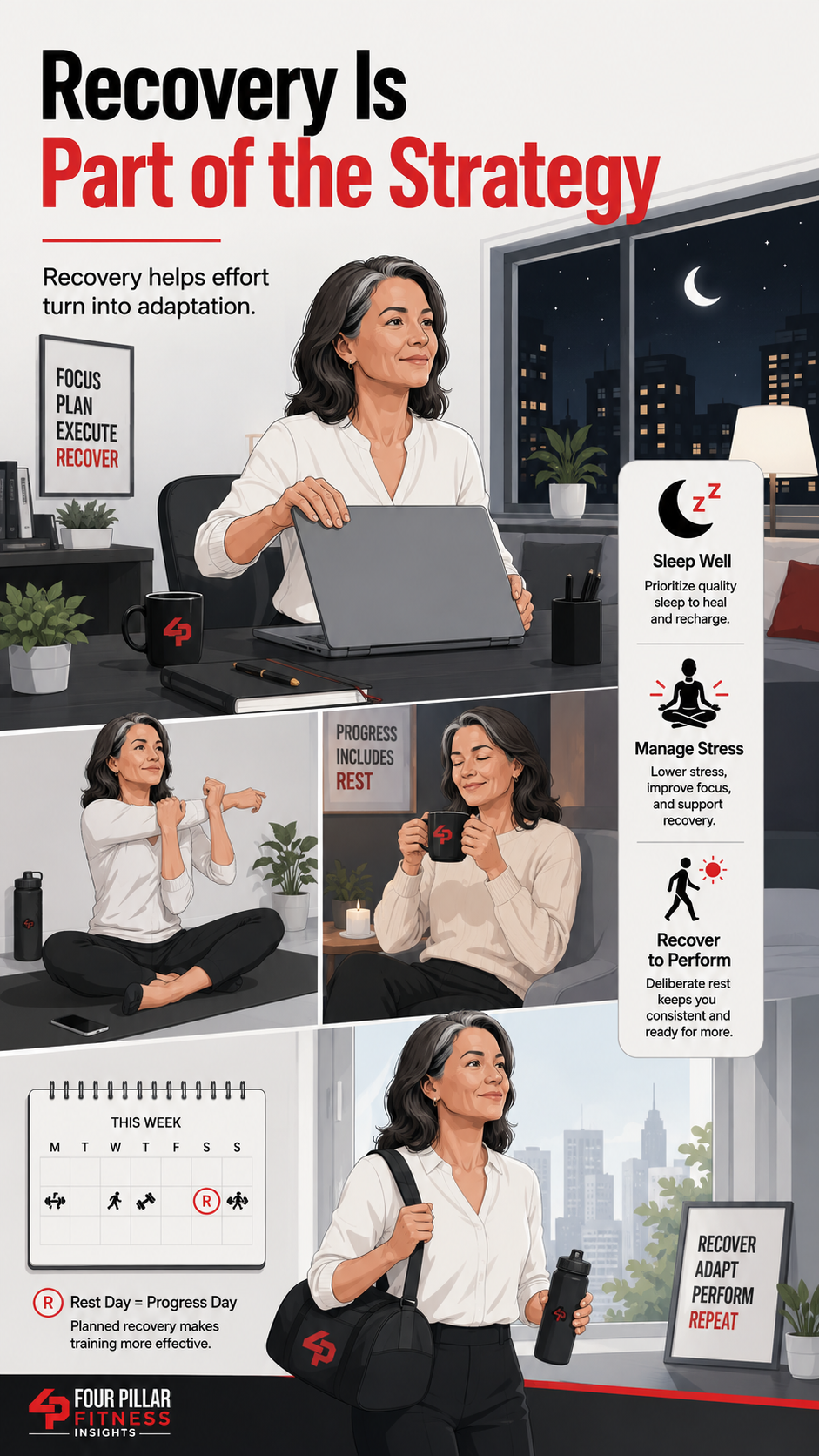
Exercise provides a stress that encourages the body to adapt, but adaptation requires recovery. Work pressure, disrupted sleep, family responsibilities, travel, and training all contribute to your total load. Recovery includes consistent sleep habits, rest days, lower-intensity movement, time away from work, and adjusting training when life becomes unusually demanding.
Recovery doesn’t mean doing nothing. It means giving your body enough support to respond to training and daily stress. It’s part of the process that allows productive effort to continue.
Fitness Should Support Your Career, Not Compete With It
A common mistake is building a fitness routine that looks impressive instead of one that fits. Someone who has been inactive doesn’t need a six-day training split, a rigid meal plan, and an elaborate morning routine. That creates another full-time job, and most professionals already have one.
A realistic baseline might include two or three weekly strength sessions, regular walking or cardiovascular activity, brief mobility work, protein and produce at most meals, and a more consistent sleep routine. During demanding weeks, the plan can shrink without disappearing. A 30-minute workout, a walk between meetings, or a simple protein-rich meal still counts.
This is also where coaching can help. A useful program should account for your schedule, current ability, training history, and the demands of your work and family life. My online coaching is designed to help busy professionals build strength, improve mobility, and develop sustainable nutrition and recovery habits without turning fitness into another full-time job.
Your goal isn’t to win fitness. It’s to build enough physical capacity to support everything else that matters.
Start Before the Need Becomes Urgent
Many people wait until pain, weakness, exhaustion, or a medical warning forces them to act. That’s the physical equivalent of waiting until retirement to begin saving. You don’t need to panic about getting older or punish yourself for what you haven’t done. You need an honest assessment of where you are now.
Can you rise from a low chair without using your hands? Can you carry your bags, climb stairs, and play with your children or grandchildren without becoming unusually exhausted? Are you building strength, or simply hoping you’ll keep what you have?
Choose one deposit you can make this week. Schedule two strength workouts. Walk after lunch. Add protein to breakfast. Take movement breaks during the workday. Set a more consistent bedtime. Small deposits may not feel dramatic, but neither do most retirement contributions. Their power comes from accumulation.
Your career may continue for decades, but life also exists beyond the résumé. The goal is to reach those years able to travel, work, train, play, and participate fully. Strength builds your physical reserve. Mobility preserves your movement options. Nutrition supplies the materials. Recovery gives your body the opportunity to adapt.
You’ve worked hard to build a successful future. Make sure you’re also building the body you’ll need to live it.
What are you doing today to make sure your body can support the life and career you’re building? Leave a comment below.
Stephan Earl is a NASM Certified Personal Trainer, Nutrition Coach, and Corrective Exercise Specialist dedicated to helping people build lasting strength and mobility at every age. With a focus on practical, sustainable fitness, he combines science-based training with mindful movement and nutrition.
He's the author of Yoga Strong: 100 Asanas for Strength of Body and Mind and the forthcoming book The Four Pillars of Fitness: A Simple, Science-Backed System For Strength and Longevity, which explores how to stay strong, mobile, and energized for life. His mission is to help others move better, feel better, and live fully at every stage of their fitness journey.
Learn More
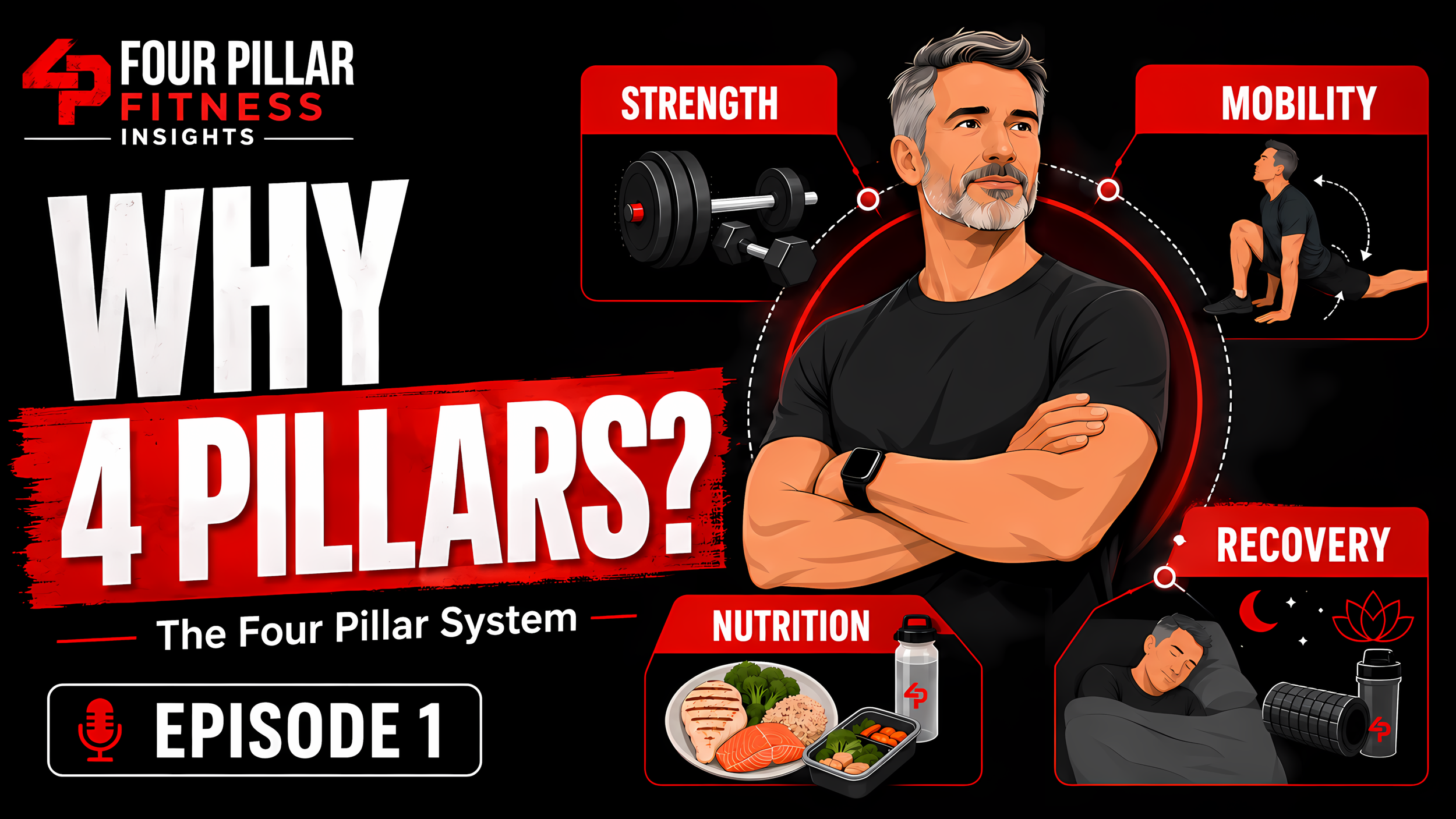
Four Pillar Fitness is built on one clear idea. Strength, Mobility, Nutrition, and Recovery work together to keep you strong and independent at every age. To dive deeper into each pillar, visit 4PFitness.com.
References
Bull, F. C., Al-Ansari, S. S., Biddle, S., Borodulin, K., Buman, M. P., Cardon, G., Carty, C., Chaput, J. P., Chastin, S., Chou, R., Dempsey, P. C., DiPietro, L., Ekelund, U., Firth, J., Friedenreich, C. M., Garcia, L., Gichu, M., Jago, R., Katzmarzyk, P. T., Lambert, E., Leitzmann, M., Milton, K., Ortega, F. B., Ranasinghe, C., Stamatakis, E., Tiedemann, A., Troiano, R. P., van der Ploeg, H. P., Wari, V., & Willumsen, J. F. (2020). World Health Organization 2020 guidelines on physical activity and sedentary behaviour. British Journal of Sports Medicine, 54(24), 1451–1462.
Ekelund, U., Tarp, J., Fagerland, M. W., Johannessen, J. S., Hansen, B. H., Jefferis, B. J., Whincup, P. H., Diaz, K. M., Hooker, S., Howard, V. J., Chernofsky, A., Larson, M. G., Spartano, N., Vasan, R. S., Dohrn, I. M., Hagströmer, M., Edwardson, C., Yates, T., Shiroma, E., & Lee, I. M. (2020). Joint associations of accelerometer-measured physical activity and sedentary time with all-cause mortality: A harmonised meta-analysis in more than 44,000 middle-aged and older individuals. British Journal of Sports Medicine, 54(24), 1499–1506.
Kashi, S. K., Mirzazadeh, Z. S., Saatchian, V., & Kargarfard, M. (2023). A systematic review and meta-analysis of resistance training on quality of life, depression, muscle strength, and functional exercise capacity in older adults. Experimental Gerontology, 177, 112190.
Nunes, E. A., Colenso-Semple, L., McKellar, S. R., Yau, T., Ali, M. U., Fitzpatrick-Lewis, D., Sherifali, D., Gaudichon, C., Tomé, D., Atherton, P. J., Phillips, S. M., & D’Souza, A. C. (2022). Systematic review and meta-analysis of protein intake to support muscle mass and function in healthy adults. Journal of Cachexia, Sarcopenia and Muscle, 13(2), 795–810.
Radaelli, R., Taaffe, D. R., Newton, R. U., Galvão, D. A., & Lopez, P. (2025). Effects of resistance training volume on physical function, lean body mass and lower-body muscle hypertrophy and strength in healthy older adults: A systematic review and network meta-analysis. Sports Medicine, 55, 455–471.
More Health & Fitness Insights…
Visit the 4P Fitness PRO Shop
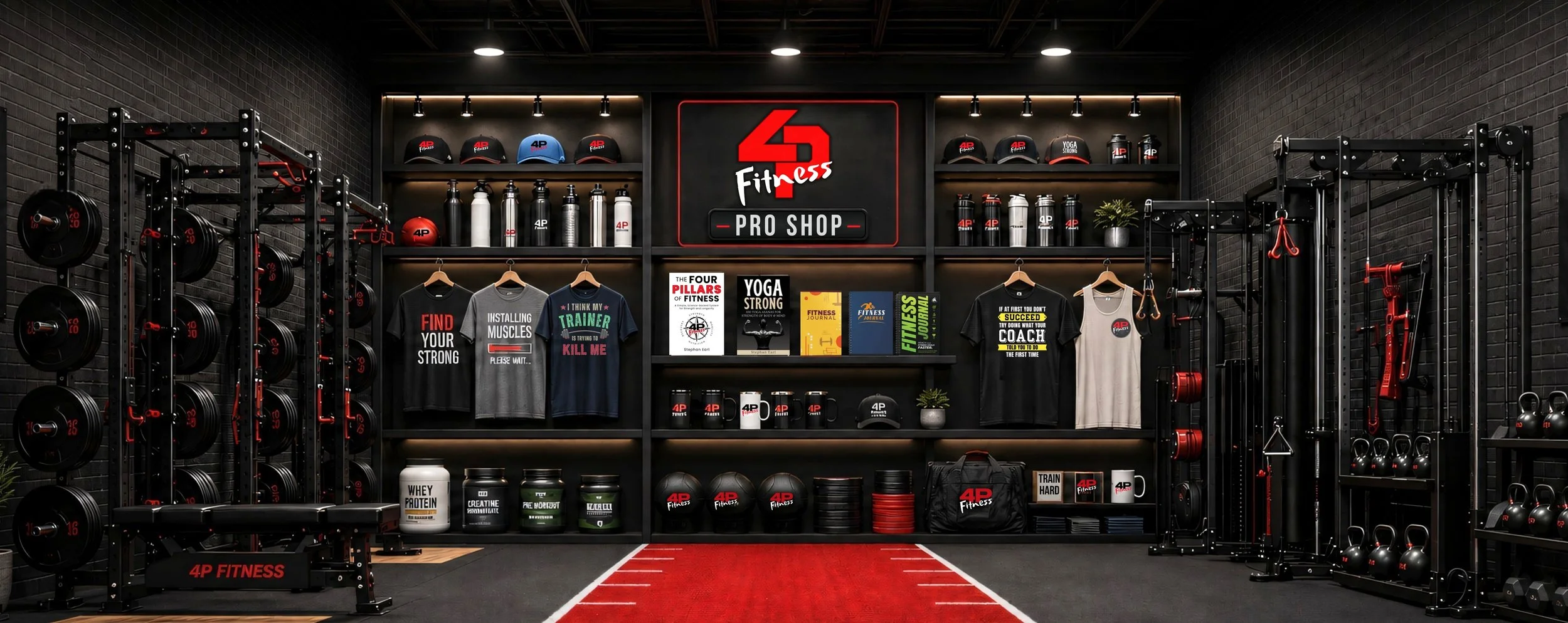
Gear up with fitness-inspired apparel, drinkware, journals, instant downloads, and a little gym and coach humor for the people who train hard, recover smart, and still know how to laugh between sets.
Shop the 4P Fitness Pro Shop and find something that fits your fitness life.

Can you build muscle and lose fat after 50? Yes, but the process depends on more than training hard or eating more. Learn how calorie intake, protein, alcohol, recovery, training history, body recomposition, smart-scale readings, and realistic timelines affect muscle gain and fat loss as you get older.