

Why You’re Not Seeing Results, Part 2: Your Habits Don’t Match Your Goals
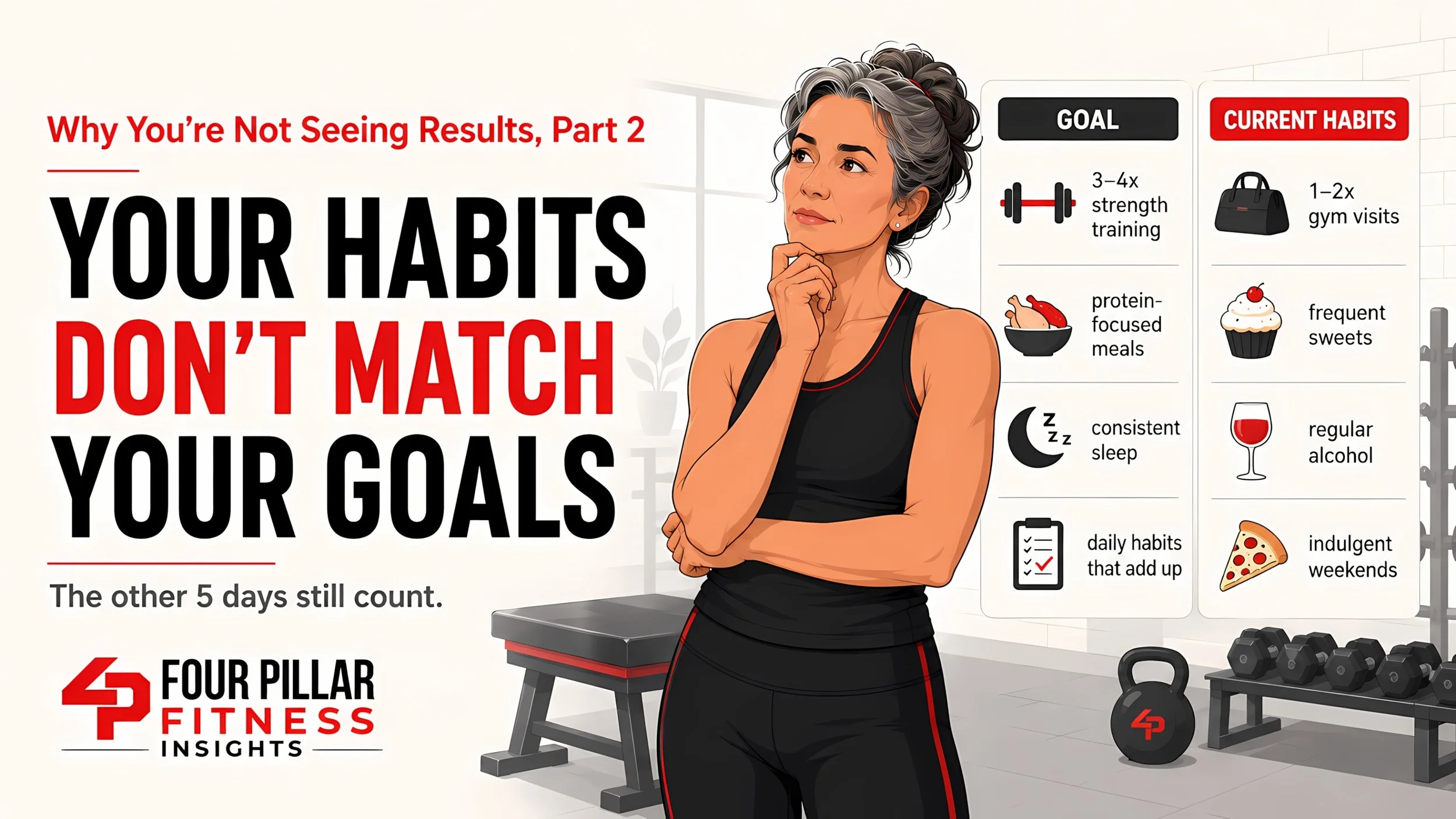
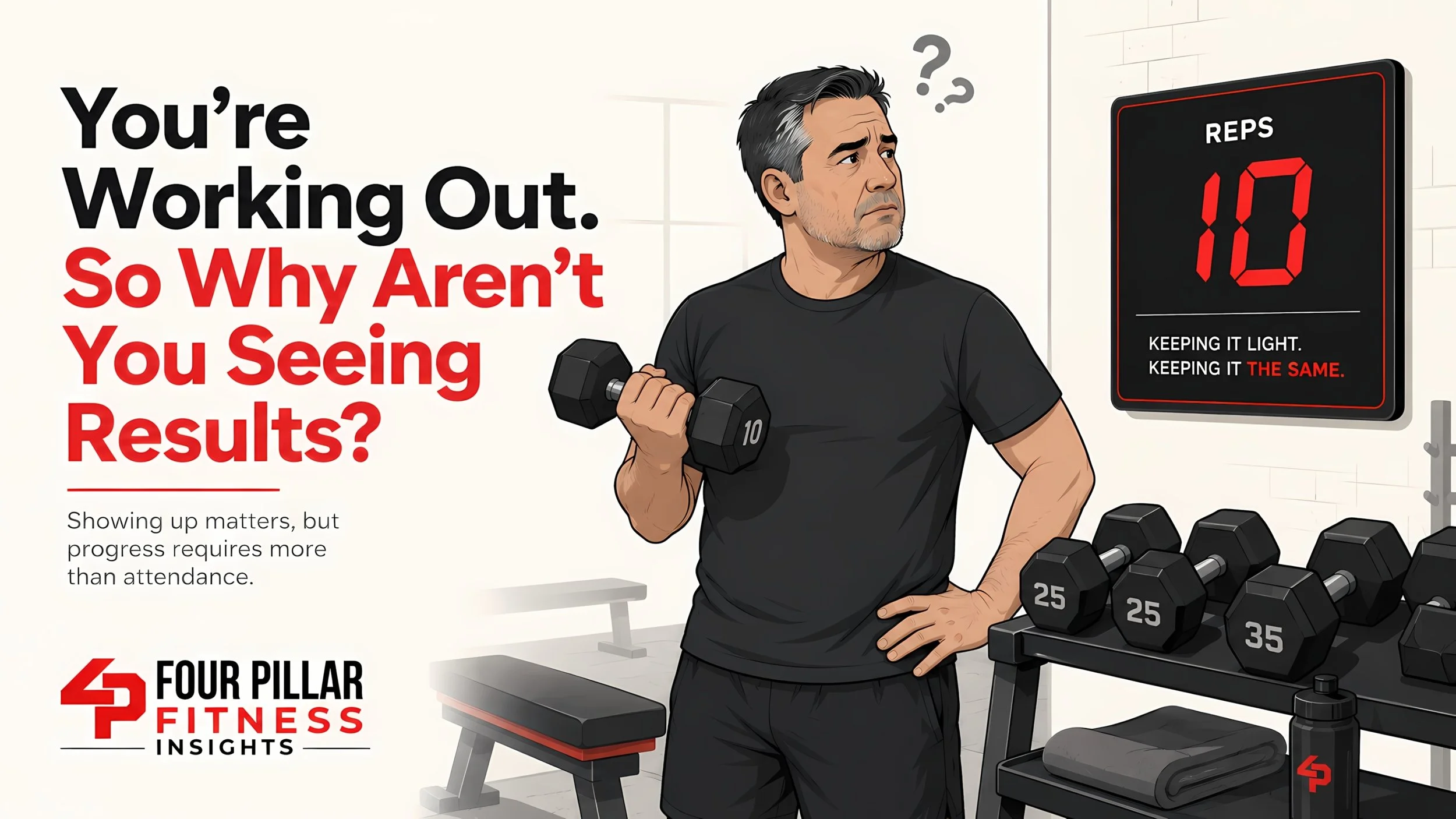
In Part 1 (Why You’re Not Seeing Results, Part 1: Your Workouts Aren’t Progressing), I focused on the person who shows up consistently but isn’t training in a way that creates much progression. The weights stay the same, the reps stay the same, and the effort stays comfortable. Part 2 is about a different problem I see just as often: the person who wants meaningful results but whose habits outside the gym don’t consistently support the goal.
They may make it to the gym once or twice most weeks. They want to lose body fat, build muscle, or noticeably change how they look and feel. They’re frustrated that progress is slow or nonexistent, but when we look at nutrition, alcohol, sleep, daily movement, and consistency, the picture usually becomes clearer. Ask about nutrition and the answer is often, “I eat pretty clean.” Then we peel back a few layers and find the restaurant meals, drinks, desserts, snacks, large portions, and weekends that weren’t part of the first description.
None of those choices make someone a bad person, and none of them need to disappear forever. But your body doesn’t respond to whether you consider a food clean or whether you intended to have a good week. It responds to what you consistently do.
Your Expectations Have to Match Your Effort
For most adults I coach who want to improve strength, build or preserve muscle, and make noticeable changes in body composition, three to four well-designed strength-training sessions per week is a strong practical target. That schedule makes it easier to spread useful training volume across the week, challenge the major muscle groups, practice the main movement patterns, and recover between sessions without requiring you to live in the gym. Research suggests that total weekly training volume matters more than frequency by itself, so the goal isn’t simply to collect gym days. It’s to organize enough quality work across the week to support progression.
That doesn’t mean two days per week is ineffective. Two well-structured strength sessions can absolutely improve health, fitness, and strength, especially for beginners, people returning after time away, or anyone with a very busy schedule. But the size and speed of the result you expect still need to match the amount and quality of training you’re actually doing.
This is where frustration often begins. Someone expects the outcome of a highly consistent plan while following one that’s only moderately consistent. There’s nothing wrong with choosing a more flexible lifestyle, but your expected results have to match the choices you’re willing to make.
What Does Realistic Fat Loss Actually Look Like?
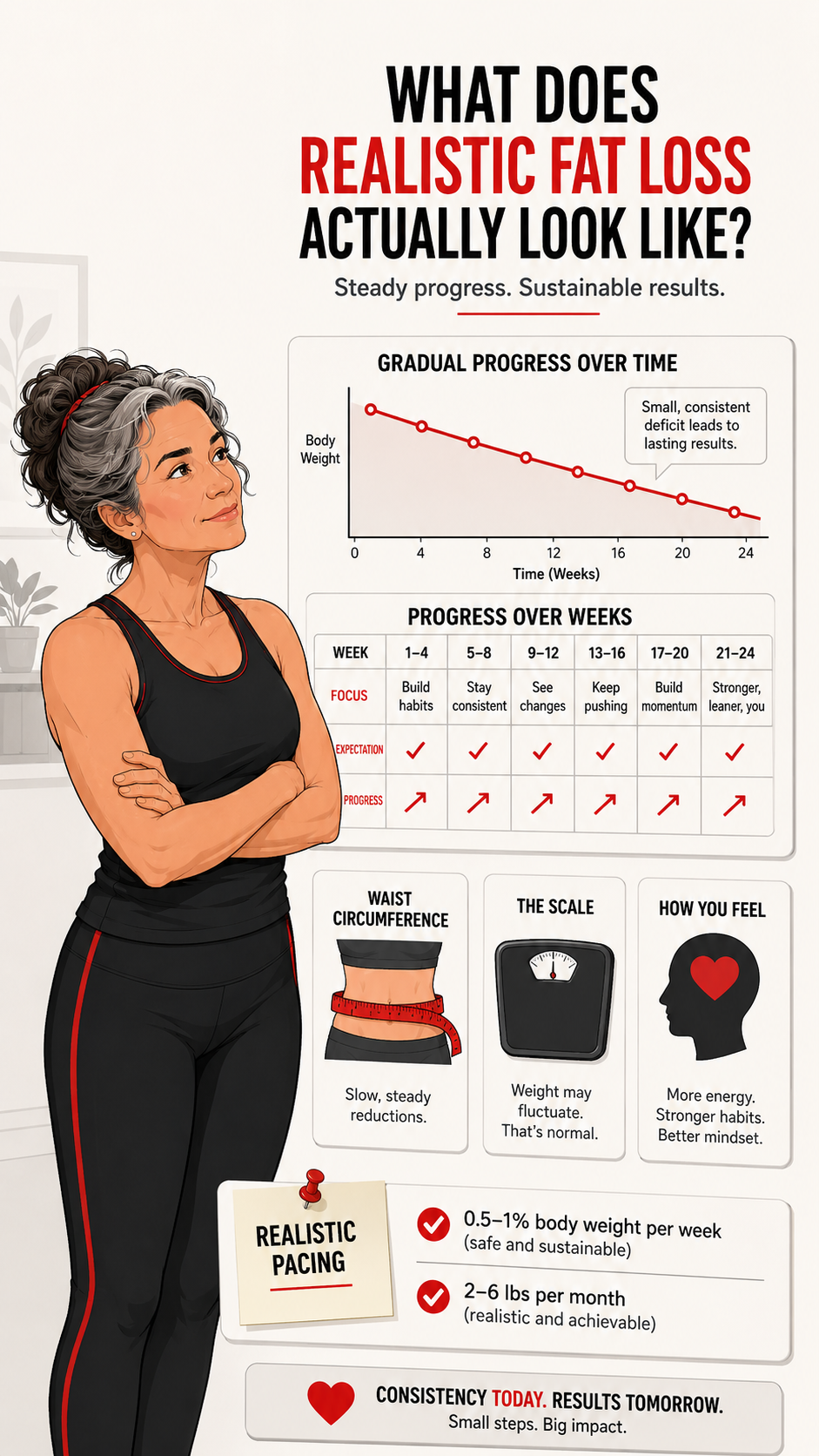
Fitness marketing has trained people to expect dramatic change on a very short timeline. Real fat loss is usually less exciting and much more sustainable. A commonly used target is roughly 0.5 to 1 percent of body weight per week, although many people will progress more slowly in real life. For someone who weighs 200 pounds, that range would be about 1 to 2 pounds per week under good conditions.
That doesn’t mean everyone should expect to lose eight pounds every month. Weight loss is rarely linear. Water retention, sodium, training, stress, sleep, starting body composition, and simple day-to-day fluctuations can all affect the scale. For many people, losing roughly 2 to 6 pounds per month can represent very good progress, especially when strength training and adequate protein are helping preserve lean mass.
Body-fat percentage is even harder to judge month to month because most practical measurement methods are estimates. Instead of chasing a specific monthly body-fat percentage, watch several indicators together: scale trends, waist measurements, strength, how clothing fits, progress photos when appropriate, and body-composition estimates over longer periods. The goal is to see a trend, not demand a perfect number every Friday morning.
Muscle Gain Is Slow Too
Muscle gain is harder to reduce to a monthly number because research usually measures changes over longer training periods, and measurements of lean mass include more than newly built muscle tissue. Beginners generally have the greatest potential for relatively fast gains, while experienced lifters progress more slowly. Even under excellent conditions, though, meaningful muscle growth happens over months and years.
If a newer trainee is clearly gaining muscle from month to month while strength and performance are also improving, that is good progress. Someone with more training experience should expect the rate to be slower. Genetics, age, training history, nutrition, sleep, and program quality all affect the pace, which is why a sudden five-pound increase on the scale should never be assumed to be five pounds of new muscle.
The practical lesson is patience. If you keep changing programs because you don’t see a dramatic physical difference after a few weeks, you may never give the process enough time to work.
Why Sweets Can Derail the Early Stages of Fat Loss
Sugar isn’t magic poison, and dessert doesn’t automatically stop fat loss. The problem is usually more practical: sweets are easy to eat, easy to underestimate, highly palatable, and often added on top of meals rather than replacing anything. A couple of cookies, a pastry, a sweet coffee, or a handful of candy may not feel like much food, but those calories still count toward the day.
This matters especially in the early stages of fat loss because you’re trying to establish a repeatable calorie deficit and learn what your normal portions actually look like. Research on free sugars and sugar-sweetened beverages shows that their relationship with weight gain is largely explained by increased energy intake. In other words, the problem isn’t that sugar breaks the laws of metabolism. It simply makes it easier to consume more energy than you realize.
Reducing frequent sweets early can simplify the process. Establish your meals, protein intake, fiber, portions, and calorie range first. Once that foundation is consistent, treats can be added deliberately instead of appearing randomly throughout the week. That’s very different from saying sugar is forbidden.
Alcohol Can Quietly Undo a Fat-Loss Week
Alcohol can create an even bigger problem because it affects several parts of the plan at once. Alcohol itself provides calories, and those calories are often combined with beer, wine, mixers, restaurant food, late-night snacks, or larger portions. A few drinks can erase a meaningful portion of a weekly calorie deficit surprisingly quickly.
There’s also recovery to consider. Higher alcohol intake after exercise has been shown to reduce post-exercise muscle protein synthesis, and alcohol can disrupt normal sleep. The following day may bring lower energy, poorer food choices, less daily movement, or a skipped workout. Suddenly, the issue wasn’t only the calories in the drinks.
This isn’t an argument that anyone pursuing fat loss must swear off alcohol forever. It’s a question of frequency and quantity. If you’re drinking several nights per week and frustrated that fat loss isn’t happening, alcohol deserves an honest look. The same principle applies to sweets: the question isn’t whether you’re allowed to have them, but whether their frequency fits the outcome you’re trying to achieve.
You Don’t Have to Give Up Everything
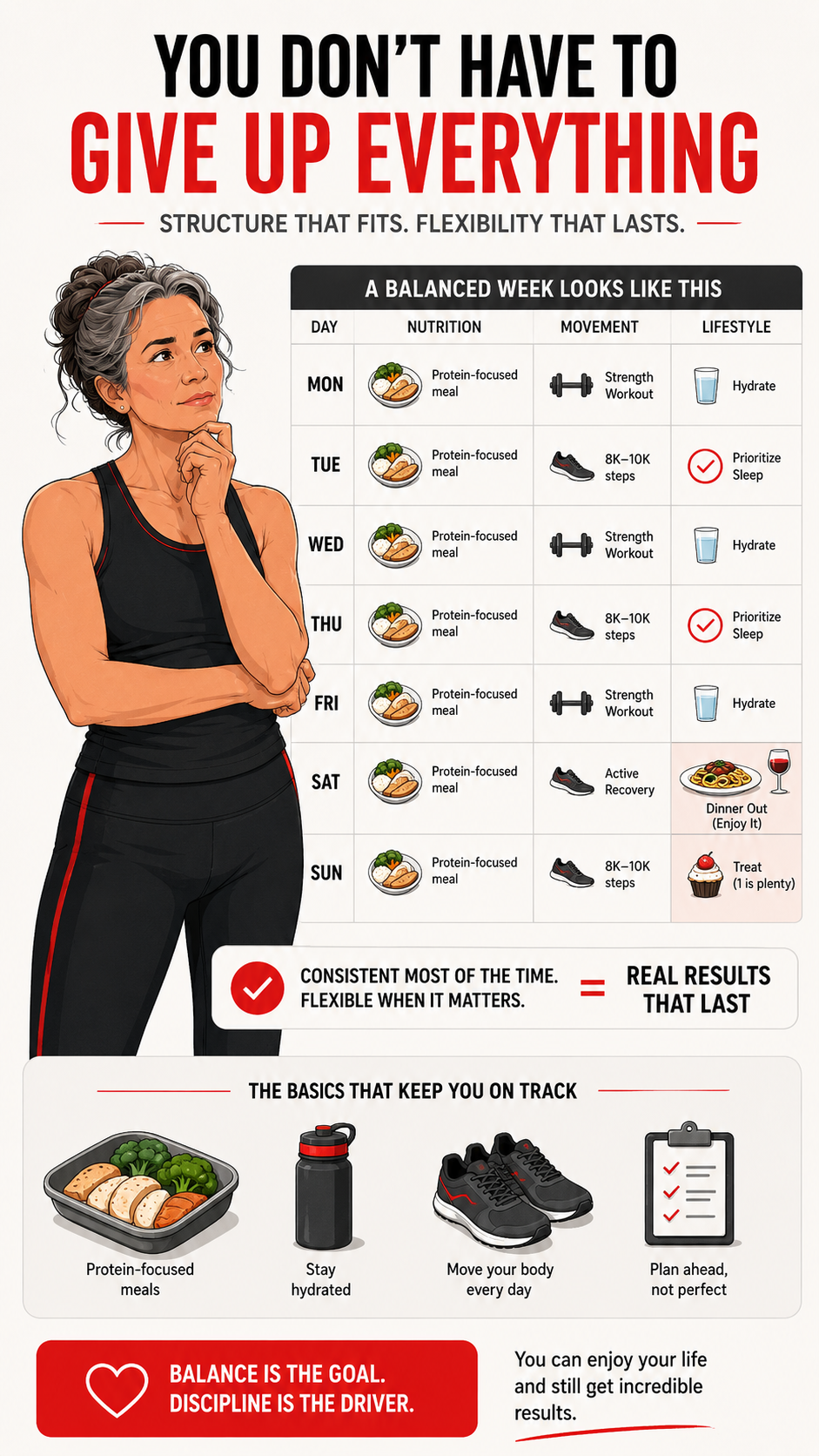
This is where fitness advice often gets misunderstood. People assume the answer must be no alcohol, no dessert, no restaurants, six gym days per week, and tracking every calorie forever. That isn’t the goal. The goal is to create enough consistency for the plan to work.
Maybe you keep Saturday dinner out but reduce drinking during the week. Maybe dessert becomes twice per week instead of every night. Maybe you add a third strength-training day, increase your daily steps, or track food for two weeks so you can finally see where your calories are going. You don’t need to change everything at once, but if the current approach isn’t producing the result you want, something has to change.
Build the Plan Around Reality
A good fitness plan shouldn’t be built around the person you wish you were. It should be built around the life you actually live and the level of commitment you’re realistically willing to make. Ask yourself what result you really want, how often you’re actually willing to train, what your nutrition looks like across seven days, how often alcohol and sweets show up, and which habit is most likely working against the goal.
Then choose one meaningful change you can maintain for the next eight weeks. If you want modest improvement and better health, a flexible plan may be enough. If you want substantial fat loss, visible muscle gain, or a major change in body composition, the level of consistency required will usually be higher. Neither choice is wrong. The problem comes when the goal and the behavior tell two different stories.
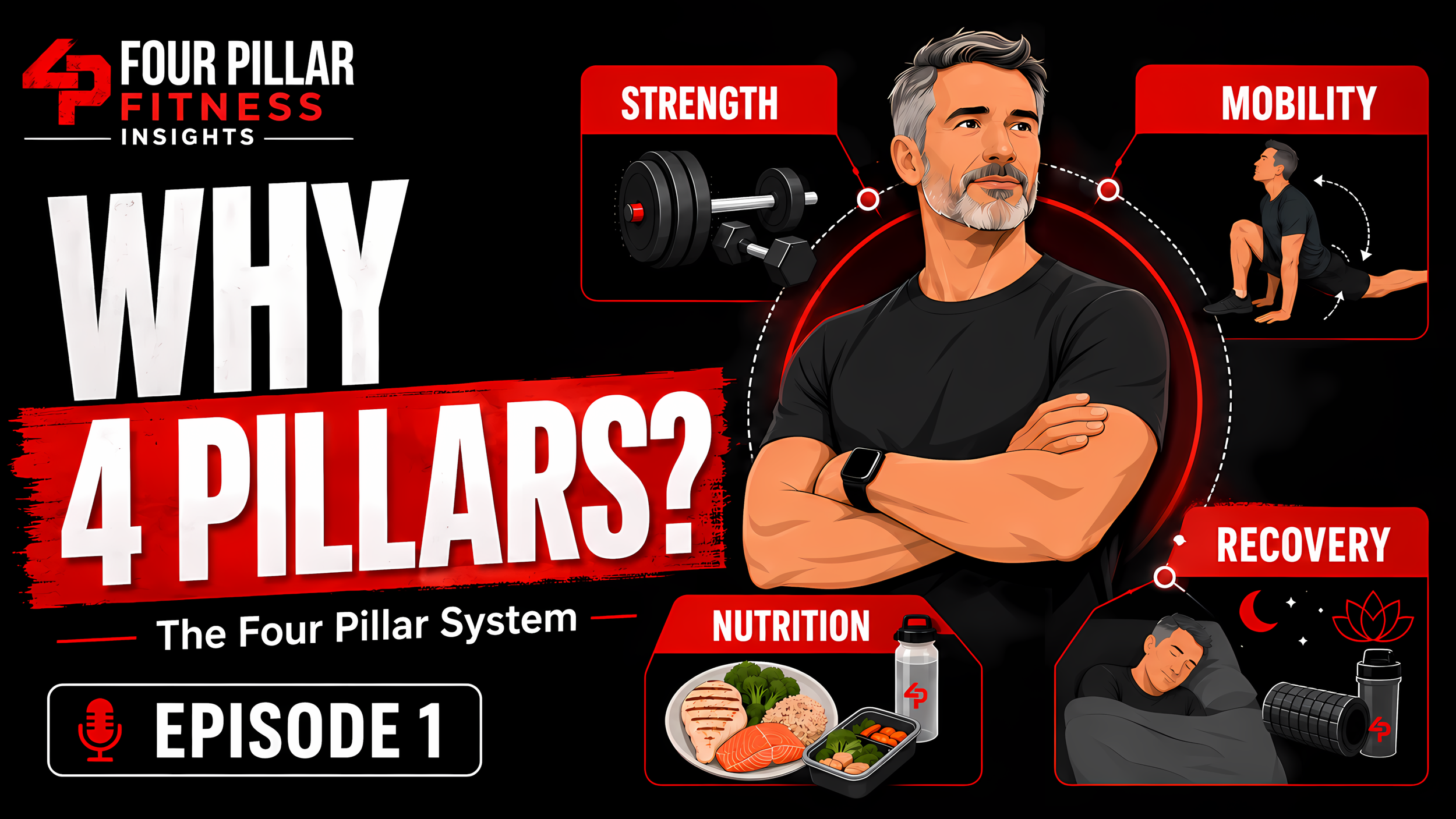
That’s why the Four Pillar Fitness system looks beyond the workout. Strength matters, but so do Nutrition, Mobility, and Recovery. Your results come from how those pieces work together over time. You don’t need perfection, but you do need enough consistency for your habits to support the outcome you’re asking your body to produce.
What’s one habit in your current routine that may not match the result you say you want? Leave a comment below.
Stephan Earl is a NASM Certified Personal Trainer, Nutrition Coach, and Corrective Exercise Specialist dedicated to helping people build lasting strength and mobility at every age. With a focus on practical, sustainable fitness, he combines science-based training with mindful movement and nutrition.
He's the author of Yoga Strong: 100 Asanas for Strength of Body and Mind and the book The Four Pillars of Fitness: A Simple, Science-Backed System for Strength and Longevity, which explores how to stay strong, mobile, and energized for life. His mission is to help others move better, feel better, and live fully at every stage of their fitness journey.
Learn More
Four Pillar Fitness is built on one clear idea. Strength, Mobility, Nutrition, and Recovery work together to keep you strong and independent at every age. To dive deeper into each pillar, visit 4PFitness.com.
References
Garthe, I., Raastad, T., Refsnes, P. E., Koivisto, A., & Sundgot-Borgen, J. (2011). Effect of two different weight-loss rates on body composition and strength and power-related performance in elite athletes. International Journal of Sport Nutrition and Exercise Metabolism, 21(2), 97–104.
Schoenfeld, B. J., Ogborn, D., & Krieger, J. W. (2016). Effects of resistance training frequency on measures of muscle hypertrophy: A systematic review and meta-analysis. Sports Medicine, 46(11), 1689–1697.
Schoenfeld, B. J., Grgic, J., & Krieger, J. (2019). How many times per week should a muscle be trained to maximize muscle hypertrophy? A systematic review and meta-analysis of studies examining the effects of resistance training frequency. Journal of Sports Sciences, 37(11), 1286–1295.
Te Morenga, L., Mallard, S., & Mann, J. (2013). Dietary sugars and body weight: Systematic review and meta-analyses of randomized controlled trials and cohort studies. BMJ, 346, e7492.
Nguyen, M., Jarvis, S. E., Tinajero, M. G., et al. (2023). Sugar-sweetened beverage consumption and weight gain in children and adults: A systematic review and meta-analysis of prospective cohort studies and randomized controlled trials. The American Journal of Clinical Nutrition, 117(1), 160–174.
Parr, E. B., Camera, D. M., Areta, J. L., Burke, L. M., Phillips, S. M., Hawley, J. A., & Coffey, V. G. (2014). Alcohol ingestion impairs maximal post-exercise rates of myofibrillar protein synthesis following a single bout of concurrent training. PLOS ONE, 9(2), e88384.
Barnes, M. J. (2014). Alcohol: Impact on sports performance and recovery in male athletes. Sports Medicine, 44(7), 909–919.
More Health & Fitness Insights…

Visit the 4P Fitness PRO Shop
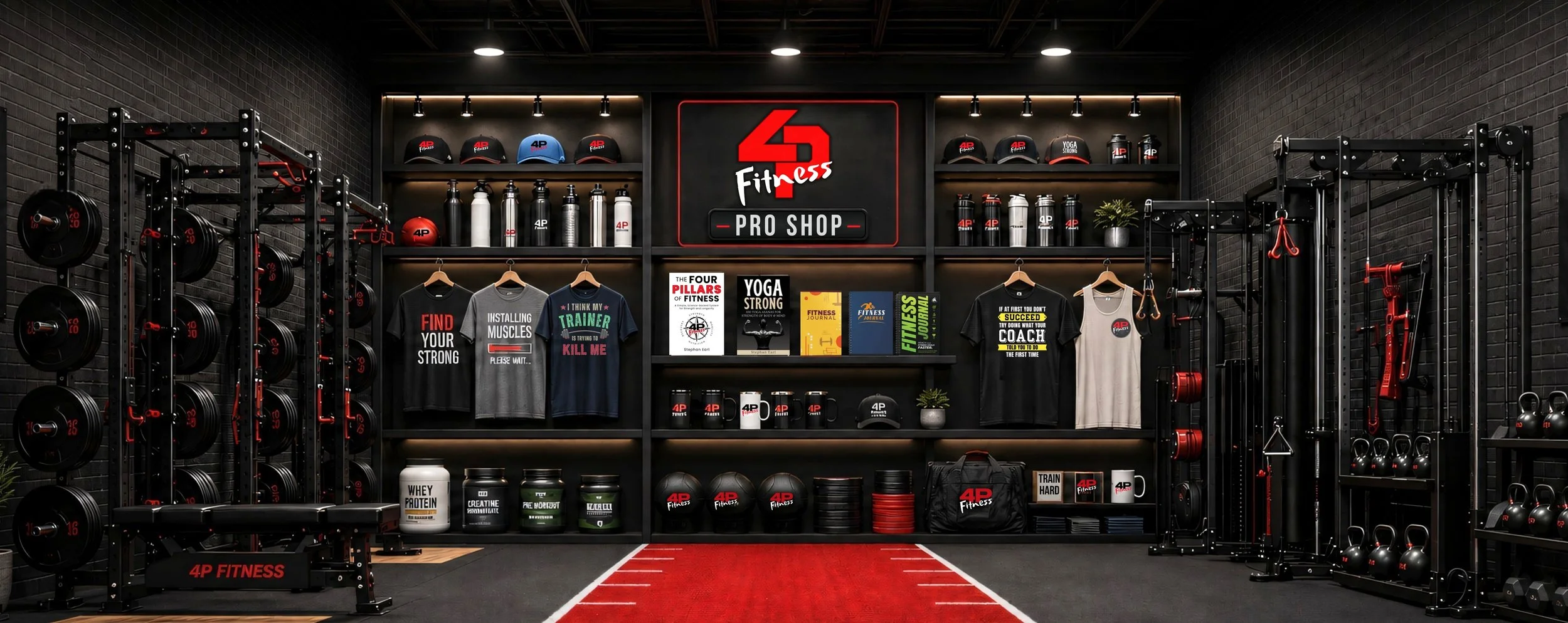
Gear up with fitness-inspired apparel, drinkware, journals, instant downloads, and a little gym and coach humor for the people who train hard, recover smart, and still know how to laugh between sets.
Shop the 4P Fitness Pro Shop and find something that fits your fitness life.

Can you build muscle and lose fat after 50? Yes, but the process depends on more than training hard or eating more. Learn how calorie intake, protein, alcohol, recovery, training history, body recomposition, smart-scale readings, and realistic timelines affect muscle gain and fat loss as you get older.