

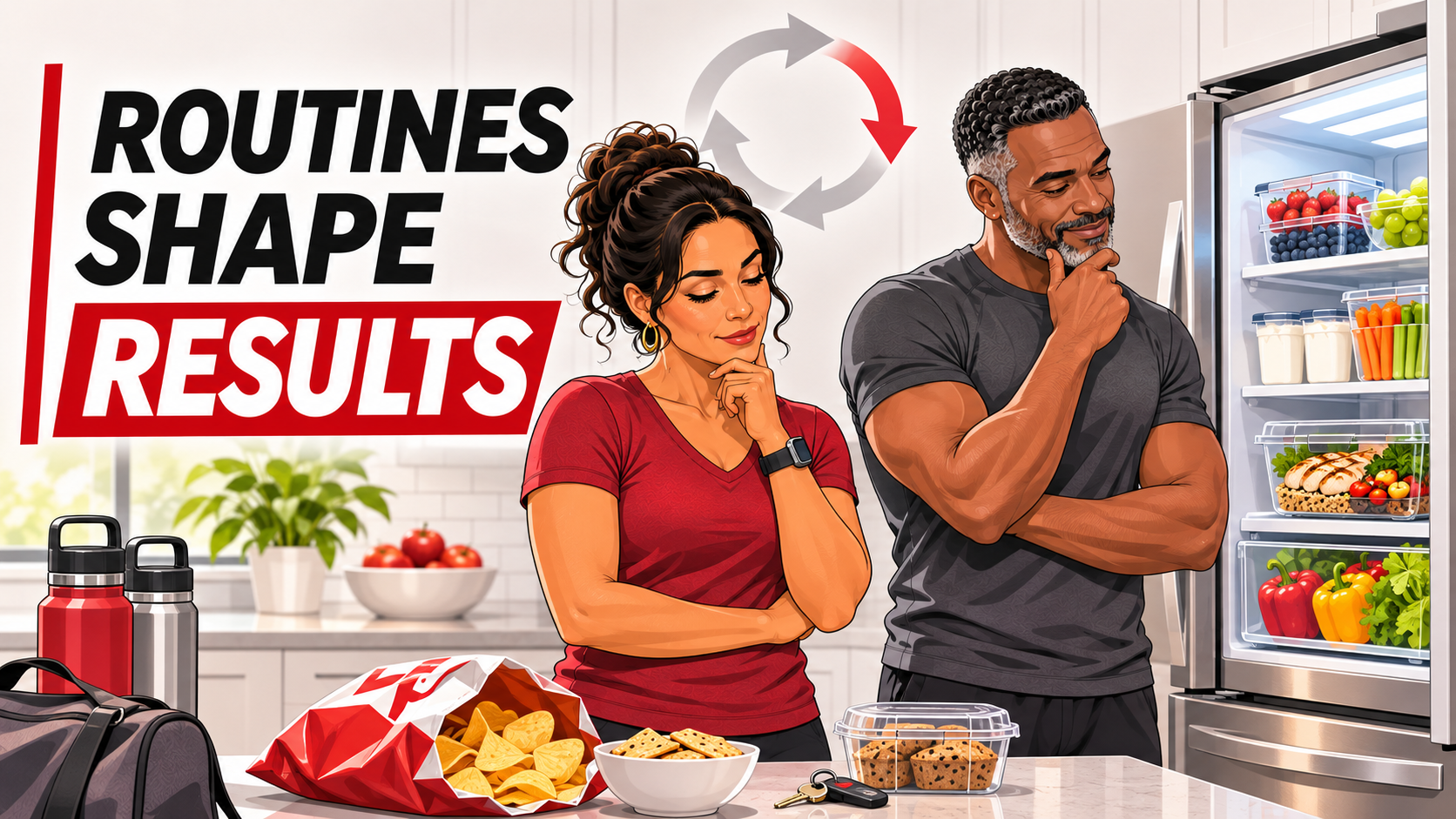
The science behind our food choices, why motivation isn't enough, and how to build better nutrition habits that last.
Most people have a pretty good idea of what healthier eating looks like. More nutritious foods, enough protein, plenty of fruits and vegetables, and perhaps cutting back on a few things. Yet knowing what to do and actually doing it consistently are two different things.
Think about how often you've started the week with good intentions. You've planned meals, promised yourself you'd stop mindlessly snacking, and decided this is finally the week you'll get your nutrition on track. Monday goes well. Then work gets hectic, dinner plans fall apart, and suddenly you're back to your usual routine.
Sound familiar? As a nutrition coach, I see how easily everyday responsibilities can get between people and their goals. Jobs, families, stress, and years of established routines influence food choices. Simply telling someone what to eat rarely addresses those obstacles.
The good news is that habits can change. With awareness, practical planning, and repetition, we can make healthier food choices easier to maintain. First, it helps to understand why familiar behaviors are so persistent.
Your Brain Likes Familiar Routines
Have you ever arrived home, opened the refrigerator, and started looking for something to eat without really thinking about it? Maybe you were hungry. Maybe you were simply following your usual routine.
Our brains learn patterns. When we repeatedly perform a behavior in a familiar situation, it can become increasingly automatic. That's useful for brushing our teeth, but less helpful when our eating routines work against our goals.
The National Academy of Sports Medicine (NASM) describes a practical four-part habit loop: cue, craving, response, and reward.
A cue triggers the behavior. A craving is the desire or anticipated benefit behind it. The response is what you do. The reward is what makes the behavior appealing enough to repeat.
Imagine reaching for chips after a stressful afternoon meeting. Finishing the meeting is the cue. You want a break or something comforting. You grab the chips, and the taste or brief relief rewards that choice.
Eating chips isn't inherently a problem. The question is whether you're making a deliberate choice or responding automatically to a familiar trigger. That distinction gives you somewhere to start.
Why Motivation Isn't Enough
Motivation helps us begin, but it changes with stress, fatigue, and competing responsibilities. Preparing nutritious lunches might sound easy on Sunday. It's less appealing after a ten-hour workday.
That's why I distinguish between outcome goals and behavior goals when coaching nutrition.
An outcome goal might be losing body fat or improving a health marker. A behavior goal identifies something you can actually do: include protein at breakfast, prepare lunch before work, or add vegetables to dinner.
These behaviors don't guarantee a particular outcome, but they give you practical steps to repeat and evaluate. Instead of asking whether you're motivated today, ask whether your routine makes the next useful choice realistic.
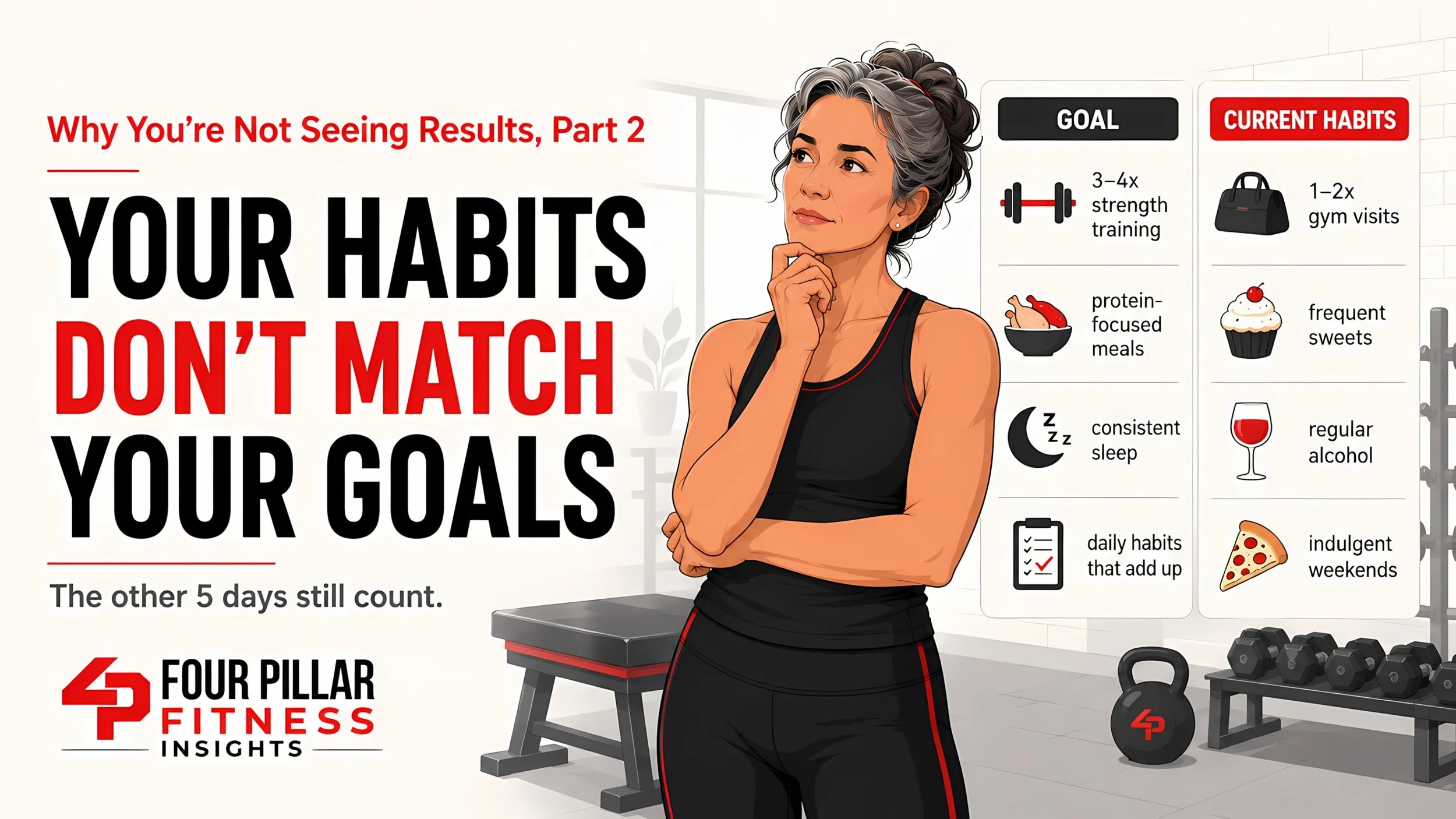
I've covered the gap between desired results and everyday choices in Why You're Not Seeing Results, Part 2: Your Habits Don't Match Your Goals. Here, we're focusing on how to build the behaviors that close that gap.
Start Smaller Than You Think
One common mistake is attempting to change everything at once. Someone decides to eliminate sugar, cook every meal, track every calorie, and follow a complicated plan. It may look impressive on paper, but it can be difficult to sustain.
Instead, choose one action. If vegetables rarely make it onto your plate, add one serving at dinner. If you skip lunch and arrive home ravenous, start with a reliable midday meal. If breakfast is rushed, identify two simple options you enjoy.
Small doesn't mean insignificant. It means manageable enough to practice while you're balancing everything else in your life. Once the routine becomes reliable, you can build on it.
And forget the claim that a habit takes exactly 21 days to form. Research shows substantial variation. A 2024 systematic review of 20 studies reported median times of roughly 59 to 66 days in the studies that measured time to automaticity, with considerable differences across people and behaviors.
There's no universal countdown. Repetition in a consistent setting matters more than hitting an arbitrary deadline.

Make the Better Choice the Easier Choice
You shouldn't have to turn every meal into a test of willpower. Sometimes the most useful strategy is making the choice you want more convenient.
If you want to eat more fruit, keep it washed and visible. If you're trying to cook at home more often, keep ingredients for two easy meals on hand. If you routinely forget to bring lunch, pack it while cleaning up dinner rather than scrambling the following morning.
If you're looking for practical ways to make nutritious eating easier, my Eat With Purpose guide is a good place to start. It offers straightforward nutrition guidance to help you make more informed food choices without overcomplicating the process.
Another tool is habit stacking: linking a new action to something you already do. For example, after starting your morning coffee, fill your water bottle. After putting groceries away, wash a few vegetables for the coming days. The existing routine becomes a reminder.
Make the plan fit your actual schedule, not your imaginary week where nothing goes wrong. Ask yourself how confident you are that you'll follow through. If your confidence is low, shrink the task or remove an obstacle. Preparing lunch three days a week may be a better beginning than promising seven perfect days.
An effective nutrition plan isn't just nutritionally sound. It also has to be practical enough to use.
When Old Habits Show Up Again
Consider someone who comes home, heads straight to the kitchen, and snacks continuously while making dinner. Before assuming the behavior needs changing, ask a basic question: Are they hungry?
If lunch was six hours ago, a planned afternoon snack might be exactly what's needed. But if the behavior happens regardless of hunger, the arrival-home routine may be a cue worth examining.
They might change clothes before entering the kitchen, decide what dinner will be before opening the pantry, or keep a satisfying planned snack available. The goal isn't to forbid food. It's to make the choice more intentional.
NASM also describes urge surfing, a technique for observing an urge without immediately acting on it. Cravings can rise and fall like waves. Pausing, noticing the feeling, and choosing what to do next may help interrupt an automatic response.
That doesn't mean ignoring genuine hunger or expecting every craving to disappear in 15 minutes. Some urges persist, and restrictive eating can make cravings more difficult to manage. Urge surfing is simply one possible strategy when you recognize you're responding to an established habit rather than physical hunger.
Build One Habit Before Adding Another
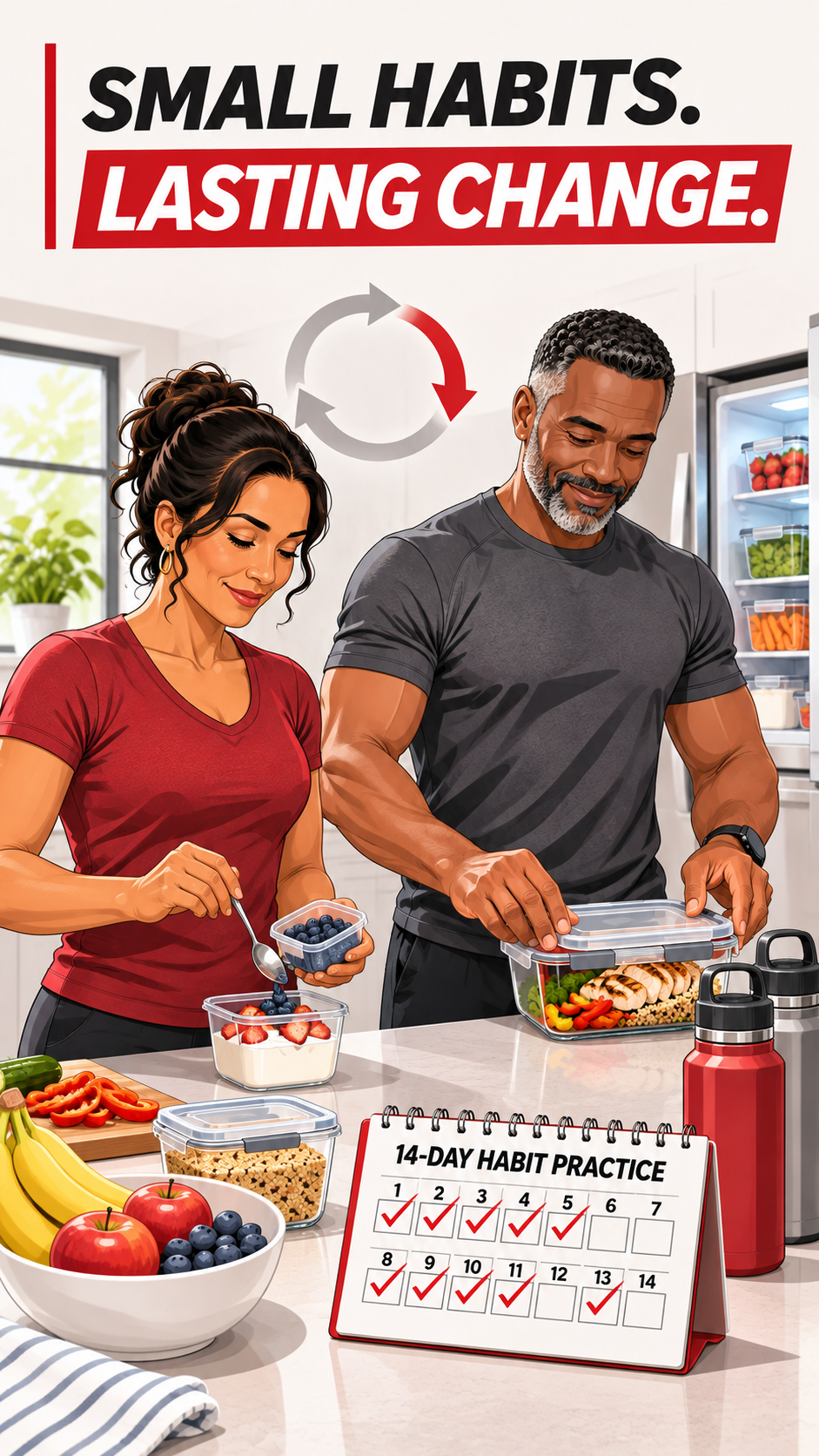
Here's an exercise you can try over the next 14 days. It isn't a two-week transformation challenge or a deadline for making a habit permanent. It's a chance to practice and learn.
First, choose one specific behavior. "Eat healthier" is vague; "include a vegetable with dinner five nights a week" gives you something concrete.
Next, choose a reliable cue. When you begin preparing dinner, put a vegetable on the menu. Make it easy by keeping frozen or prewashed options available.
Then track whether you followed through. A calendar checkmark or note in your phone is enough. You're looking for patterns, not a perfect score.
At the end of two weeks, review your experience by asking yourself three questions:
What helped me follow through? Identify the routines, reminders, or circumstances that made the behavior easier.
What repeatedly got in the way? Look for patterns involving your schedule, environment, energy, or preparation.
What one adjustment would make this habit easier next week? Use what you've learned to improve your approach.
The purpose isn't simply to count successful days. It's to understand what helps you stay consistent and what needs to change.
Missed days aren't proof that you've failed. They're information you can use to make the plan more realistic. Adjust it, keep practicing, and build on the habit when you're ready.

The Coach's Takeaway: Make Consistency Easier
At Four Pillar Fitness, Strength, Mobility, Nutrition, and Recovery work together. Each depends on behaviors you can return to consistently, not occasional bursts of enthusiasm.
You don't have to overhaul your diet tomorrow. Start by recognizing one routine that influences your food choices. Decide what you'd like to do differently, make that action practical, and give yourself opportunities to repeat it.
With time, some of those decisions may require less effort. Healthy eating can become less of a temporary project and more a normal part of your day.
And if you're finding it difficult to turn your nutrition goals into consistent daily habits, that's something we can work on together through Four Pillar Fitness Online Coaching.
Start where you are. Build from there.
What's one eating habit you've struggled to maintain, and what usually gets in the way?
Leave a comment below.
Listen to the podcast on YouTube.
Stephan Earl is a NASM Certified Personal Trainer, Nutrition Coach, and Corrective Exercise Specialist dedicated to helping people build lasting strength and mobility at every age. With a focus on practical, sustainable fitness, he combines science-based training with mindful movement and nutrition.
He's the author of The Four Pillars of Fitness: A Simple, Science-Backed System for Strength and Longevity, which explores how to stay strong, mobile, and energized for life. His mission is to help others move better, feel better, and live fully at every stage of their fitness journey.
Learn More
Four Pillar Fitness is built on one clear idea. Strength, Mobility, Nutrition, and Recovery work together to keep you strong and independent at every age. To dive deeper into each pillar, visit 4PFitness.com.
References
National Academy of Sports Medicine. (n.d.). Nutrition and behavior change: The power of positive habits. NASM educational guide, authored by Christopher Mohr and Kara Mohr.
Singh, B., Murphy, A., Maher, C., & Smith, A. E. (2024). Time to form a habit: A systematic review and meta-analysis of health behaviour habit formation and its determinants. Healthcare, 12(23), 2488. https://doi.org/10.3390/healthcare12232488
Lally, P., van Jaarsveld, C. H. M., Potts, H. W. W., & Wardle, J. (2010). How are habits formed: Modelling habit formation in the real world. European Journal of Social Psychology, 40(6), 998–1009. https://doi.org/10.1002/ejsp.674
Lally, P., & Gardner, B. (2013). Promoting habit formation. Health Psychology Review, 7(sup1), S137–S158. https://doi.org/10.1080/17437199.2011.603640
Effects of mindfulness-based interventions on food craving in adults: A systematic review and meta-analysis of controlled clinical trials. (2025). PubMed
More Health & Fitness Insights…









Visit the 4P Fitness PRO Shop

Gear up with 4P Fitness-inspired apparel, gear, and accessories with a little gym humor for the people who train hard, recover smart, and still know how to laugh between sets.
Shop the 4P Fitness Pro Shop and find something that fits your fitness life.

Why are healthy eating habits so difficult to maintain, even when you know what to eat? Coach Stephan Earl explores the science of habit formation, the role of motivation, food cravings, and daily routines, and practical strategies for making better nutrition choices easier. Learn how small changes, habit stacking, and a simple 14-day practice can help you build sustainable eating habits that support your goals.