

Are You Protecting Your Joints or Making Them Weaker?
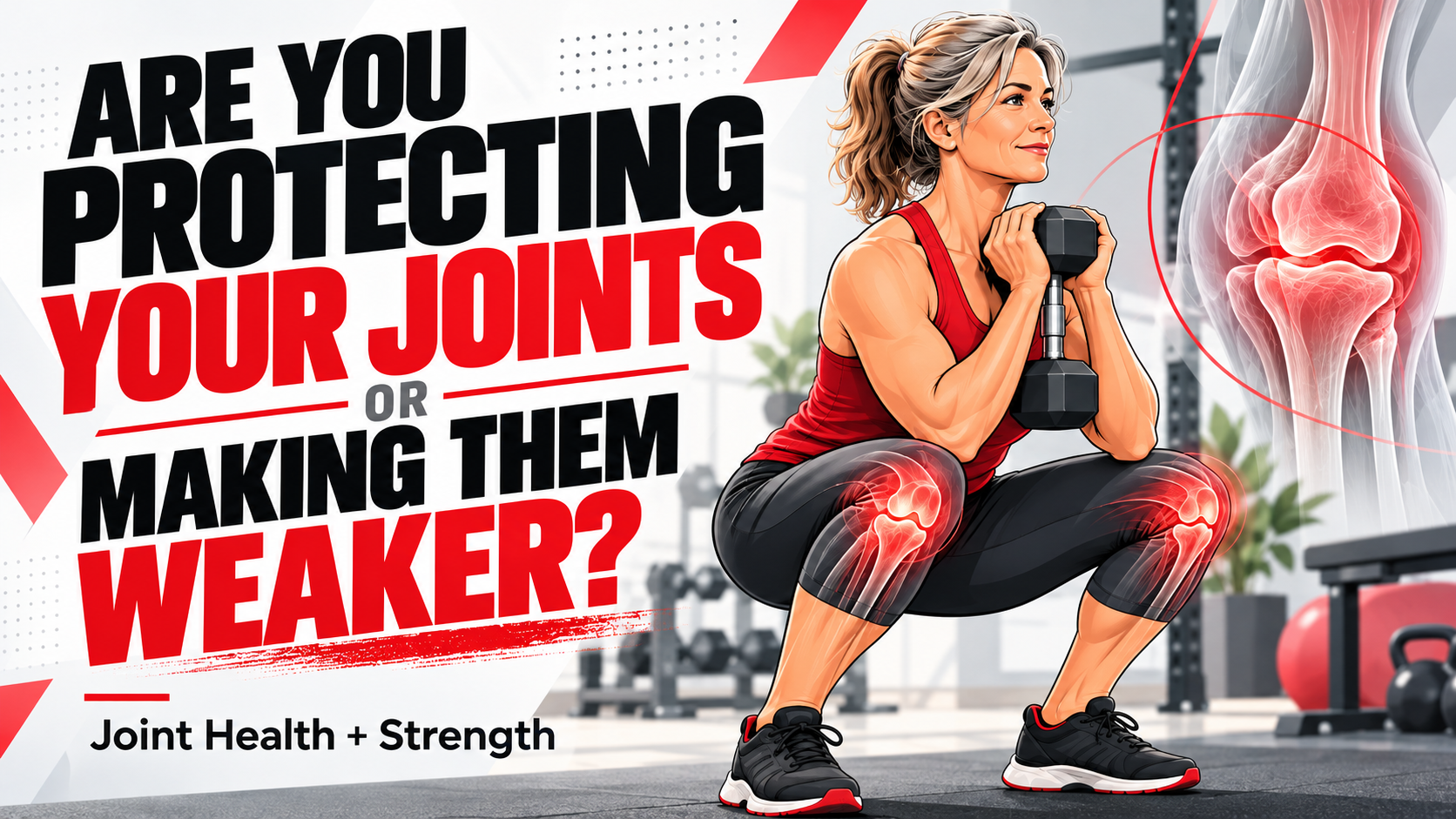
Why avoiding strength training isn't always the best way to care for your knees, hips, shoulders, and back.
If your knees bother you when you squat, should you stop squatting? If your shoulders occasionally ache, is it safer to avoid lifting weights? And if your back feels stiff, should you stay away from resistance training altogether?
These are reasonable questions. Nobody wants to make an uncomfortable joint worse, especially when they're trying to stay active and healthy.
I encounter these concerns regularly in my coaching. I work with several clients who have limited knee mobility, including a couple who are currently receiving physical therapy. In those cases, I build their strength training around what they're working on in physical therapy, reinforcing that progress rather than working against it.
And here's something I've learned: We're not just working to improve strength, mobility, and flexibility. We're also helping people build confidence in what their bodies can do.
That's an important part of the process. When someone has struggled with joint discomfort or limited movement, even a familiar exercise can feel intimidating. Learning to move with greater control and gradually building strength can help restore confidence in everyday activities.
Which raises an interesting question: What if avoiding strength training isn't always protecting your joints? What if it's actually making the muscles and supporting tissues around them less capable of handling everyday demands?
The goal isn't to lift the heaviest weight possible or push through pain. It's to develop a body that's strong enough to handle the things you ask it to do, both inside and outside the gym.
Your Joints Were Made to Move
Think about everything your joints do during an ordinary day. Your knees help you stand up from a chair, your hips allow you to walk and climb stairs, and your shoulders make it possible to reach overhead or carry groceries.
These movements all place forces on your joints. That's normal. Our bodies are built for movement, and many of the tissues supporting our joints adapt to the demands we place on them.
Muscles become stronger through resistance training. Tendons, which connect muscles to bones, can adapt to mechanical loading. Bones also respond to weight-bearing activity by maintaining or improving their strength.
These changes take time, but they illustrate an important principle: Appropriate physical stress can help the body develop and maintain its capacity.
Of course, too much stress, poorly managed training, or an existing injury can create problems. The answer isn't to avoid physical stress altogether. It's to find the right amount for your abilities and gradually build from there.
What Actually Supports a Healthy Joint?
When people think about joint health, they often focus on cartilage, the smooth tissue covering the ends of bones that helps joints move efficiently and distribute forces.
But healthy joint function involves much more than cartilage.
Your muscles help control movement and manage the forces passing through a joint. Tendons transfer muscular force to bones, while ligaments contribute to stability. Your nervous system coordinates these structures to help you move with balance and control.
Consider your knees. Strong quadriceps, hamstrings, and glutes contribute to how you walk, climb stairs, lower yourself into a chair, and recover your balance.
When those muscles become weaker, everyday tasks can become more difficult. You may still be able to perform those activities, but you have less strength available when the demands increase.
Research also shows that tendons can adapt to resistance exercise. That doesn't make them indestructible, but it demonstrates that strength training affects more than just your muscles.
There's also an important distinction regarding cartilage. Research doesn't support the blanket assumption that appropriate exercise simply wears it away. However, we shouldn't promise that lifting weights rebuilds damaged cartilage. The science is more complicated than either claim.
The takeaway is that joint care should involve the entire movement system, not just the joint itself.

What About Arthritis? Isn't Exercise Bad for Worn Joints?
Many people associate osteoarthritis with wear and tear, which makes exercise seem counterproductive. If a joint already hurts, why would you deliberately place additional demands on it?
Because exercise can improve function even when changes within the joint already exist.
The American College of Rheumatology recommends exercise as part of osteoarthritis management. A 2026 systematic review involving more than 10,000 participants also found that resistance training improved several measures of strength, mobility, and physical function in people with knee osteoarthritis.
That's encouraging evidence, but it doesn't mean everyone with arthritis should immediately start performing heavy squats or lunges.
Osteoarthritis affects people differently. Some tolerate substantial resistance training, while others need modified exercises, lighter loads, or guidance from a physical therapist.
The important message is that an arthritis diagnosis doesn't automatically mean strength training is off the table. In many cases, appropriately selected exercise is part of managing the condition, not something that must be avoided.

Stronger Doesn't Always Mean Heavier
One mistake people make is assuming that strength training requires lifting heavier weights every week.
Progressive overload, one of the foundations of effective resistance training, simply means gradually increasing the demands placed on your body as your abilities improve.
Adding weight is one way to accomplish that, but it's not the only option.
You might begin with a squat to a sturdy chair, then gradually improve your depth or control. You might start with a supported step-up before progressing to a higher step. Or you might increase your repetitions while maintaining good technique.
These are all ways to make progress without rushing into loads your body isn't ready to handle.
For someone with joint concerns, I'd rather see steady, manageable progress than an impressive workout followed by several days of unnecessary discomfort.
Remember, the right resistance for one person may be completely inappropriate for another. Your current strength, exercise experience, joint history, and recovery capacity all matter.
Five Ways to Train With Your Joints in Mind
You don't need a complicated program to start building physical resilience. You need an approach that matches your abilities and allows you to make steady progress.
1. Warm up before loading your joints.
Spend five to ten minutes increasing your body temperature and practicing the movements you're about to perform. Walking, easy cycling, and lighter warm-up sets are good options. The goal is preparation, not exhaustion.
2. Begin with movements you can control.
Choose exercises that allow you to maintain balance, coordination, and a comfortable movement pattern. Supported squats, controlled step-ups, machine-based exercises, and appropriate dumbbell movements can all be useful starting points.
3. Strengthen the muscles around vulnerable areas.
For knees and hips, develop your quadriceps, hamstrings, and glutes. For shoulders, work on the muscles controlling the shoulder blade and upper arm. The objective is balanced strength and better movement capacity.
4. Increase your training demands gradually.
Give your muscles, tendons, and joints time to adapt. Avoid sudden jumps in weight, exercise volume, or frequency. If you're returning after a long break, resist the temptation to train at the level you remember from years ago.
5. Include recovery and mobility.
Allow your body to recover between challenging sessions. Adequate sleep, appropriate rest, and regular daily movement support your training. Mobility exercises can also help maintain the range of motion needed for everyday activities.
None of these steps requires extraordinary athletic ability. They require consistency, patience, and a willingness to progress gradually.
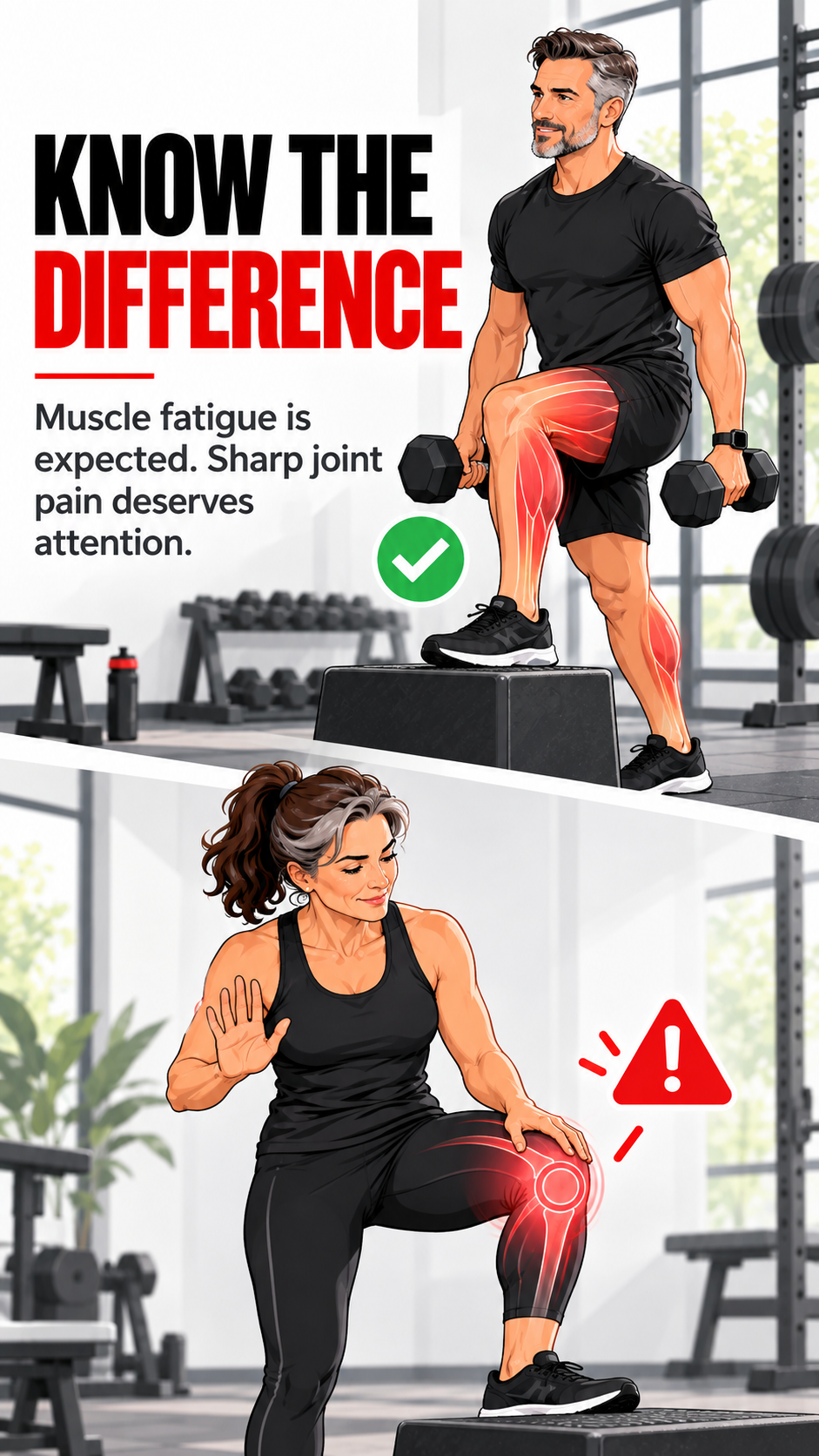
Learn the Difference Between Effort and Warning Signs
One of the most valuable skills you can develop is recognizing how your body responds to exercise.
Muscular fatigue during a challenging set is expected. Mild muscle soreness after an unfamiliar workout can also be normal.
Joint pain is different, although discomfort doesn't always indicate tissue damage. Some people with persistent joint conditions can exercise safely with carefully managed symptoms, especially under professional guidance.
What matters is the nature of the discomfort and how your body responds.
Sharp pain, sudden instability, significant swelling, or symptoms that progressively worsen shouldn't be ignored. Persistent joint pain deserves evaluation by an appropriate healthcare professional.
You shouldn't feel obligated to push through warning signs just to complete a workout. But you also don't have to interpret every uncomfortable sensation as proof that exercise is damaging your body.
Sometimes the answer is modifying the movement, reducing the load, or choosing another exercise. Other times, it means getting a proper assessment before continuing.
Smart training requires judgment, not stubbornness.
Think Beyond the Gym
Here's where joint strength becomes particularly meaningful.
Most of us aren't training to become professional weightlifters. We're training because we want to keep doing the things that make life enjoyable.
We want to walk comfortably, take the stairs, work in the yard, travel, play with our children or grandchildren, and maintain the confidence to move independently.
Those activities require strength, mobility, coordination, and endurance. While no exercise program can guarantee you'll avoid joint problems, maintaining those abilities can help you remain capable as life changes.
This is why I encourage people to think of resistance training as preparation for everyday life, not simply a way to build muscle.
A squat isn't only a gym exercise. It's a movement pattern you use whenever you sit down and stand back up. Carrying a dumbbell isn't just a strength exercise. It's preparation for carrying groceries, luggage, or whatever else life puts in your hands.
And for someone who once worried about performing those movements, regaining confidence can be just as meaningful as adding weight to an exercise.

The Coach's Takeaway: Build Capacity, Don't Just Avoid Stress
Protecting your joints doesn't mean keeping them away from every physical challenge.
It means understanding your limitations, choosing appropriate exercises, and developing the strength and movement capacity to handle more of life's demands.
For some people, that means beginning with gentle movement and professional rehabilitation. For others, it means gradually increasing resistance as they become stronger.
Either way, the goal is the same: Build a body that's better prepared for what you want it to do.
You don't need to train recklessly or ignore pain. But you also don't need to treat every joint as something fragile that must be protected from movement.
Train with purpose. Build strength you can use. And give your body a reason to remain capable.
Have you ever avoided a particular exercise because you were worried it might damage your knees, shoulders, or back? What influenced that decision?
Leave a comment below.
Listen to the podcast on YouTube.
Stephan Earl is a NASM Certified Personal Trainer, Nutrition Coach, and Corrective Exercise Specialist dedicated to helping people build lasting strength and mobility at every age. With a focus on practical, sustainable fitness, he combines science-based training with mindful movement and nutrition.
He's the author of The Four Pillars of Fitness: A Simple, Science-Backed System for Strength and Longevity, which explores how to stay strong, mobile, and energized for life. His mission is to help others move better, feel better, and live fully at every stage of their fitness journey.
Learn More
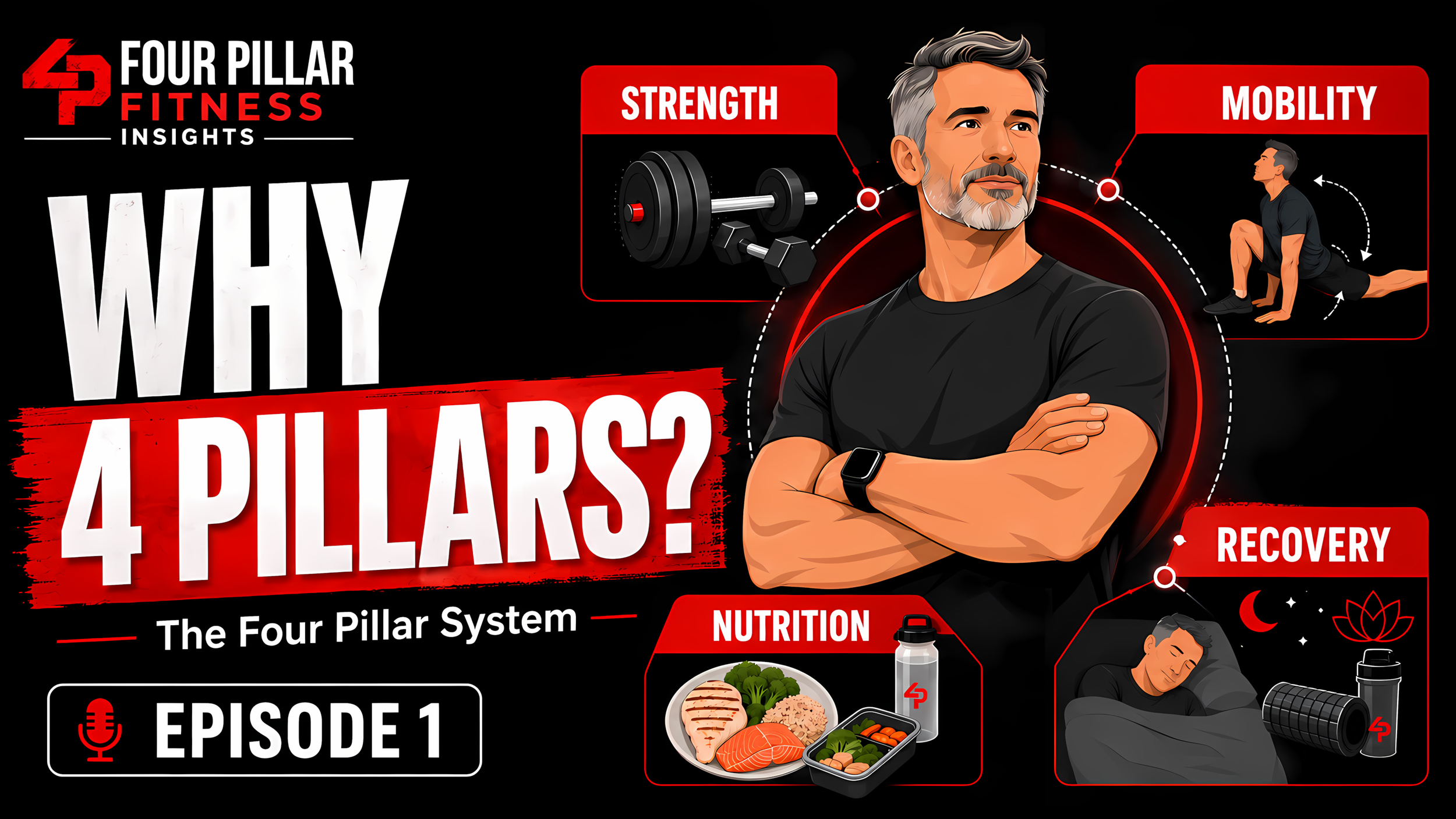
Four Pillar Fitness is built on one clear idea. Strength, Mobility, Nutrition, and Recovery work together to keep you strong and independent at every age. To dive deeper into each pillar, visit 4PFitness.com.
References
American College of Rheumatology. Osteoarthritis management guidance, including recommendations for exercise and self-management.
Efficacy and Safety of Resistance Training for Knee Osteoarthritis. (2026). Systematic review and meta-analysis of 120 trials involving 10,253 participants. https://pubmed.ncbi.nlm.nih.gov/42030701/
Lazarcuk et al. (2022). Mechanical, Material and Morphological Adaptations of Healthy Lower Limb Tendons to Mechanical Loading. Systematic review and meta-analysis. https://pubmed.ncbi.nlm.nih.gov/35657492/
Bricca et al. (2019). Impact of Exercise on Articular Cartilage in People at Risk of, or With Established, Knee Osteoarthritis. https://pubmed.ncbi.nlm.nih.gov/29934429/
More Health & Fitness Insights…





Visit the 4P Fitness PRO Shop

Gear up with 4P Fitness-inspired apparel, gear, and accessories with a little gym humor for the people who train hard, recover smart, and still know how to laugh between sets.
Shop the 4P Fitness Pro Shop and find something that fits your fitness life.

Is strength training bad for your knees, hips, shoulders, or back? Coach Stephan Earl explains how smart resistance training can support joint health, build muscle strength, improve mobility, and increase confidence in everyday movement. Learn why avoiding exercise isn't always the answer and how progressive overload, proper technique, and recovery can help you build stronger, more capable joints.