

The Four Pillars of Fitness: A Simple System for Strength, Mobility, Nutrition, and Recovery
Most people don’t need a more complicated fitness plan. They need a clearer one.
That’s especially true for busy adults and professionals. When work, family, stress, travel, and responsibility start taking up more space, fitness often becomes the first thing pushed to the back burner. At first, it doesn’t feel like a big deal. You miss a few workouts, grab whatever food is convenient, stay up too late, and tell yourself you’ll get back on track next week. Then next week becomes next month, and eventually your body starts giving you feedback you can’t ignore.
Maybe your energy drops. Maybe your clothes fit differently. Maybe your back feels tighter, your joints feel older than they should, or workouts that used to feel manageable now feel harder than expected. That doesn’t mean you’re broken. It usually means your system needs to change.
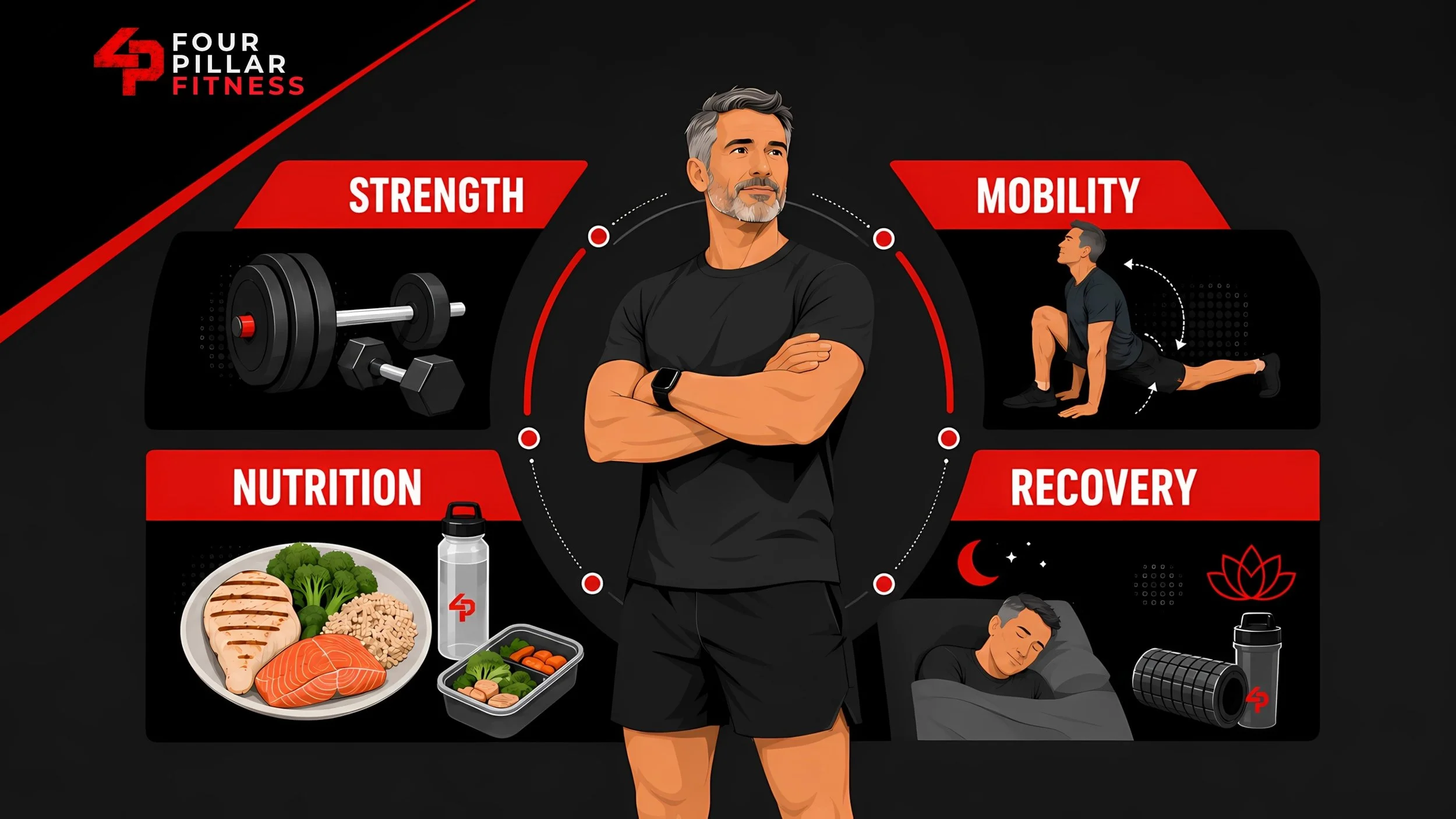
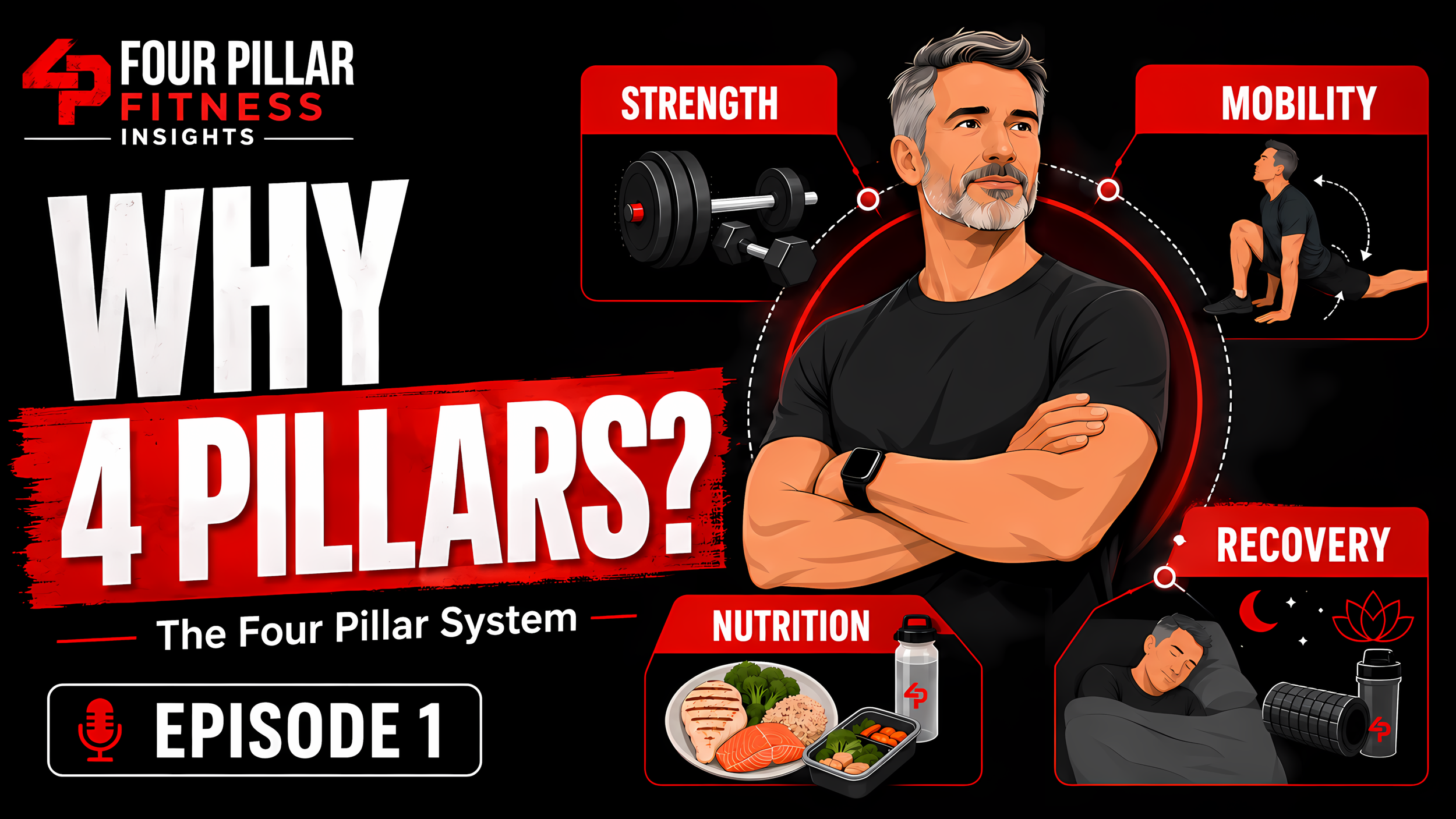
That’s why Four Pillar Fitness is built around four essentials: Strength, Mobility, Nutrition, and Recovery. Each pillar matters on its own, but the real power comes from how they work together. Strength helps you build and preserve muscle. Mobility helps you move better and train safely. Nutrition gives your body the fuel and building blocks it needs. Recovery allows you to adapt, rebuild, and keep going.
This isn’t about chasing a perfect body or trying to train like a professional athlete. It’s about building a stronger, healthier, more capable body that supports the life you actually live.
Pillar 1: Strength
Strength is the foundation of long-term fitness. It helps you build muscle, protect your joints, support bone health, improve body composition, and stay capable as you age. Strength training is not just for bodybuilders, athletes, or people who love the gym. It’s for anyone who wants to carry groceries, climb stairs, get off the floor, travel comfortably, reduce injury risk, and feel more confident in their own body.
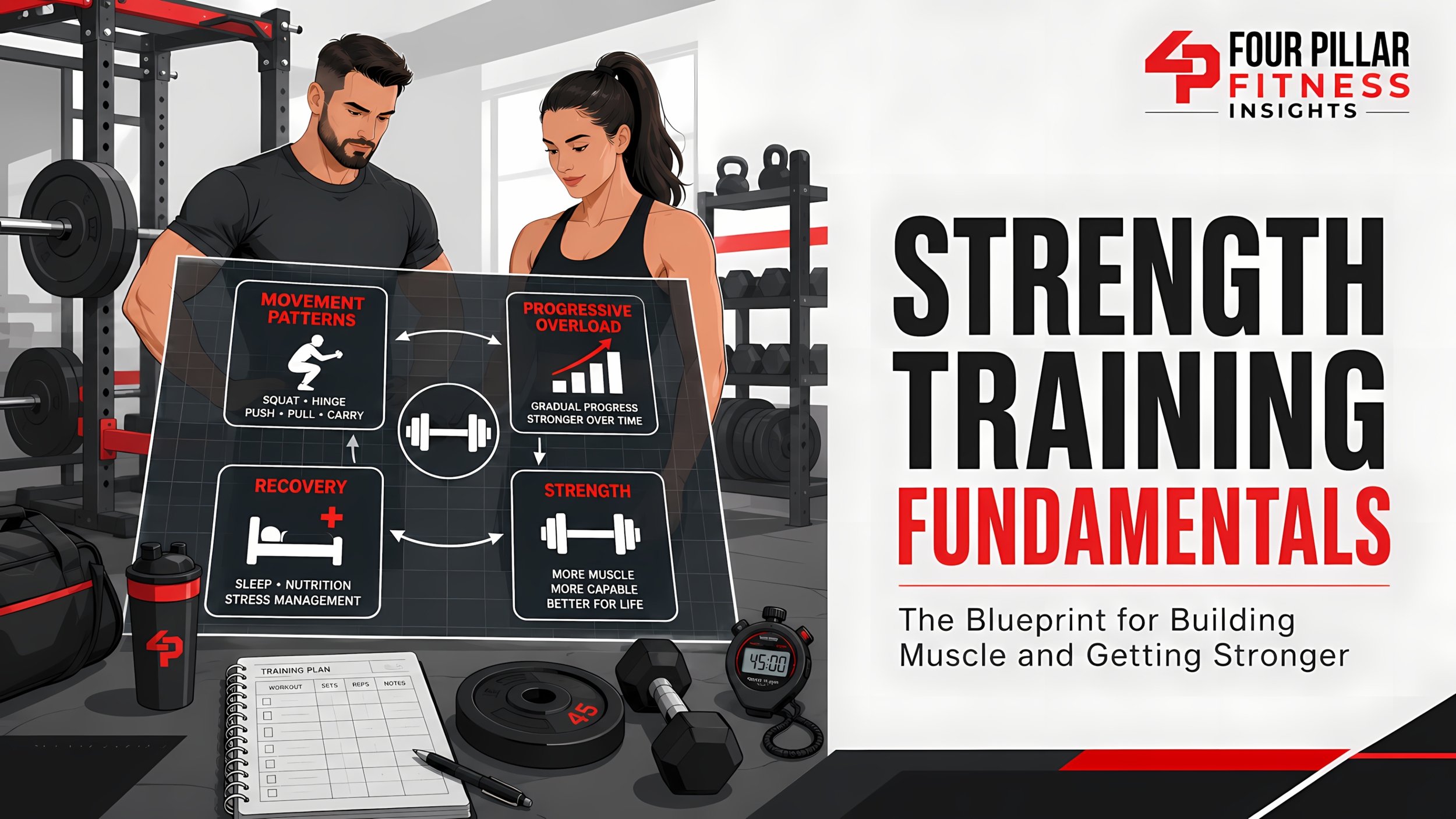
The Centers for Disease Control and Prevention recommends that adults do muscle-strengthening activity at least two days per week, along with regular aerobic activity. That doesn’t mean you need to live in the gym. It means your body needs regular resistance, whether that comes from dumbbells, machines, cables, bands, bodyweight exercises, or a well-designed training plan. The key is consistency and progression, not punishment.
A good strength plan should train the major movement patterns: squat, hinge, push, pull, lunge, carry, and rotate. These patterns show up in real life all the time. When your training improves those movements, your body becomes more useful outside the gym too.
For busy professionals, strength training also gives structure. Instead of wandering through random workouts, you have a plan. You know what you’re training, why you’re training it, and how progress is being measured. That matters because the people who are already overloaded with decisions don’t need more fitness confusion. They need a clear path.
Pillar 2: Mobility
Mobility is often misunderstood. It’s not just stretching, and it’s not about becoming a human pretzel. Mobility is your ability to move well through usable ranges of motion with control. It combines flexibility, joint function, strength, coordination, and body awareness.
This pillar becomes more important when your life includes a lot of sitting, driving, computer work, travel, or repetitive stress. Tight hips, stiff shoulders, cranky backs, and limited ankle mobility don’t usually appear overnight. They build gradually. Then one day a simple movement feels awkward, a workout feels restricted, or your body starts compensating in ways that create pain.
Mobility work helps keep your training productive. If your hips move better, your squats and hinges usually improve. If your shoulders and upper back move better, pressing and pulling exercises feel smoother. If your ankles, spine, and core function better together, your entire body tends to move with less friction.
The goal is not to stretch randomly for an hour. The goal is to identify the areas that limit your movement and address them consistently. That might mean five to ten minutes before training, short movement breaks during the workday, or dedicated mobility sessions a few times per week. The American College of Sports Medicine has long included flexibility and neuromotor training as part of a complete exercise program for adults, especially when the goal is health, function, and long-term physical capacity.
Mobility is not the flashy pillar, but it’s one of the reasons people stay in the game. A strong body that can’t move well eventually hits a wall. A mobile body that lacks strength also has limits. The sweet spot is having both.
Pillar 3: Nutrition
Nutrition is where many people make fitness harder than it needs to be. They jump from one diet trend to another, cut calories too aggressively, skip meals, under-eat protein, over-rely on willpower, and then wonder why they feel tired, hungry, and frustrated.
Good nutrition does not require perfection. It requires structure.
For most people, the biggest nutrition wins come from a few basics done consistently: eating enough protein, getting enough fiber, managing calories without extreme restriction, drinking enough water, and building meals that support energy instead of crushing it. You don’t need to fear carbs, eliminate entire food groups, or eat like a fitness competitor to make progress.
Protein deserves special attention because it supports muscle repair, recovery, satiety, and body composition. The International Society of Sports Nutrition notes that physically active individuals often benefit from higher protein intake than the basic minimum, and that protein doses of about 20 to 40 grams per meal are commonly recommended depending on body size, age, training status, and goals.
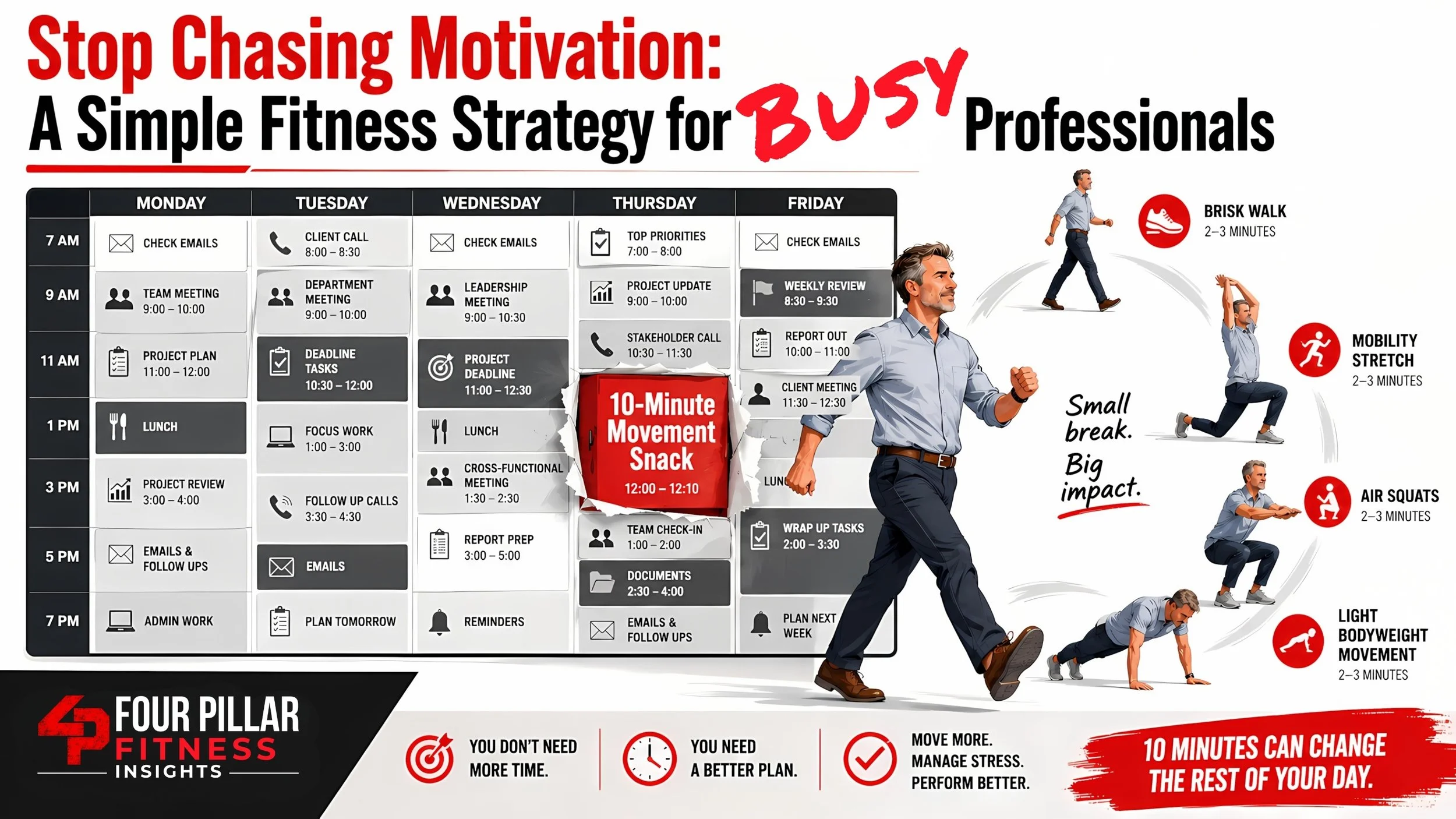
That doesn’t mean every meal has to be perfect. It means protein should not be an afterthought. For a busy professional, a better breakfast, a planned lunch, and a simple dinner strategy can make a massive difference. The goal is to stop relying on emergency food decisions when your day gets chaotic.
Nutrition should support your training, your health, and your lifestyle. If a plan requires you to hate your life to follow it, it probably won’t last. The best nutrition plan is the one that helps you make progress while still living like a real person.
Pillar 4: Recovery
Recovery is the pillar people tend to respect only after they’ve ignored it for too long.
Training creates the stimulus, but recovery is where adaptation happens. Muscle repair, strength gains, energy restoration, hormone regulation, and nervous system balance all depend on recovery. If you’re constantly under-sleeping, over-stressed, under-eating, and training hard, your body eventually pushes back.
Recovery does not mean being lazy. It means giving your body enough support to benefit from the work you’re doing. Sleep, rest days, stress management, hydration, nutrition, walking, light movement, and intelligent training volume all play a role.
This is especially important for busy professionals because stress is not limited to the gym. Your body doesn’t separate work stress, family stress, poor sleep, travel, and hard workouts into neat little boxes. It experiences all of it as total load. If that load stays high without enough recovery, performance drops, cravings rise, motivation fades, and small aches can become bigger problems.
A smart fitness plan should have hard days, easier days, and rest built into it. More is not always better. Better is better. Recovery helps you train consistently, and consistency beats occasional intensity every time.
Why the Four Pillars Work Together
Each pillar supports the others. Strength training works better when your nutrition provides enough protein and energy. Mobility improves your ability to train with better form. Recovery allows your body to adapt to the training stress. Nutrition supports both performance and recovery. When one pillar is missing, the whole system becomes less stable.
This is why random workouts and short-term diets often fail. They focus on one piece while ignoring the rest. Someone may train hard but sleep poorly. Someone else may diet aggressively but lose strength and energy. Another person may stretch every day but never build enough muscle to support their joints. The problem is not effort. The problem is an incomplete system.
Four Pillar Fitness is designed to make that system simple. You don’t have to do everything perfectly. You just need to know which pillar needs attention and take the next reasonable step.
For one person, that might mean starting two strength sessions per week. For another, it might mean adding protein to breakfast. Someone else may need better sleep habits, more daily walking, or a mobility routine that helps them train without pain. The plan should match the person, not the other way around.
Fitness That Fits Real Life
The best fitness plan is not the one that looks impressive on paper. It’s the one you can actually follow.
Busy adults don’t need guilt. They need strategy. Professionals don’t need another unrealistic routine that collapses during a stressful week. They need coaching, structure, accountability, and a plan that adjusts to real life while still moving them forward.
That’s the purpose of the Four Pillar Fitness system. It gives you a clear framework for building strength, improving mobility, eating smarter, recovering better, and creating habits that last. No gimmicks. No crash diets. No random workouts. Just a practical system built around what the body needs to perform, adapt, and age well.
You don’t have to train like an athlete to build a body that works better. You don’t have to be perfect to make progress. You don’t have to wait until life gets less busy to start.
You just need a system.
Train with purpose. Live stronger. Build a body that lasts.
What pillar do you need to focus on most right now: Strength, Mobility, Nutrition, or Recovery? Leave a comment below.
Stephan Earl is a NASM Certified Personal Trainer, Nutrition Coach, and Corrective Exercise Specialist dedicated to helping people build lasting strength and mobility at every age. With a focus on practical, sustainable fitness, he combines science-based training with mindful movement and nutrition.
He's the author of Yoga Strong: 100 Asanas for Strength of Body and Mind and the forthcoming book The Four Pillars of Fitness: A Simple, Science-Backed System For Strength and Longevity, which explores how to stay strong, flexible, and energized for life. His mission is to help others move better, feel better, and live fully at every stage of their fitness journey.
Learn More
Four Pillar Fitness is built on one clear idea. Strength, Mobility, Nutrition, and Recovery work together to keep you strong and independent at every age. To dive deeper into each pillar visit 4PFitness.com.
More Health & Fitness Insights…
Visit the 4P Fitness PRO Shop
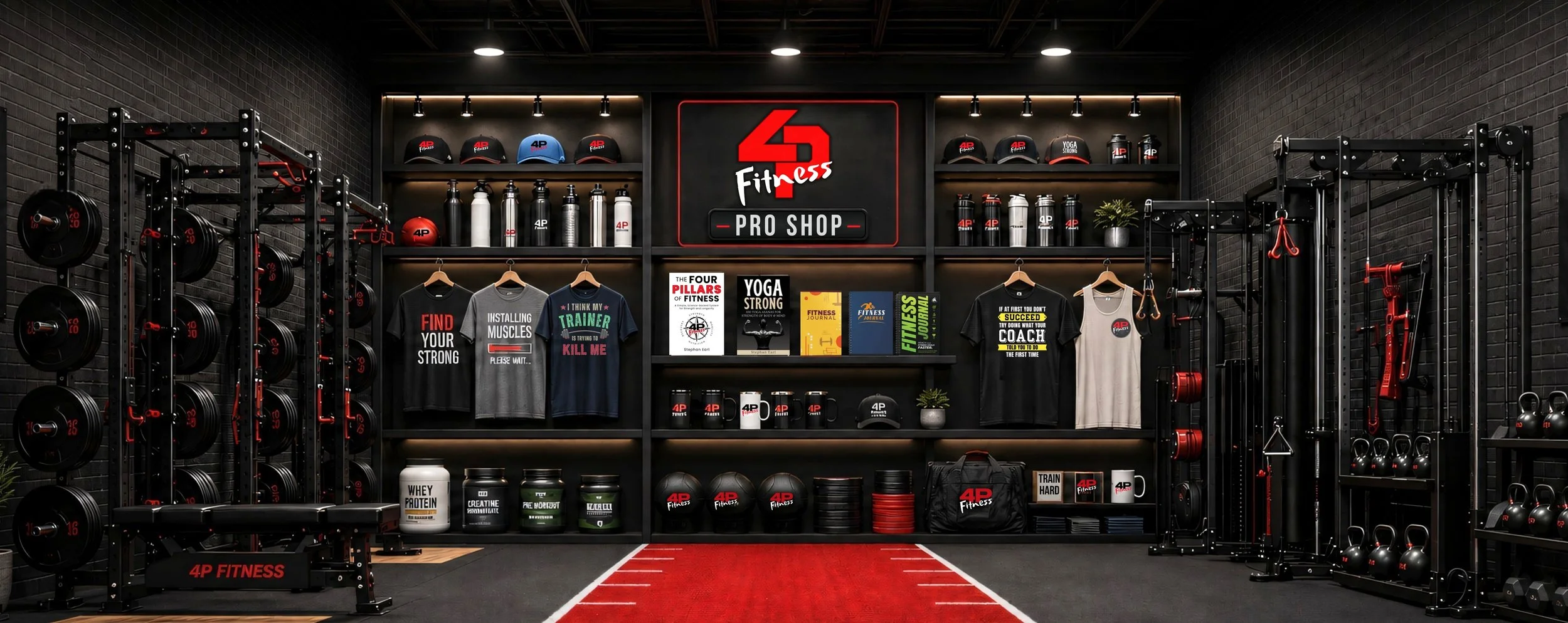
Gear up with fitness-inspired apparel, drinkware, journals, instant downloads, and a little gym and coach humor for the people who train hard, recover smart, and still know how to laugh between sets.
Shop the 4P Fitness Pro Shop and find something that fits your fitness life.













Can you build muscle and lose fat after 50? Yes, but the process depends on more than training hard or eating more. Learn how calorie intake, protein, alcohol, recovery, training history, body recomposition, smart-scale readings, and realistic timelines affect muscle gain and fat loss as you get older.