
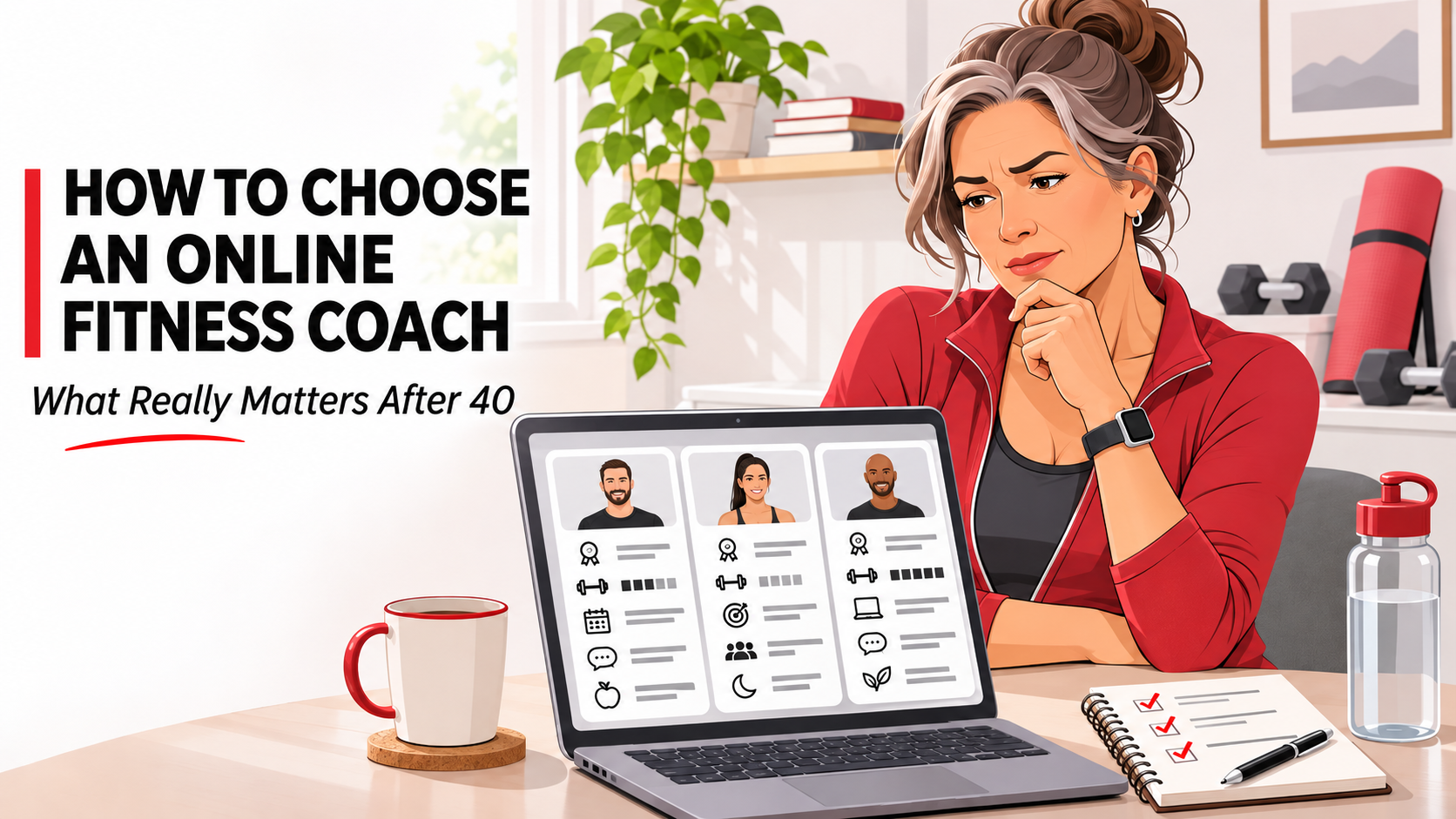
You've decided it's time to get more serious about your fitness. Maybe you're in your late 40s or 50s, your schedule is packed, and you're tired of starting over. You've tried workout apps, YouTube routines, or downloaded programs that never quite fit your life.
Now you're considering an online fitness coach. A quick search turns up hundreds of options, all promising personalized workouts and accountability. How do you know who's actually qualified to help?
Look for recognized credentials, relevant experience, personalized programming, consistent communication, and an approach that fits your life. The best coach isn't necessarily the one with the biggest following or most impressive physique.
After 40, your goals may differ from what they were at 25. That doesn't mean you need easier workouts. You need a plan that makes sense for your abilities, responsibilities, and priorities. Here's what I'd look for before hiring someone.
Credentials Matter, but They're Only the Beginning
Anyone can post workouts on Instagram and call themselves a coach. That doesn't necessarily mean they understand exercise science or know how to train people with different needs.
Look for a recognized personal training certification from an established organization such as the National Academy of Sports Medicine (NASM), American College of Sports Medicine (ACSM), or National Strength and Conditioning Association (NSCA). Education in anatomy, exercise programming, and safe training practices provides an important foundation. Continuing education matters too.
But a certification doesn't automatically make someone an exceptional coach. Listening, communication, sound judgment, and the ability to adapt are just as important.
Ask about experience with people who share your goals. A competitive bodybuilding specialist may be excellent at their job but not the best fit for a 55-year-old professional focused on strength, mobility, and everyday fitness.
A qualified coach also knows their limits. Medical concerns may require a physician or physical therapist, while medical nutrition therapy belongs with appropriately qualified healthcare professionals. Knowing when to refer someone is a sign of professionalism.
Personalized Online Coaching vs. Generic Workout Plans
The biggest difference between buying a workout plan and hiring a coach is what happens after you get the exercises.
A generic plan might offer a schedule, exercise videos, and instructions for adding weight. There's nothing wrong with that. It can be useful and affordable, particularly if you already understand basic technique.
Personalized coaching should start with questions: What's your training history? What equipment do you have? How many days can you realistically exercise? What are your goals, abilities, and relevant limitations?
Someone training four days in a fully equipped gym needs a different program from someone with two 45-minute sessions at home. Both can improve, but their programs shouldn't be identical.
Personalization also means making adjustments. Your coach should review performance, recovery, and feedback as you progress. The ACSM's 2026 position stand supports resistance training to improve strength, muscle size, and physical function, while explaining how training variables influence results.
If a coach promises a fully customized program without learning much about you, ask what exactly is being customized.
A Good Coach Looks Beyond the Workouts
Workouts are important, but they're only one piece of the picture. That's why my coaching approach, also explained in my book, The Four Pillars of Fitness, connects four areas:
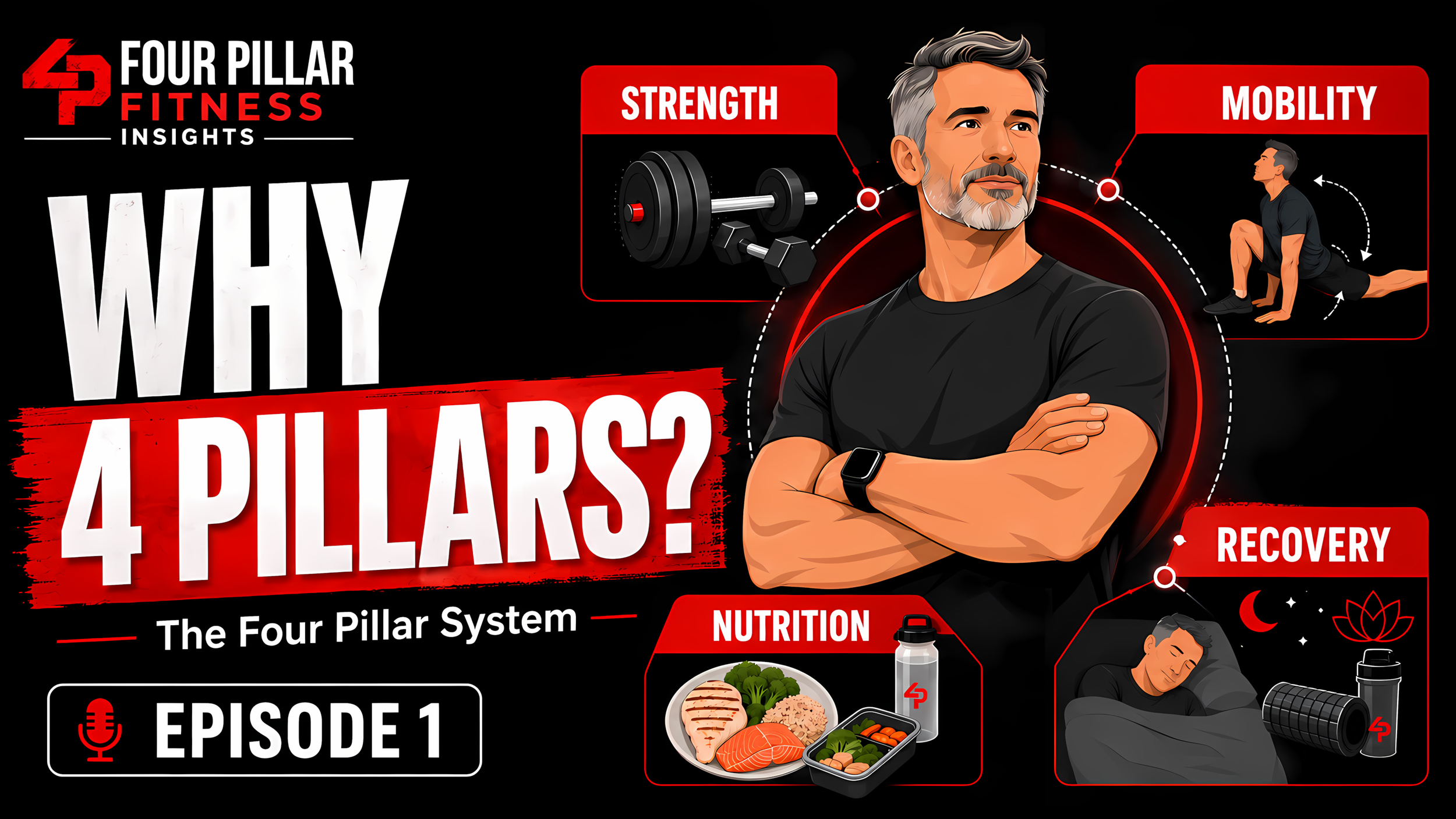
Strength: Progressive resistance training to build or maintain muscle, strength, and everyday capability.
Mobility: Moving comfortably and effectively in exercise and daily activities.
Nutrition: Practical eating habits that support training, body composition, and recovery, with referrals when medical nutrition care is needed.
Recovery: Sleep, stress management, appropriate rest, and training intensity so your body has time to adapt.
These aren't separate programs. They influence one another. For example, a demanding schedule and poor sleep may call for a temporary change in training volume, not another hard workout.
The World Health Organization recommends muscle-strengthening activities involving major muscle groups at least twice weekly for adults, including older adults. How you organize those sessions should reflect your schedule, abilities, and recovery.
For a longer view of how training priorities evolve, see Build, Maintain, Defend: A Smarter Way to Think About Strength for Life.
A good coach should connect these elements without making fitness needlessly complicated.
Accountability Is More Than Checking a Box
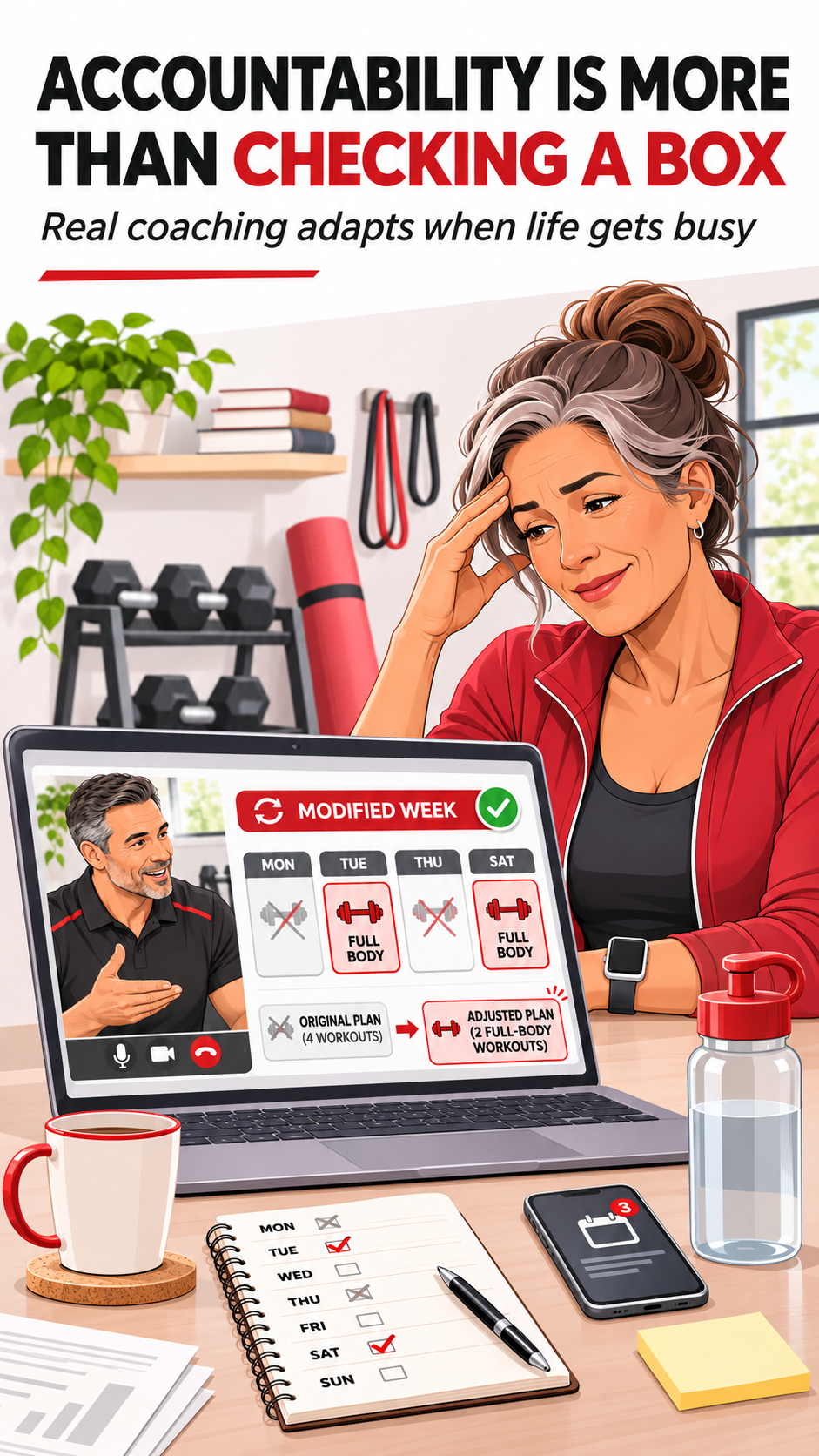
Accountability should mean more than an app reminding you to work out. It includes regular check-ins, constructive feedback, progress reviews, and changes when life gets complicated.
Imagine you've planned four workouts, but meetings and travel take over your week. A rigid program may leave you feeling as though you've failed. A thoughtful coach might switch you temporarily to two full-body workouts, keeping your most important exercises until your schedule settles.
That's coaching. Consistency doesn't always mean doing the same thing every week.
A systematic review of exercise adherence in older adults identified promising strategies involving feedback and monitoring, but the evidence wasn't strong enough to establish one consistently effective method. Individual needs and coaching judgment still matter.
Over time, good accountability should help you build confidence and independence. You shouldn't need someone watching over your shoulder forever.
Online Coaching vs. In-Person Personal Training
Is online coaching as effective as in-person training? The better question is which format fits your needs.
Online coaching offers flexibility. You can train at home, in a gym, or while traveling, with structured workouts, progress tracking, demonstrations, and messaging. Some coaches also review exercise videos or offer live virtual feedback. That can work well if you're comfortable exercising independently.
In-person training provides direct supervision, immediate movement feedback, help with unfamiliar equipment, and scheduled appointments. It may be the better starting point if you're new to strength training or need close guidance with technique.
Hybrid coaching combines in-person sessions with app-based programming and communication between appointments.
Neither format is automatically better. Consider your experience, safety needs, schedule, budget, and preferences rather than choosing solely on convenience or price.
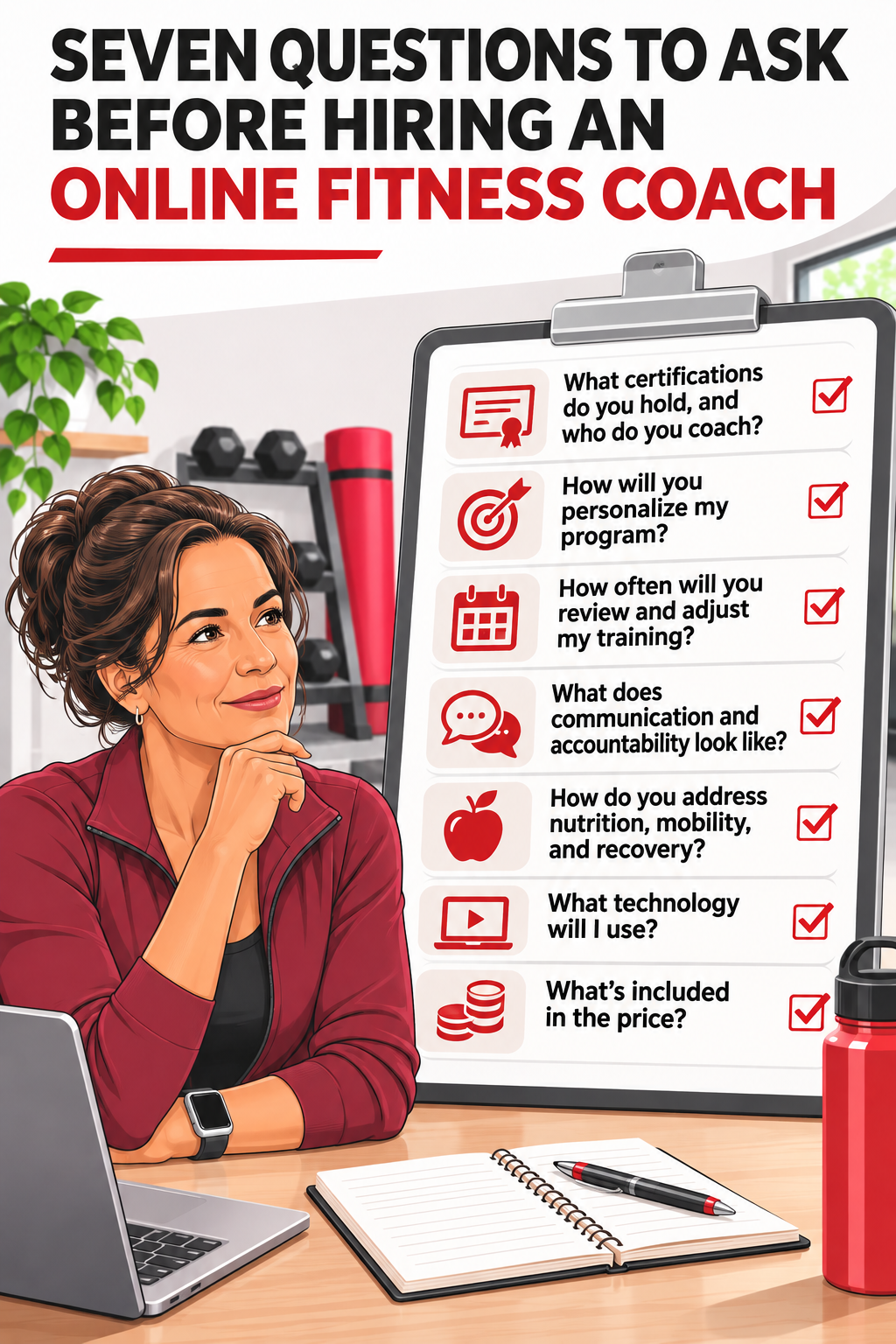
Seven Questions to Ask Before Hiring an Online Fitness Coach
Before committing, ask these questions. A coach's answers should help you compare services, not leave you guessing.
What certifications do you hold, and who do you typically coach? Look for recognized qualifications and experience relevant to your needs.
How will you personalize my program? Ask about assessments, goals, equipment, schedule, and limitations.
How often will you review and adjust my training? Find out whether changes are ongoing or only made when you ask.
What does communication and accountability look like? Clarify check-ins, response times, feedback, and support during setbacks.
How do you address nutrition, mobility, and recovery? Look for practical guidance within the coach's qualifications.
What technology will I use? Ask about exercise videos, workout tracking, progress reports, and messaging. The platform should make things easier.
What's included in the price? Confirm fees, contract terms, cancellation policy, access to your coach, and any extras.
You don't need complicated answers. You need clear ones. If a coach can't explain their service before you sign up, that's worth noticing.
Red Flags Worth Recognizing
Be cautious about guaranteed dramatic results, unrealistic timelines, one-size-fits-all programs sold as personalized, or medical claims outside a coach's qualifications. Vague credentials, little communication, pressure tactics, and unclear pricing should also make you pause.
Pay attention to how someone talks about aging. Being over 40 doesn't mean you're fragile or incapable of challenging training. A good coach recognizes individual considerations without treating age alone as a reason to limit your potential.
The Coach's Takeaway: Choose Guidance That Can Grow With You
Choosing an online coach after 40 isn't about finding someone who promises the fastest transformation. It's about finding someone who understands your goals, communicates clearly, and builds a realistic plan that can evolve with you.
Look for credentials, thoughtful programming, steady support, and a coach who teaches you why you're doing what you're doing. Whether you want more muscle, better movement, improved body composition, or the ability to stay active for decades, your coaching should support the life you're building.
If you'd like to learn more about my approach, you can explore Four Pillar Fitness Coaching. Whether you work with me or another qualified coach, the goal is the same: sustainable progress and greater confidence in your training.
What's your biggest concern about online coaching: qualifications, accountability, cost, or whether it would work for you?
Leave a comment below.
Listen to the podcast on YouTube.
Stephan Earl is a NASM Certified Personal Trainer, Nutrition Coach, and Corrective Exercise Specialist dedicated to helping people build lasting strength and mobility at every age. With a focus on practical, sustainable fitness, he combines science-based training with mindful movement and nutrition.
He's the author of The Four Pillars of Fitness: A Simple, Science-Backed System for Strength and Longevity, which explores how to stay strong, mobile, and energized for life. His mission is to help others move better, feel better, and live fully at every stage of their fitness journey.
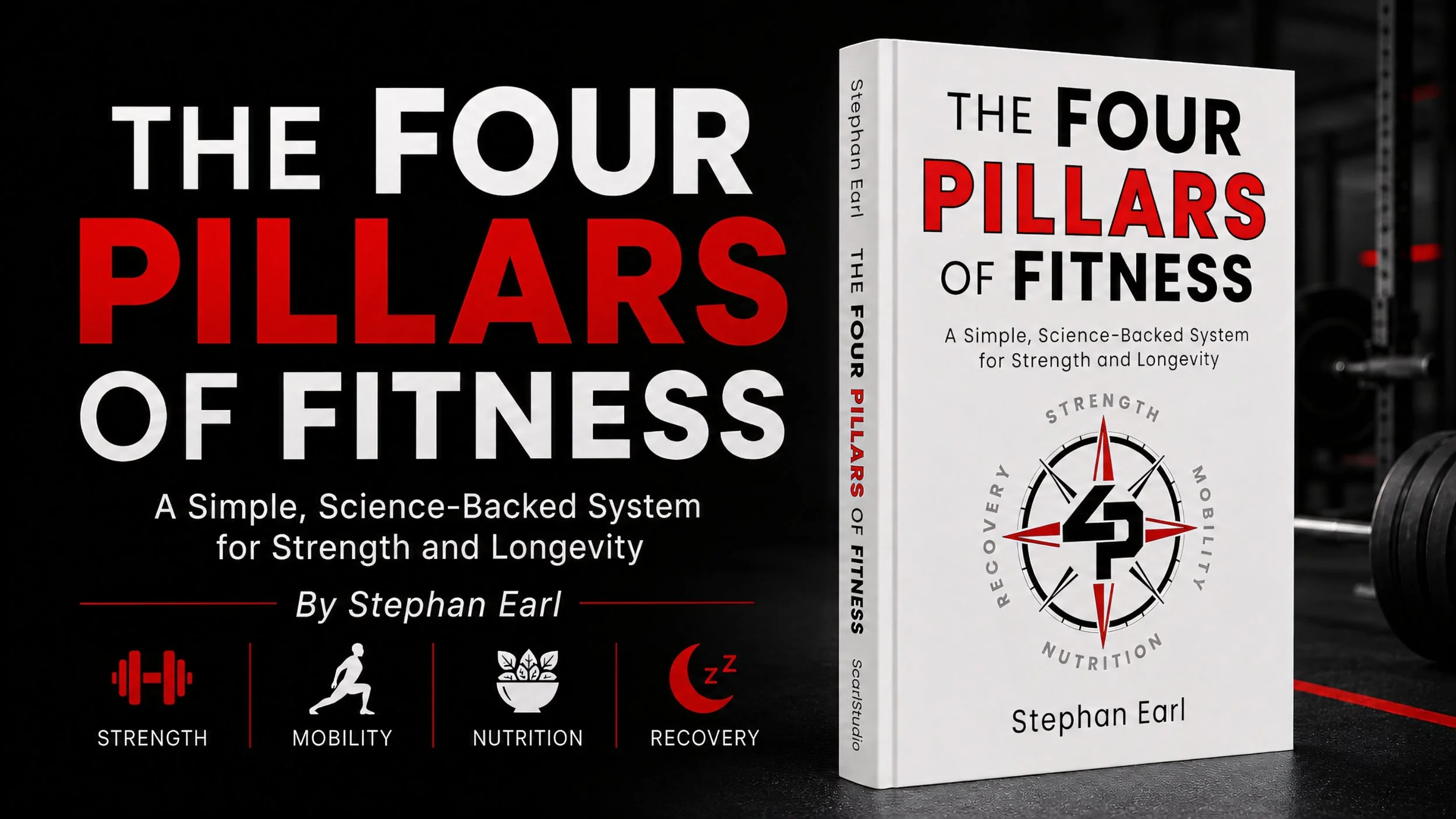
Learn More
Four Pillar Fitness is built on one clear idea. Strength, Mobility, Nutrition, and Recovery work together to keep you strong and independent at every age. To dive deeper into each pillar, visit 4PFitness.com.
References
Currier, B. S., D'Souza, A. C., Fiatarone Singh, M. A., Lowisz, C. V., Rawson, E. S., Schoenfeld, B. J., Smith-Ryan, A. E., Steen, J. P., Thomas, G. A., Triplett, N. T., Washington, T. A., Werner, T. J., & Phillips, S. M. (2026). American College of Sports Medicine position stand: Resistance training prescription for muscle function, hypertrophy, and physical performance in healthy adults: An overview of reviews. Medicine & Science in Sports & Exercise, 58(4), 851–872. https://doi.org/10.1249/MSS.0000000000003897
Bull, F. C., Al-Ansari, S. S., Biddle, S., et al. (2020). World Health Organization 2020 guidelines on physical activity and sedentary behaviour. British Journal of Sports Medicine, 54(24), 1451–1462. https://doi.org/10.1136/bjsports-2020-102955
Room, J., Hannink, E., Dawes, H., & Barker, K. (2017). What interventions are used to improve exercise adherence in older people and what behavioural techniques are they based on? A systematic review. BMJ Open, 7(12), e019221. https://doi.org/10.1136/bmjopen-2017-019221
More Health & Fitness Insights…



Visit the 4P Fitness PRO Shop
Gear up with 4P Fitness-inspired apparel, gear, and accessories with a little gym humor for the people who train hard, recover smart, and still know how to laugh between sets.
Shop the 4P Fitness Pro Shop and find something that fits your fitness life.

Looking for an online fitness coach after 40? Learn how to evaluate professional credentials, personalized strength training programs, accountability, nutrition guidance, and ongoing support. Coach Stephan Earl explains seven important questions to ask, the differences between online and in-person training, and how to choose a qualified coach who fits your goals, schedule, and lifestyle.